-

sales@tujinmagnet.com
-

+86-18858010843

Content
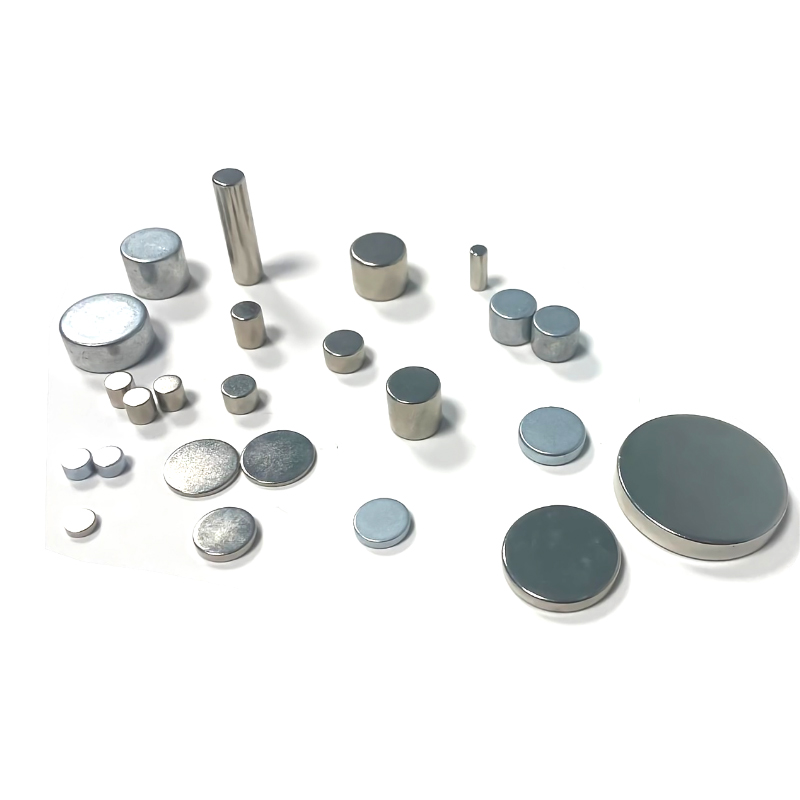
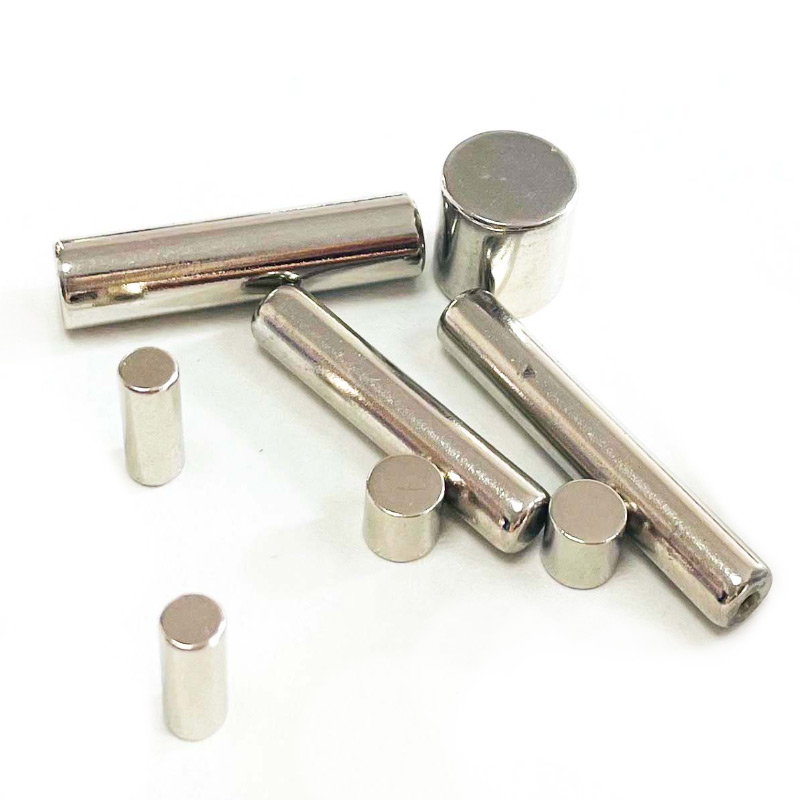
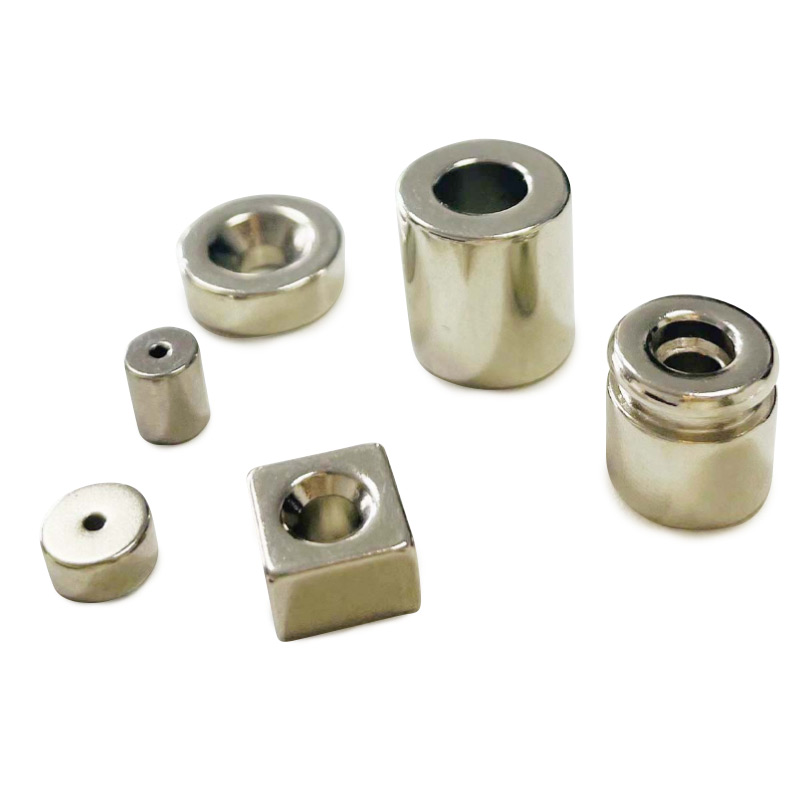
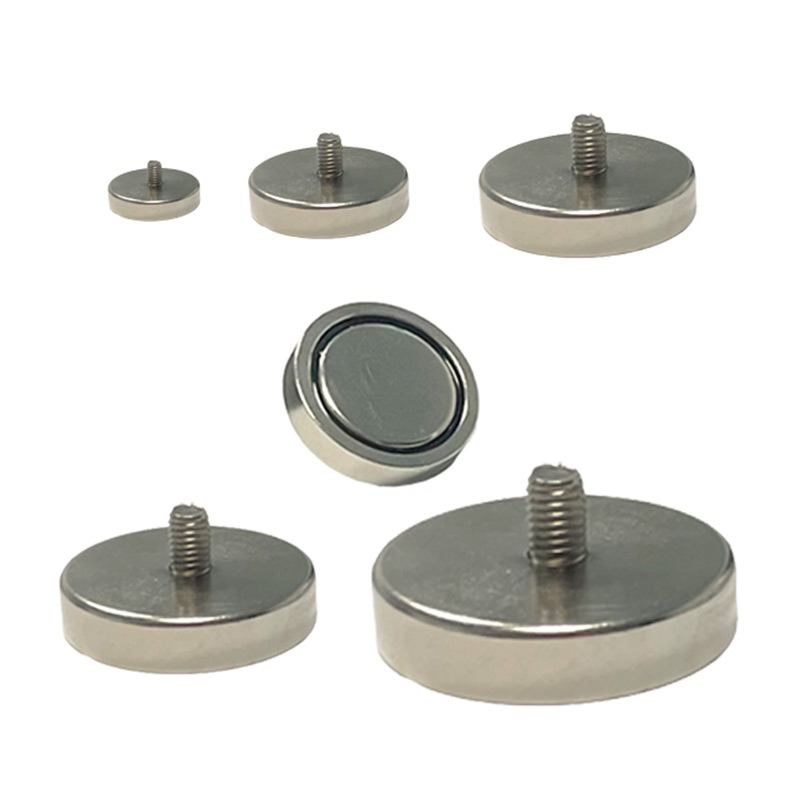
In modern industry, NdFeB magnets are known as the "King of Magnets" due to their exceptional magnetic properties. From the vibration motors of smartphones and the drive motors of electric vehicles to wind turbines, this powerful magnet is ubiquitous.
The first step in manufacturing NdFeB magnets is the selection and proportioning of raw materials. Its main components include the rare earth metals neodymium (Nd), iron (Fe), and boron (B). To improve the magnet's high-temperature resistance and coercivity, manufacturers typically add small amounts of auxiliary elements such as dysprosium (Dy), terbium (Tb), and copper (Cu).
Careful Batching: High-purity metal raw materials are precisely weighed according to the requirements of the magnetic material grade (e.g., N35, N52, 50SH, etc.).
Because neodymium oxidizes very easily at high temperatures, the melting process must be carried out under vacuum or high-purity inert gas protection.
Melting: The prepared raw materials are placed in a vacuum induction furnace and heated to melt.
Rapid Solidification (SC): This is a key step in modern production. The molten alloy is sprayed onto a high-speed rotating water-cooled copper roller, rapidly cooling and solidifying into an ultra-thin alloy strip. This technology results in finer and more uniform grains, laying the foundation for subsequent manufacturing of high-performance magnets.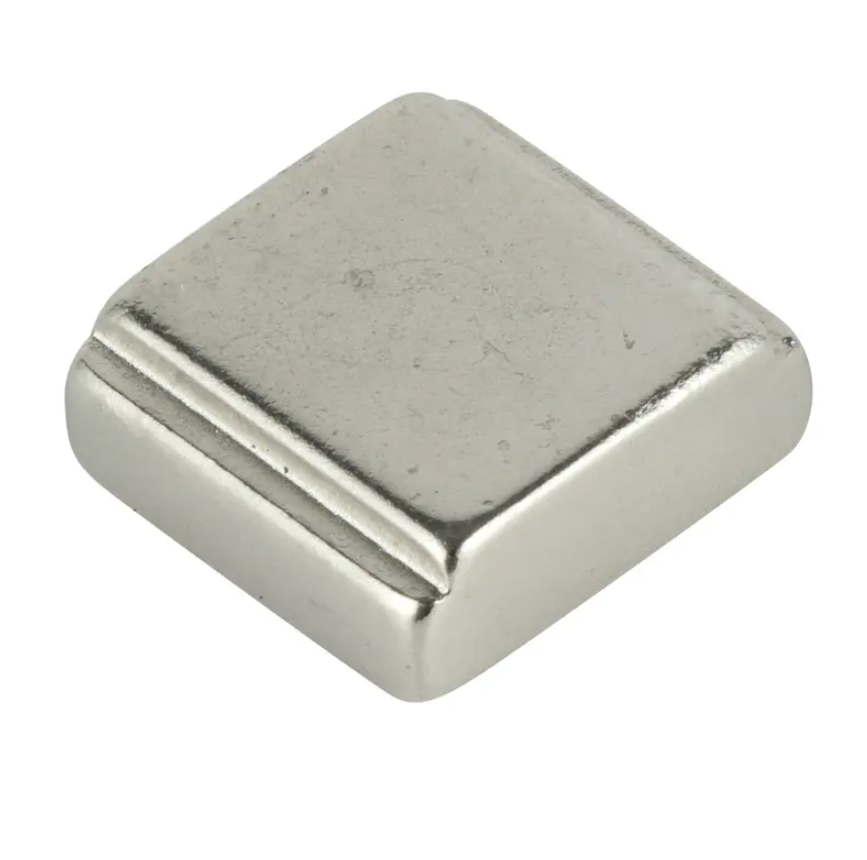
To obtain good magnetic anisotropy, the alloy sheet needs to be crushed into micron-sized powder.
Hydrogen Crushing (HD): Utilizing the hydrogen absorption and expansion properties of rare earth metals, microcracks are created within the alloy strip, causing it to pulverize.
Jet Milling: Using a supersonic airflow, the powder collides with each other, refining it into a fine powder with an average particle size of approximately 3-5 micrometers. During this process, the oxygen content must be strictly controlled.
This is the crucial step in determining the magnetic field direction of NdFeB magnets.
Pressing: Fine powder is placed in a mold and pressed under a strong external magnetic field. The long axes of the magnetic powder particles align neatly under the influence of the magnetic field (i.e., orientation).
Isostatic Pressing: After initial pressing, the green blank usually undergoes cold isostatic pressing to ensure uniform density and prevent deformation during sintering.
Sintering is the most crucial step in improving the density and magnetic properties of NdFeB magnets.
Sintering: The green blank is heated in a vacuum environment at a high temperature (approximately 1000 °C - 1100 °C). During this process, physicochemical reactions occur between the particles, causing volume shrinkage and increased density, forming a dense metal block.
Tempering: A two-stage heat treatment adjusts the distribution of grain boundary phases, optimizing the coercivity and energy product of the magnetic material.
Sintered magnets are typically large square or cylindrical blanks with rough surfaces that are easily corroded.
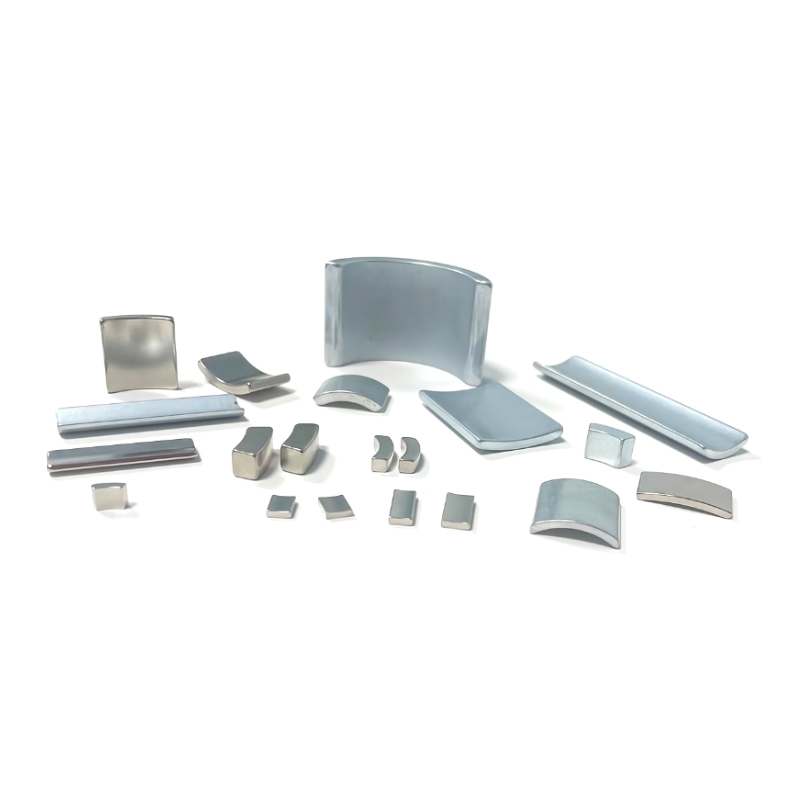
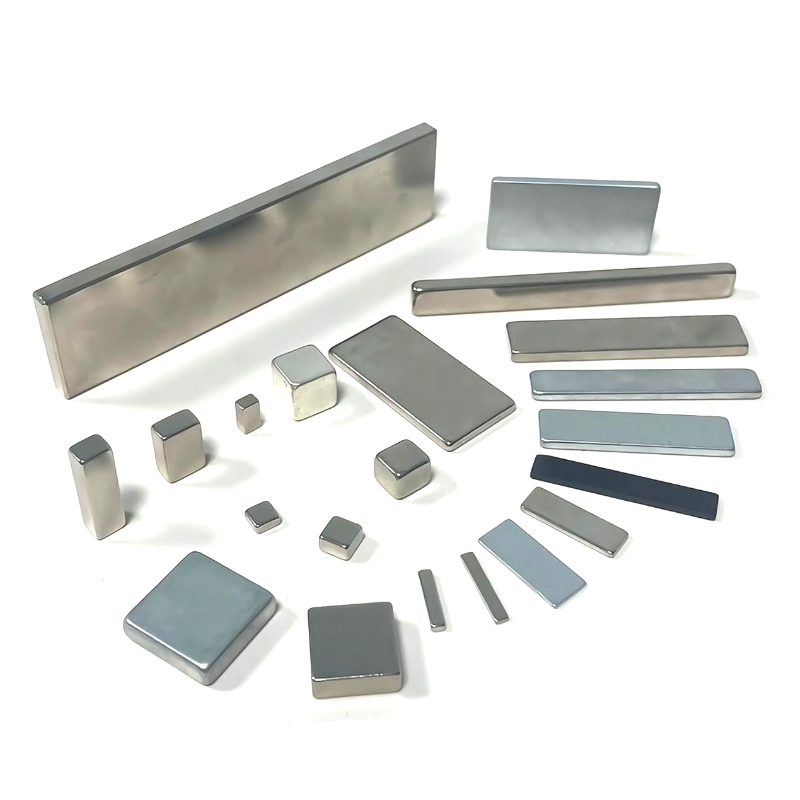
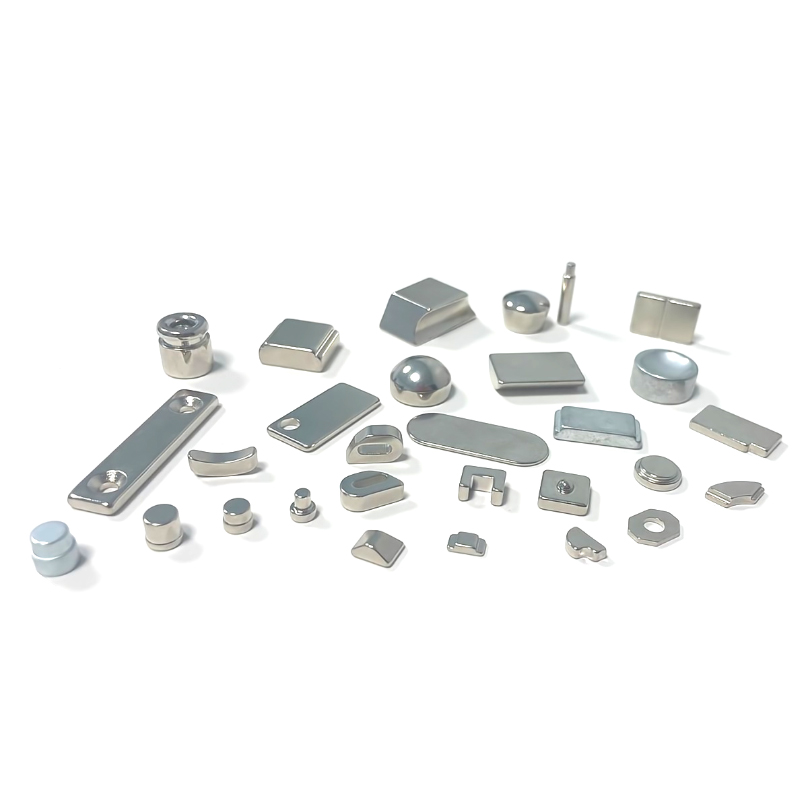
Machining: Large blocks of material are machined into the precision dimensions required by the customer using wire cutting, grinding, or slicing machines.
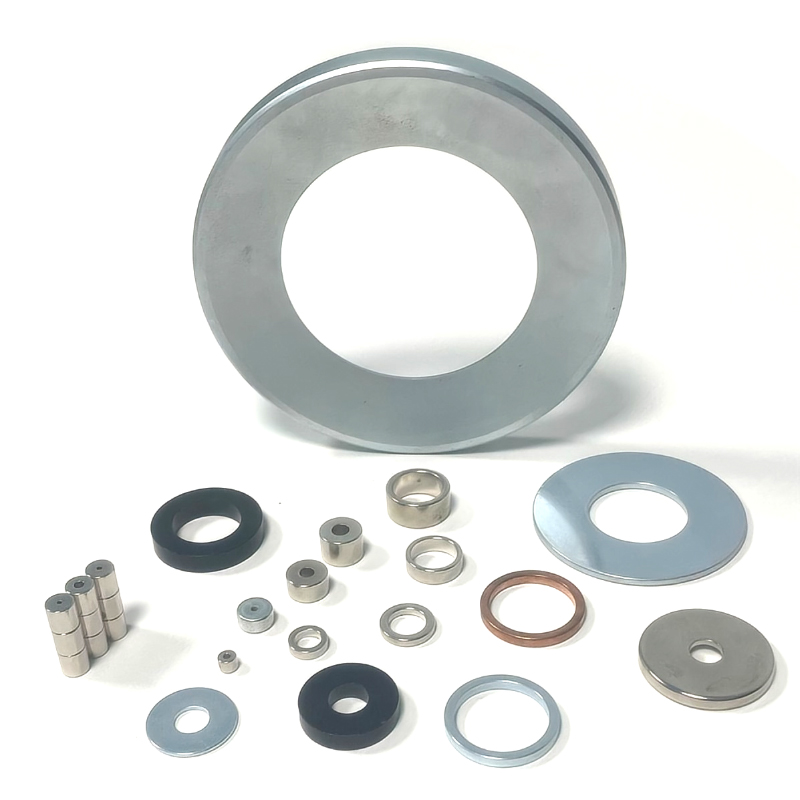
Surface Treatment: Neodymium iron boron (NdFeB) magnets are highly susceptible to oxidation, therefore, anti-corrosion treatment is essential. Common plating methods include zinc plating, nickel-copper-nickel plating, and epoxy resin plating to extend their service life in complex environments.
The final step is to give the magnet its "soul."
Magnetization: The finished magnet is placed in an ultra-strong pulsed magnetic field, causing its internal magnetic moments to align completely along the orientation direction, generating extremely strong remanence.
Quality Testing: Through demagnetization curve measurement, high and low temperature tests, and salt spray tests, each NdFeB magnets is ensured to meet performance specifications.
The manufacturing of NdFeB magnets is a complex process encompassing materials science, vacuum technology, and precision machining. It is through such rigorous processes that this rare-earth permanent magnet material unleashes its astonishing energy, driving the continuous advancement of modern technology.
Having a blueprint in mind, working hard and forging ahead
 No.107 Yunshan Industry Park, Sanqishi Town, Yuyao, Ningbo, Zhejiang 315412, China
 +86-18858010843
 sales@tujinmagnet.com
Copyright ? Ningbo Tujin Magnetic Industry Co., Ltd. All Rights Reserved. Custom Rare Earth Magnets Factory