-
sales@tujinmagnet.com
-
+86-18858010843

Content
Choosing the right neodymium disc magnet size comes down to three variables: diameter, thickness, and grade. Diameter controls the pole face area and therefore the raw pull force; thickness governs the magnetic field depth and how far the field projects beyond the surface; and grade (N35 through N52) sets the maximum energy density the sintered NdFeB material can deliver. Get all three right and a single neodymium disc magnet can replace a much larger ferrite component — or perform a function that no other magnet shape can match.
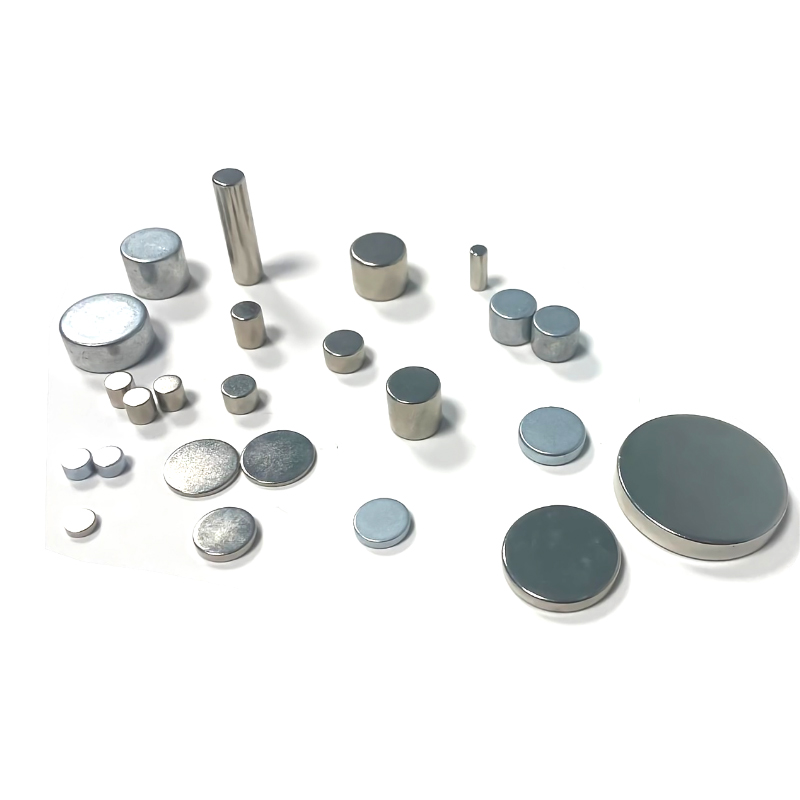
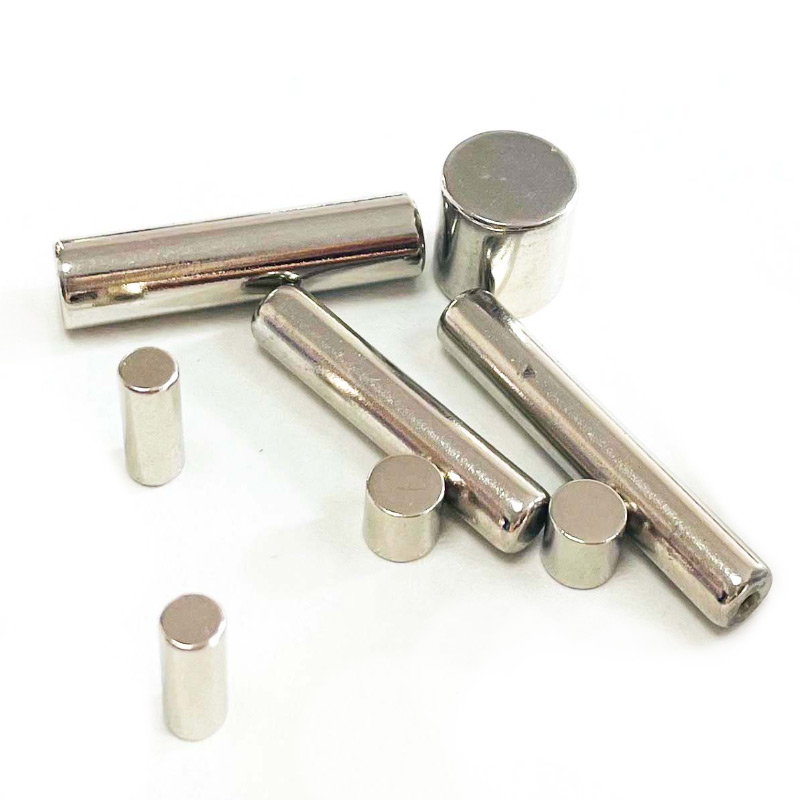
Neodymium NdFeB disc magnets are among the most versatile shapes in the permanent magnet family. Because their geometry is fully defined by just two dimensions — diameter (D) and thickness (T) — they can be scaled across an enormous range, from a 3 mm × 1 mm micro-disc for a wearable sensor to a 100 mm × 50 mm industrial disc for a magnetic separator. Their wide, flat pole surface maximizes the contact area between magnet and target material, which is why disc magnets consistently deliver higher pull-to-weight ratios than block or ring magnets of equivalent volume. This guide walks through every dimension of that selection decision, with real application data to anchor each recommendation.
In a sintered NdFeB disc magnet, the diameter and thickness work against each other in a well-understood trade-off. A large-diameter, thin disc concentrates the magnetic flux very close to the pole face — producing extremely high surface pull force but a shallow field that drops off rapidly with distance. A small-diameter, thick disc (closer to a rod magnet geometry) projects a narrower but deeper field that retains useful flux density at greater stand-off distances. Understanding this trade-off is the starting point for any size selection.
As a practical rule of thumb from custom NdFeB magnets engineering: doubling the diameter of a disc magnet at constant thickness increases the axial pull force by approximately four times, because pull force scales with pole area (proportional to D²). Doubling thickness at constant diameter increases pull force by roughly 40–60%, with diminishing returns beyond a D/T ratio of 1. This asymmetry means diameter is the more powerful lever for maximizing pull force, while thickness is the lever for controlling field reach.
This chart illustrates the dramatic, non-linear relationship between disc diameter and axial pull force for an N42-grade neodymium disc magnet at a fixed 5 mm thickness against a mild-steel target. The pull force climbs from approximately 0.5 kg at 10 mm diameter to 20 kg at 50 mm — a 40-fold increase for a fivefold increase in diameter, consistent with the D² area scaling law. For engineers specifying custom NdFeB magnets for a new design, this means that minor diameter increments in the 30–50 mm range yield large pull-force gains, while the same absolute increment at small diameters (e.g., 10 to 20 mm) provides comparatively modest improvement. The red bars highlight sizes where pull force begins to exceed the structural capability of standard mounting adhesives, signaling a shift to mechanical fastening. When designing industrial neodymium magnets for motor, separator, or sensor applications, this curve should be the first reference consulted, as it immediately narrows the feasible diameter range without a single prototype being built. Custom disc magnet suppliers can confirm exact values through FEA simulation before tooling is committed.
The grade number in a neodymium NdFeB disc magnet specification — N35, N42, N52, and so on — directly encodes the Maximum Energy Product (BHmax) of the sintered material, expressed in MGOe (Mega-Gauss-Oersteds). A higher number means more magnetic energy per unit volume, enabling a smaller disc to deliver the same flux as a larger, lower-grade disc. The practical ceiling today is N52 (approximately 52 MGOe), which is close to the theoretical limit for NdFeB chemistry.
| Grade | BHmax (MGOe) | Remanence Br (kGs) | Max Operating Temp. | Typical Applications |
|---|---|---|---|---|
| N35 | 33–36 | 11.7–12.1 | 80 °C | Packaging closures, hobby, DIY |
| N42 | 40–43 | 13.2–13.8 | 80 °C | Consumer electronics, sensors, smart home |
| N52 | 50–53 | 14.3–14.8 | 80 °C | Compact motors, audio, precision instruments |
| N42M | 40–43 | 13.2–13.8 | 100 °C | Industrial motors, servo drives |
| N38H | 36–39 | 12.3–12.8 | 120 °C | EV traction motors, BLDC, compressors |
| N35SH | 33–36 | 11.7–12.1 | 150 °C | Turbines, solar pump motors, robotics |
| N30UH / EH | 28–32 | 10.8–11.5 | 180–200 °C | Downhole tools, aerospace, heavy industry |
The letter suffixes after the grade number are critical for any thermally demanding application. Standard grades (N35–N52, no suffix) are limited to 80 °C before irreversible demagnetization risk begins. The M, H, SH, UH, and EH suffixes progressively extend the coercivity (resistance to demagnetization) at the cost of a modest reduction in BHmax. As a trusted NdFeB magnets manufacturer, Tujin's high-temperature motor magnet line covers the full range from 80 °C to 200 °C, enabling application engineers to specify a single-source custom NdFeB magnets solution across their entire product portfolio without switching suppliers.
The radar chart compares the N52 standard grade against the N38H high-temperature grade across six performance dimensions. N52 dominates on energy density and remanence — the two axes that determine how small a disc can be while still delivering a required flux — making it the preferred choice for compact consumer electronics, audio transducers, and precision sensors where temperature excursions are limited to 80 °C. N38H, by contrast, trades a modest reduction in BHmax for substantially higher coercivity (Hcj) and thermal stability, enabling reliable operation in environments where continuous temperatures reach 120 °C — such as EV traction motors, BLDC compressor drives, and industrial servo systems. The two grades overlap significantly on cost efficiency and availability, meaning the selection decision is almost entirely driven by the application's thermal profile rather than commercial considerations. Engineers specifying high-temperature NdFeB magnets for motor programs should note that the H-suffix grades also exhibit lower reversible temperature coefficients (typically −0.09%/°C for Br vs. −0.12%/°C for standard N grades), which reduces flux variation across the operating temperature range and improves motor torque consistency. As a specialized motors magnet manufacturer, Tujin's engineering team can recommend the optimal grade-coating combination based on a motor's thermal map and duty cycle.
NdFeB is a highly reactive alloy — without surface protection, it oxidizes rapidly in ambient air, particularly in humid or salt-spray environments, causing surface flaking that degrades magnetic performance. All rare earth disc magnets require a protective coating, and the choice of that coating is as consequential as the grade selection for long-term reliability.
As a full-service neodymium magnets supplier, Tujin provides all major coating options in-house, validated by neutral salt-spray, humidity cycling, and adhesion-peel testing to relevant IEC and ASTM standards. Custom coating thickness specifications can be accommodated for dimensional-critical applications where coating build-up would otherwise affect assembly clearances.
The size range of neodymium disc magnets in active production spans more than two orders of magnitude in diameter, enabling a single magnet geometry to serve applications as dissimilar as a hearing-aid reed switch and a wind-turbine magnetic coupling. The table below maps typical size ranges to their dominant applications.
| Size Category | Diameter Range | Typical Grade | Key Applications |
|---|---|---|---|
| Micro | 2–8 mm | N42–N52 | Wearables, hearing aids, dental implant motors, micro-sensors |
| Small | 8–20 mm | N42–N52 | Consumer electronics, smart-home devices, handbag clasps, packaging |
| Medium | 20–50 mm | N35H–N42H | Acoustic speakers, BLDC motors, magnetic couplings, sensors |
| Large | 50–100 mm | N35SH–N38SH | Industrial separators, traction motors, wind energy, robotics |
| XL / Custom | >100 mm | N30UH–N35EH | Offshore wind generators, elevators, MRI gradient coils, heavy machinery |
The line chart shows how axial flux density decreases with distance from the pole face for two N42 neodymium disc magnets of different diameters but identical thickness (5 mm). The 20 mm disc opens at approximately 3,800 Gauss at the surface, compared to 2,600 Gauss for the 10 mm disc — a 46% advantage that directly translates into higher attraction force and greater effective working range. Both curves follow a steep exponential decay, but the larger disc's higher starting point means it retains useful flux (above 1,000 Gauss) out to approximately 3.5 mm, compared to only 2.5 mm for the smaller disc. This working-distance advantage is particularly significant for contactless sensing applications — Hall-effect switches, proximity detectors, and reed sensors — where the magnet must reliably trigger the sensor even when assembly tolerances create a variable air gap. For acoustic speaker and smart-home latch applications, the design objective is usually to maximize surface flux density rather than working distance, which means minimizing air gap and maximizing disc diameter within the available envelope. As a full-capability rare earth magnets manufacturer and neodymium magnets factory, Tujin provides FEA-validated flux maps for all custom disc sizes, enabling customers to optimize their magnetic circuit before committing to tooling.
Ordering custom disc magnets from a custom neodymium magnets manufacturer is most efficient when the specification sheet is complete before the first engineering conversation. The following checklist covers every parameter that a manufacturer will need to quote and produce accurately.
The horizontal bar chart ranks the five most frequently cited critical selection criteria among design engineers specifying permanent disc magnets for production programs. Pull force and flux density top the list at 92%, reflecting the fact that magnetic performance is the primary functional deliverable of any magnet specification. Grade and temperature stability at 80% highlight the growing importance of high-temperature NdFeB magnets as electrification trends drive more applications into thermally demanding motor environments — a trend that is accelerating across EV, industrial automation, and home appliance markets. Dimensional tolerance at 74% is particularly critical for disc magnets used in precision assemblies such as sensor housings and magnetic couplings, where even a 0.05 mm oversize can prevent correct seating. Coating selection at 65% reflects the diverse end-environment requirements across the disc magnet application spectrum, from indoor packaging to outdoor industrial equipment. Lead time and supply reliability at 58% underscores why long-term partnerships with an established rare earth magnets factory like Tujin — rather than spot-market procurement — deliver commercial value beyond the per-unit cost of the magnet itself.
Ningbo Tujin Magnetic Industry Co., Ltd. specializes in the manufacturing and sales of high-performance NdFeB magnets. With years of expertise in magnetic materials, we excel in providing high-temperature-resistant motor magnets and customized magnetic solutions with superior precision and stability. Renowned for exceptional product quality, fast lead times, and high flexibility, we have become a trusted long-term partner for leading companies across multiple industries.
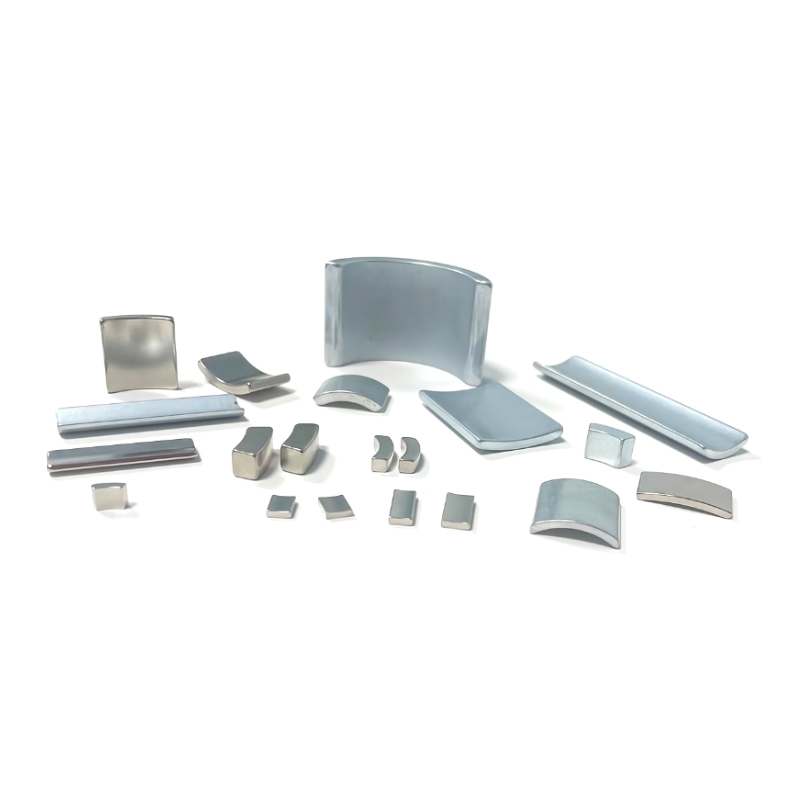
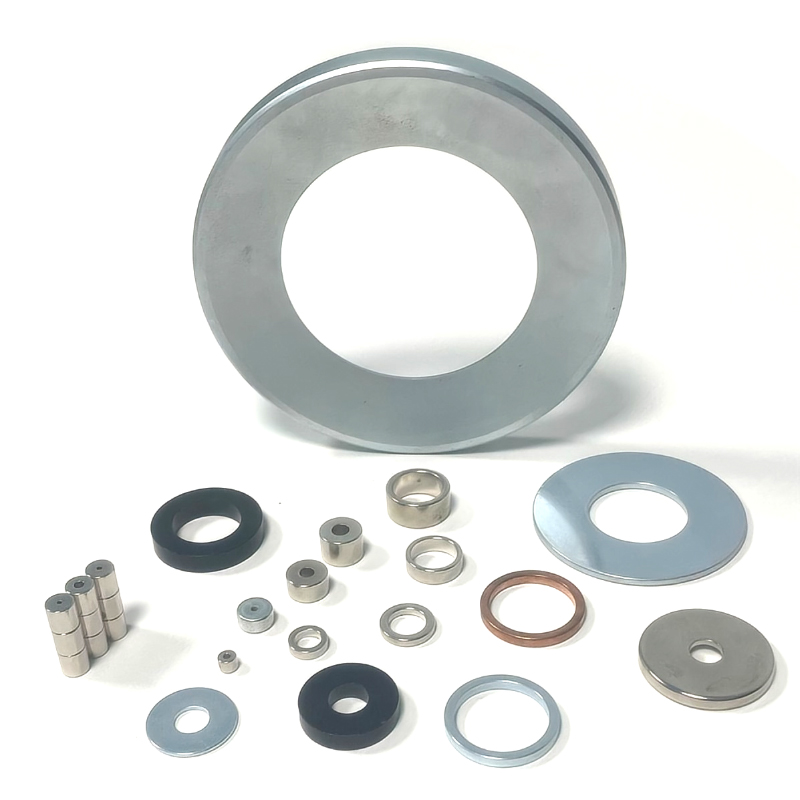
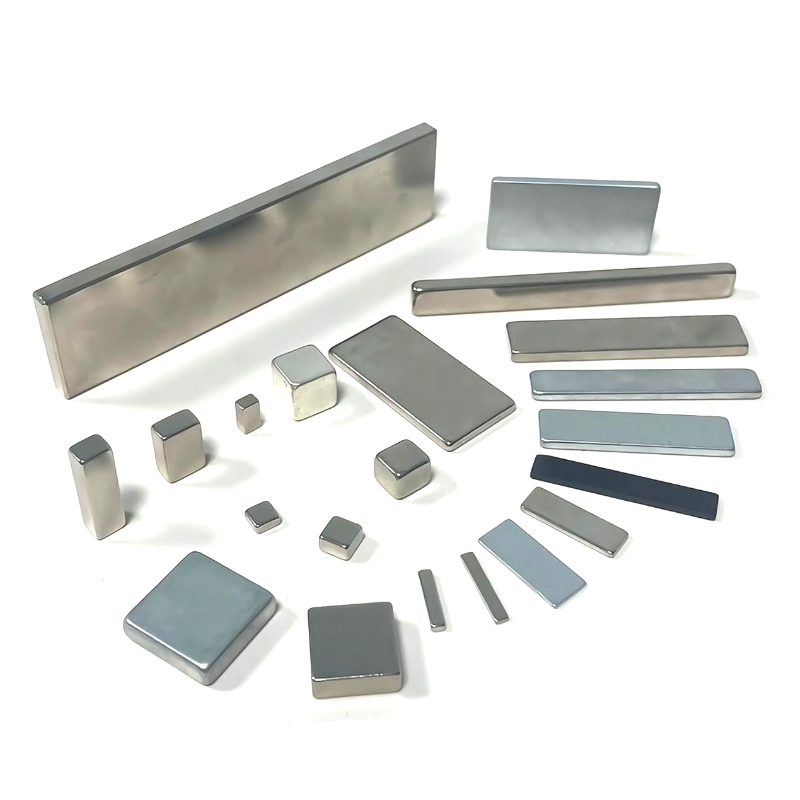
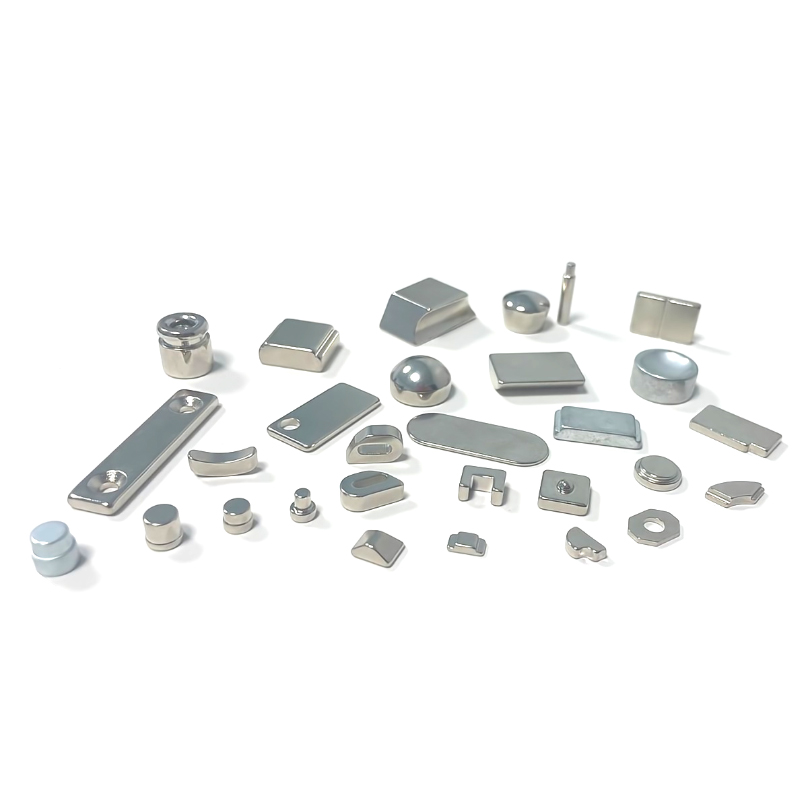
As a specialized NdFeB magnets manufacturer and neodymium magnets factory, Tujin's core product strength lies in high-temperature motor magnets designed for demanding thermal environments (−40 °C to 200 °C), serving New Energy Vehicles, Industrial Automation, Home Appliances, Medical Devices, and Energy & Heavy Machinery sectors. We support complex and precision-shaped designs including disc, block, arc (segment), ring (multi-pole magnetized), and rod geometries. Advanced coatings — Ni-Cu-Ni, epoxy, and more — enhance oxidation resistance and service life. More than 50% of our customers have cooperated with us for over 10 years, a reflection of the reliability and consistency that a professional permanent magnet manufacturer must deliver. Whether for standard or custom solutions, Tujin delivers professionalism, efficiency, and reliability to empower your products with superior magnetic performance.
Q1: How do I calculate the pull force of a neodymium disc magnet?
Pull force depends on diameter, thickness, grade, and the air gap to the target material. For a direct steel contact, approximate pull force (kg) ≈ 0.796 × Br² × A / (4π × 10⁻⁷) — but in practice, use supplier-provided pull-force tables or FEA simulation. A reputable neodymium magnets supplier will provide tested pull-force data for standard sizes and simulate custom geometries on request.
Q2: What is the difference between N35, N42, and N52 disc magnets?
The number reflects the Maximum Energy Product (BHmax) in MGOe. N52 has approximately 49% more magnetic energy per unit volume than N35, enabling a smaller disc to achieve the same pull force. All three standard grades share the same 80 °C maximum operating temperature. Choose a higher grade when size or weight constraints require maximum flux in minimum volume.
Q3: What coating is best for outdoor or humid environments?
Ni-Cu-Ni triple-layer nickel coating is the standard choice, offering 500+ hours of salt-spray resistance per ASTM B117. For aggressive chemical or marine environments, epoxy or Parylene coatings provide superior barrier performance. Zinc coating is suitable for controlled indoor environments only. Discuss the specific exposure conditions with your custom neodymium magnets manufacturer to confirm the right coating system.
Q4: Can disc magnets be used in motor applications?
Yes. Small neodymium disc magnets are widely used in micro-motors for dental implants, medical instruments, and consumer electronics. Larger discs and custom arc/ring geometries are standard in BLDC, servo, and traction motors. For motor applications, always specify the appropriate high-temperature grade (H, SH, UH, or EH suffix) based on the motor's continuous operating temperature. Tujin is a specialized motors magnet manufacturer with proven delivery to EV, automation, and medical motor programs.
Q5: What is the minimum order quantity for custom disc magnets?
MOQ varies by size and complexity. Standard-size strong disc magnets typically have MOQs of 100–500 pieces, while fully custom geometries with specialized coatings may require 500–2,000 pieces for the first production run. As a flexible NdFeB magnets factory, Tujin accommodates prototype quantities for R&D programs and scales to mass production with shorter lead times as the product matures. Contact the Tujin engineering team with your specification sheet for a specific MOQ and lead-time quotation.
Q6: How should neodymium disc magnets be stored and handled safely?
Store rare earth disc magnets in a dry, temperature-controlled environment away from ferromagnetic tools and electronic equipment. Separate individual magnets with plastic or foam spacers to prevent snap-together collisions, which can chip the coating and fracture the magnet body. Keep away from pacemakers, credit cards, and other magnetically sensitive devices. Gloves are recommended for handling large-diameter discs where pinch-force hazards exist. Follow the industrial magnet supplier's packaging and handling guidelines supplied with each shipment.
No.107 Yunshan Industry Park, Sanqishi Town, Yuyao, Ningbo, Zhejiang 315412, China
+86-18858010843
sales@tujinmagnet.com
Copyright ? Ningbo Tujin Magnetic Industry Co., Ltd. All Rights Reserved. Custom Rare Earth Magnets Factory