-
sales@tujinmagnet.com
-
+86-18858010843

Content
A neodymium magnet — also called an NdFeB magnet — is produced through a precise powder metallurgy process that fuses neodymium, iron, and boron into the world's strongest permanent magnet material. The result matters enormously: these rare earth magnets power everything from EV traction motors to medical micro-motors, and selecting a reliable neodymium magnets manufacturer directly determines the performance and longevity of end products.
As a leading NdFeB magnets manufacturer and neodymium magnets supplier, Ningbo Tujin Magnetic Industry Co., Ltd brings years of expertise to every magnet — from standard grades to fully custom NdFeB magnets engineered for extreme environments.
Understanding how neodymium magnets are made reveals why manufacturing precision is non-negotiable. Every stage — from raw ore to finished magnet — introduces variables that influence magnetic strength, corrosion resistance, and thermal stability.
High-purity neodymium oxide (Nd₂O₃), iron, and boron are sourced and proportioned. The typical NdFeB composition is approximately Nd₂Fe₁₄B, with neodymium making up 26–32% by weight. Dysprosium (Dy) or terbium (Tb) may be added to improve high-temperature coercivity for motor magnet manufacturer applications.
Ingredients are melted in a vacuum induction furnace at roughly 1,350 °C, then rapidly quenched via strip casting onto a water-cooled copper roller. This produces thin alloy flakes (0.2–0.5 mm) with a fine, homogeneous microstructure — critical to achieving the high remanence values demanded by a quality rare earth magnets factory.
Flakes are loaded into hydrogen at room temperature; they absorb hydrogen and shatter into coarse powder. A subsequent jet mill — operating under high-pressure nitrogen — grinds particles to 3–5 µm. Smaller, uniform particles are essential for high-strength rare earth magnets because grain alignment becomes more complete during pressing.
Powder is pressed inside a strong magnetic field (typically ≥ 1.5 T) to align the crystallographic c-axis of each particle. This orientation step is what separates sintered NdFeB from isotropic bonded magnets, producing N52 magnets and other high-grade products with remanence above 1.4 T.
Green compacts are sintered in vacuum at 1,060–1,100 °C for several hours, then undergo a two-stage aging treatment (900 °C + 500 °C) to optimise coercivity. Density reaches ~7.5 g/cm³ — over 95% of theoretical maximum.
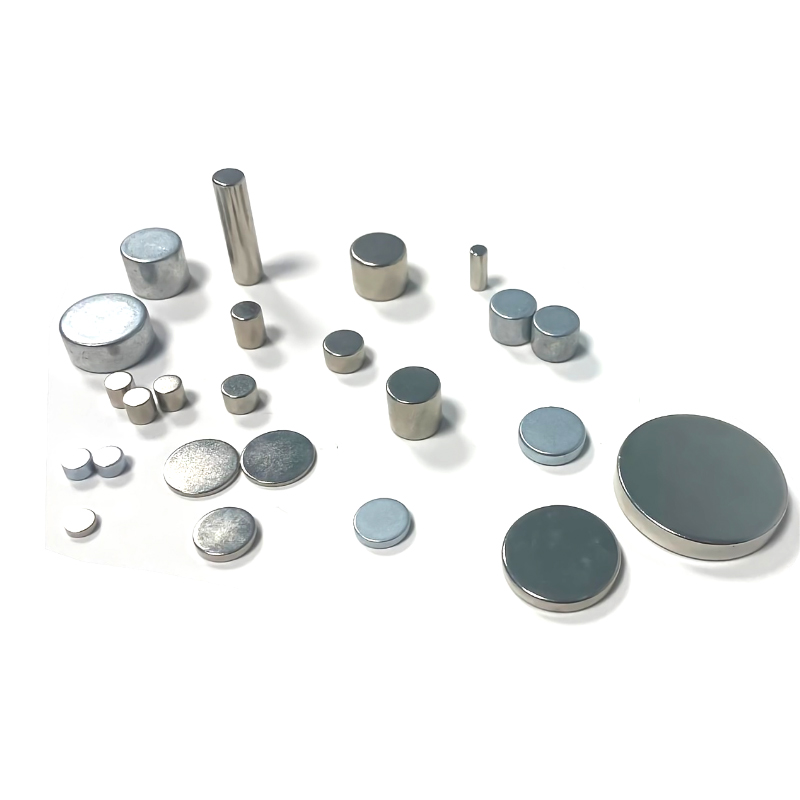
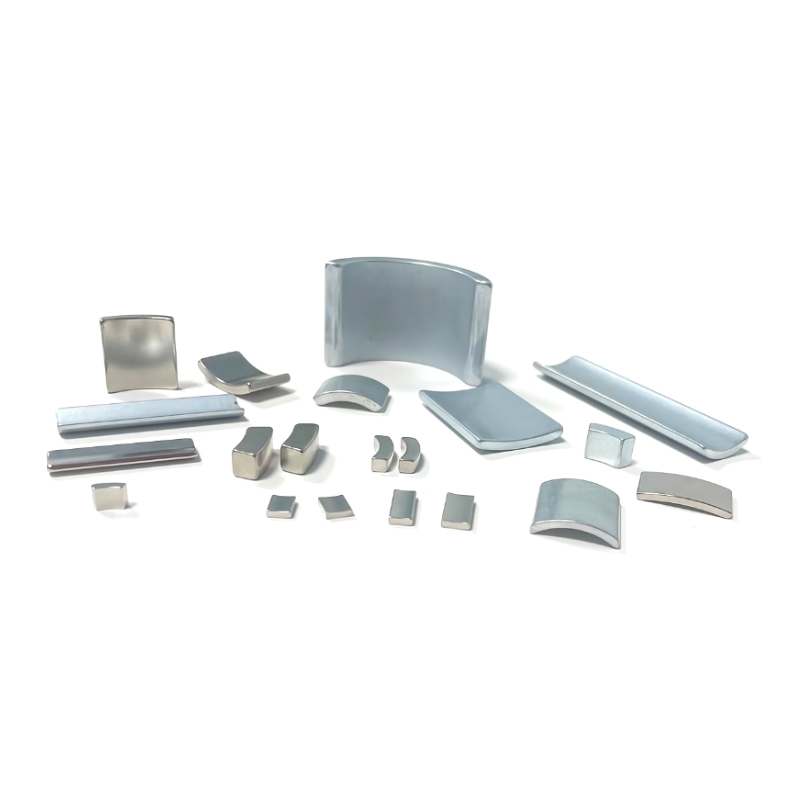
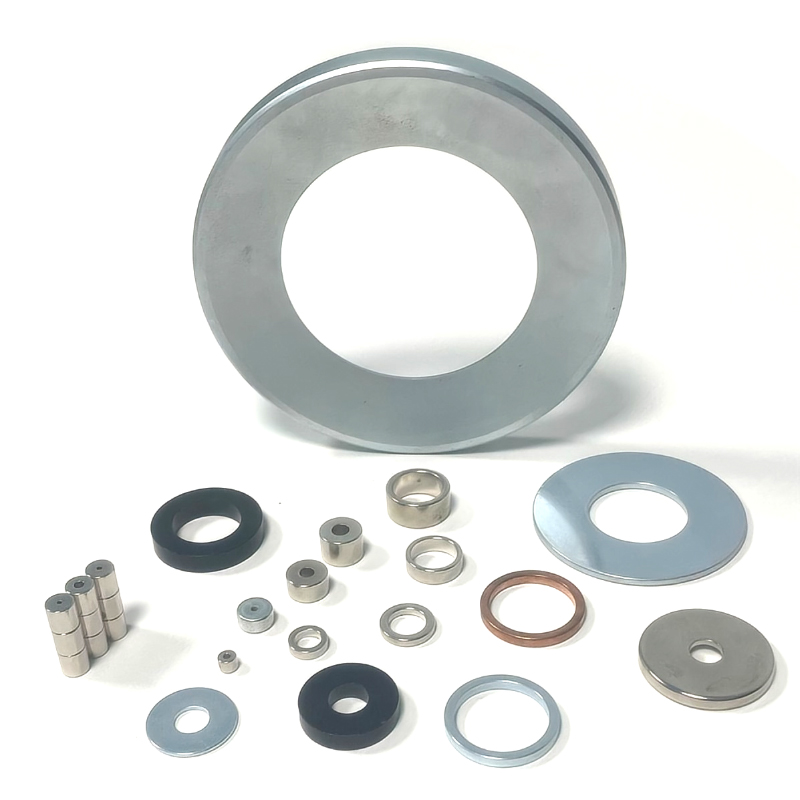
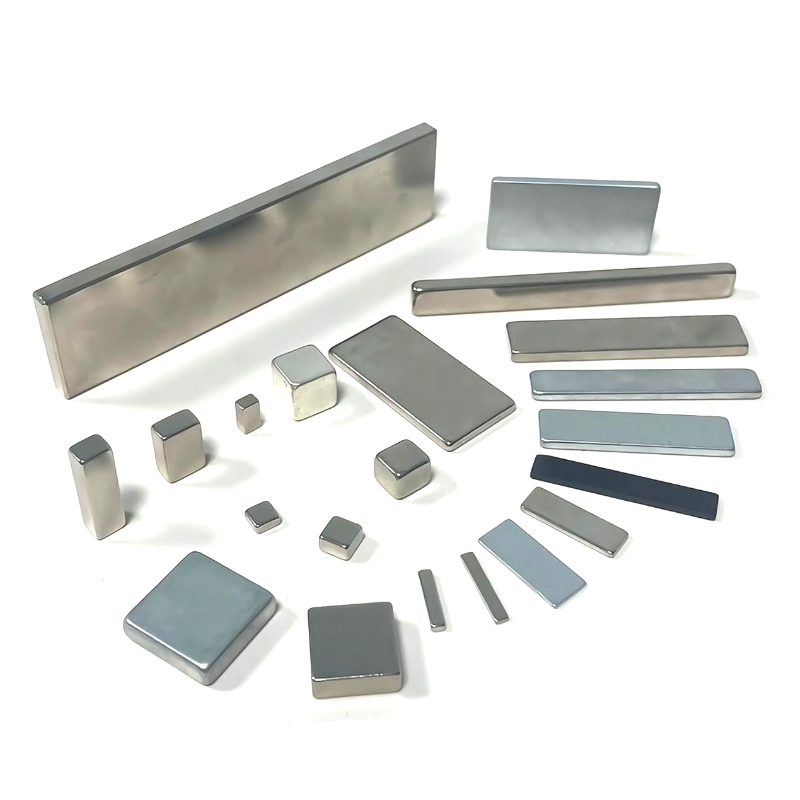
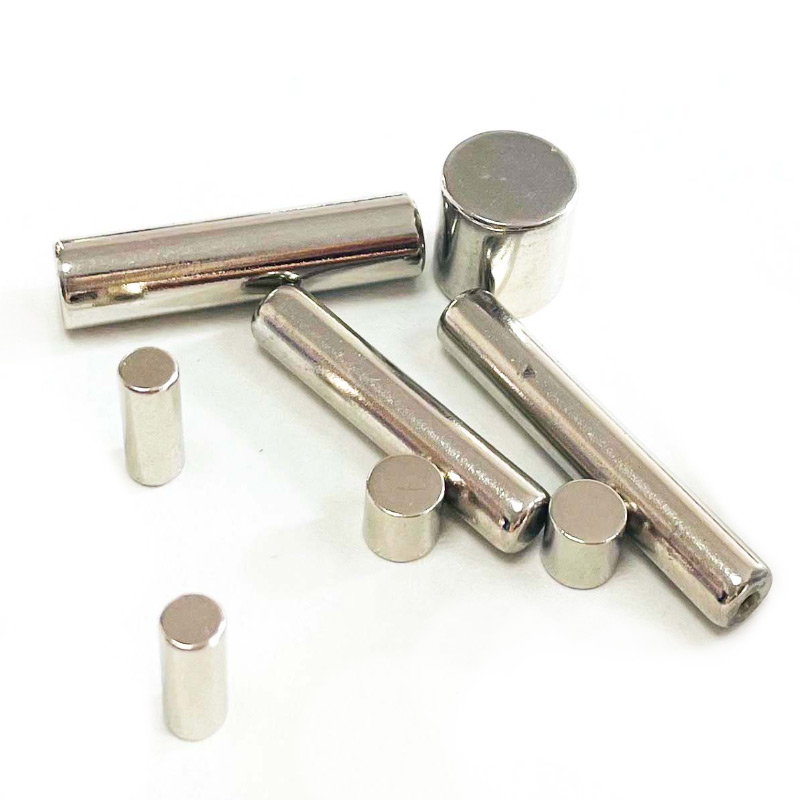
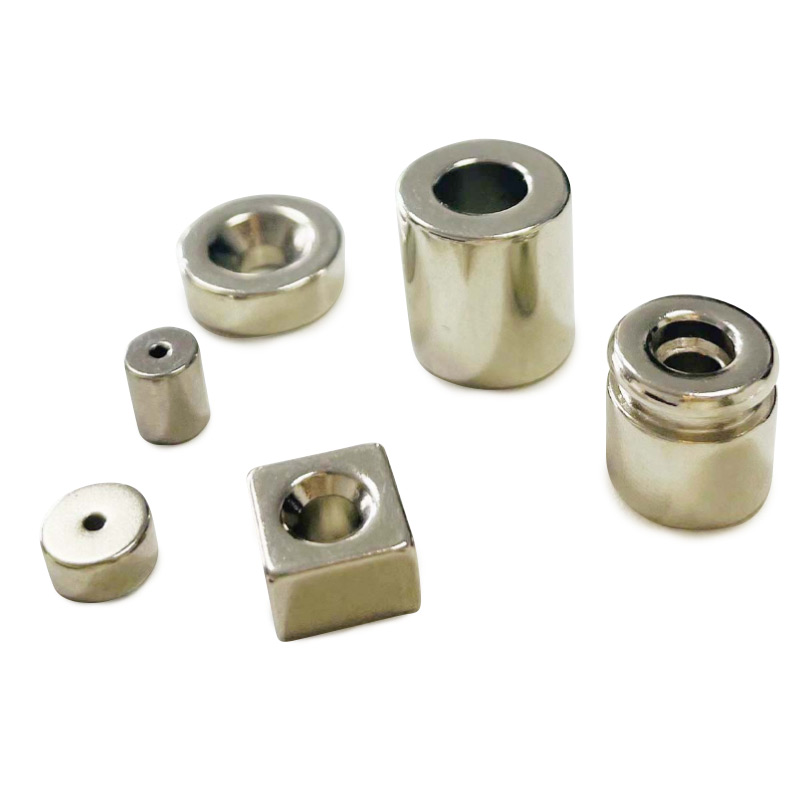
Sintered blocks are brittle, so custom neodymium magnets are shaped using diamond wire saws, surface grinders, and EDM. A precise neodymium magnets factory can achieve tolerances of ±0.05 mm on disc, arc (segment), ring, block, and rod geometries required for motor, sensor, and speaker applications.
Bare NdFeB corrodes readily. Industrial magnet suppliers apply coatings such as Ni-Cu-Ni (most common), epoxy, Zn, Sn, or parylene depending on the environment. Ni-Cu-Ni triple-layer coating typically delivers salt-spray resistance exceeding 200 hours, making it the standard choice for motors magnet manufacturer applications.
A pulsed magnetizer saturates the magnet in a field exceeding 3× the coercivity. Final inspection includes flux measurement (fluxmeter), dimensional verification (CMM), coating adhesion tests, and temperature cycling — all aligned with neodymium magnets quality standards such as IATF 16949 for automotive supply chains.
Figure 1 — NdFeB Manufacturing Process Flow
Neodymium magnets deliver an energy product (BHmax) of up to 56 MGOe — 5–10× stronger than ferrite magnets per unit volume. This power density is why sourcing from an experienced rare earth magnets manufacturer is a strategic decision, not a commodity purchase.
Figure 2 — Comparative BHmax values; NdFeB leads all commercial magnet types
Key application areas where industrial neodymium magnets are indispensable include:
The global sintered NdFeB magnet market was valued at approximately USD 14 billion in 2023 and is projected to grow at a CAGR of 9–11% through 2030, driven primarily by EV adoption and wind energy expansion. This rapid growth is creating sustained demand for every tier of the supply chain — from rare earth magnets factory operations to downstream neodymium magnets supplier networks.
Figure 3 — Global sintered NdFeB market size projection 2022–2030 (estimated)
When evaluating a magnetic manufacturer or choosing between grades, four parameters matter most: remanence (Br), coercivity (Hcj), maximum energy product (BHmax), and maximum operating temperature (Tmax). The table below compares commonly specified grades from a quality NdFeB magnets factory.
| Grade | Br (T) | Hcj (kA/m) | BHmax (MGOe) | Tmax (°C) | Typical Application |
|---|---|---|---|---|---|
| N42 | 1.29–1.32 | ≥ 955 | 40–43 | 80 | Sensors, speakers |
| N52 | 1.42–1.47 | ≥ 876 | 49–52 | 80 | High-flux assemblies |
| 38H | 1.22–1.25 | ≥ 1353 | 36–38 | 120 | BLDC motors |
| 38SH | 1.22–1.25 | ≥ 1592 | 36–38 | 150 | Servo & robot motors |
| 35EH | 1.17–1.21 | ≥ 2388 | 33–35 | 200 | EV traction motors |
Figure 4 — Radar comparison: N52 optimises flux density; 35EH optimises thermal performance
As a full-service custom magnet manufacturing partner, selecting the right surface treatment is as critical as selecting the right grade. Different operating environments demand different coating strategies.
Figure 5 — Approximate salt-spray performance by coating type (indicative values)
Choosing among magnet suppliers requires evaluating more than price. The following criteria define a credible neodymium magnets manufacturer capable of supporting long-term supply partnerships:
Ningbo Tujin Magnetic Industry Co., Ltd specialises in the manufacturing and sales of high-performance NdFeB magnets. As a dedicated NdFeB magnets manufacturer and neodymium magnets supplier, we bring years of expertise in magnetic materials, excelling in high-temperature-resistant motor magnets and fully custom NdFeB magnets with superior precision and stability. Renowned for exceptional product quality, fast lead times, and high flexibility, Tujin has become a trusted long-term partner for leading companies across multiple industries.
Designed for demanding thermal stability requirements, our NdFeB magnets maintain excellent magnetic performance across -40 °C to 200 °C or higher — a key differentiator for a quality motors magnet manufacturer. Applications span:
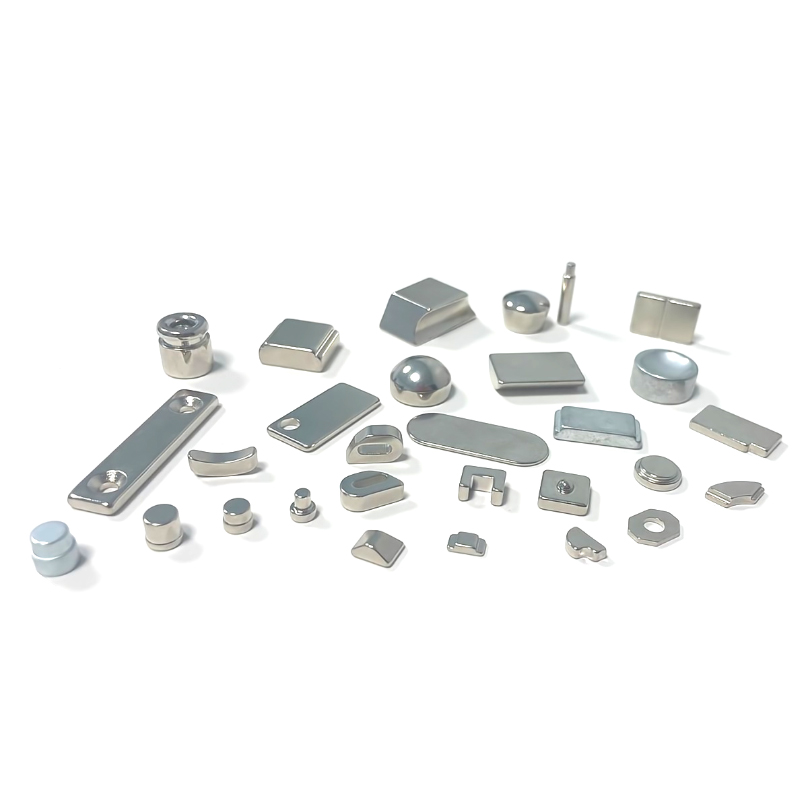
As a custom neodymium magnets specialist, Tujin supports complex precision-shaped designs — disc, block, arc (segment), ring (multi-pole magnetised), rod, and more — catering to diverse magnetic circuit requirements. Our mid-to-high-end focus ensures long-term reliability, while advanced coatings (Ni-Cu-Ni, epoxy, and others) enhance oxidation resistance and lifespan. Streamlined processes from design to mass production deliver shorter lead times for faster market entry. Beyond motors, our magnets serve speakers (audio magnets), sensors, wind power, and specialised industrial equipment.
At Tujin Magnetic Industry, we are more than a rare earth magnets factory — we are your innovation partner. Whether for standard or fully custom solutions, we deliver professionalism, efficiency, and reliability to empower your products with superior magnetic performance.
Q1. What is the difference between N-grade and H/SH/EH grade NdFeB magnets?
N-grade magnets (e.g., N42, N52) offer the highest remanence but are limited to about 80 °C. H, SH, and EH suffixes indicate progressively higher coercivity, allowing operation up to 120 °C, 150 °C, and 200 °C respectively — making them suitable for demanding motor magnet manufacturer requirements.
Q2. Can you produce custom shapes and sizes as a neodymium magnets factory?
Yes. As a full-service neodymium magnets factory, Tujin supports custom disc, block, arc (segment), ring, and rod geometries with tolerances as tight as ±0.05 mm. Complex multi-pole magnetisation patterns are also available for motor and sensor assemblies.
Q3. What quality certifications does a professional NdFeB magnets manufacturer hold?
A credible NdFeB magnets manufacturer should hold at minimum ISO 9001. For automotive supply chains, IATF 16949 certification is essential. Quality shipments should be accompanied by flux measurement data, dimensional inspection reports (CMM), and coating test results.
Q4. Which coating should I choose for high-humidity motor environments?
For high-humidity or chemically demanding environments, Ni-Cu-Ni triple-layer coating (≥ 200 hours salt spray) is the standard recommendation from most experienced rare earth magnets manufacturers. Epoxy coating is an alternative for encapsulated designs or medical applications.
Q5. What are typical lead times when ordering from a neodymium magnets supplier?
Standard lead times for sintered NdFeB are approximately 2–4 weeks for prototypes and 4–8 weeks for production runs, depending on grade complexity and order volume. A well-organised neodymium magnets supplier with in-house machining and coating can often reduce these timelines for established customers.
Q6. Are rare earth magnets from a reputable manufacturer RoHS compliant?
Quality rare earth magnets produced by responsible manufacturers are RoHS and REACH compliant. Ensure your rare earth magnets factory partner can provide material composition reports and declaration of conformity documentation with each shipment batch.
No.107 Yunshan Industry Park, Sanqishi Town, Yuyao, Ningbo, Zhejiang 315412, China
+86-18858010843
sales@tujinmagnet.com
Copyright ? Ningbo Tujin Magnetic Industry Co., Ltd. All Rights Reserved. Custom Rare Earth Magnets Factory