-
sales@tujinmagnet.com
-
+86-18858010843

Conclusion: Arc magnets are curved segments designed for cylindrical rotors in motors and generators, providing a uniform radial magnetic field, while block magnets are rectangular prisms offering concentrated, directional flux ideal for holding, sensing, and linear applications. The primary difference lies in geometry and resulting magnetic field orientation. Neodymium NdFeB Arc Magnets (also called segment magnets) match the curvature of a rotor or stator, maximizing air-gap flux density in rotating machinery. Block magnets (rectangular or square) deliver strong, focused magnetic fields along a straight axis, making them suitable for magnetic assemblies, sensors, and holding devices. For high-temperature environments, a high temperature arc magnet (SH/UH/EH grades) maintains performance up to 200°C. As a custom neodymium arc magnet manufacturer, Ningbo Tujin produces both shapes with precision tolerances and advanced coatings to meet diverse application needs.
Content
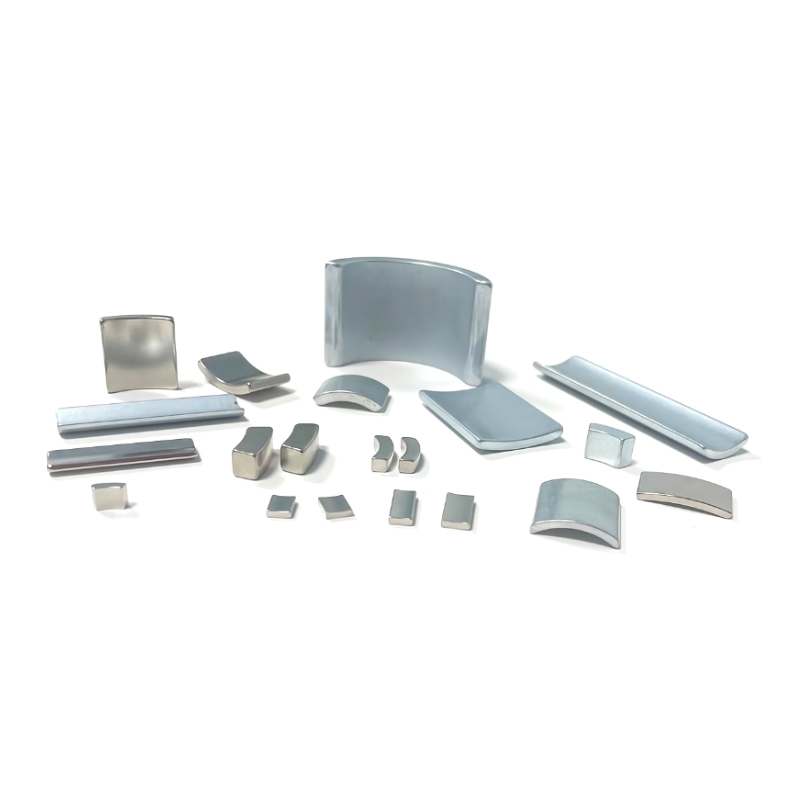
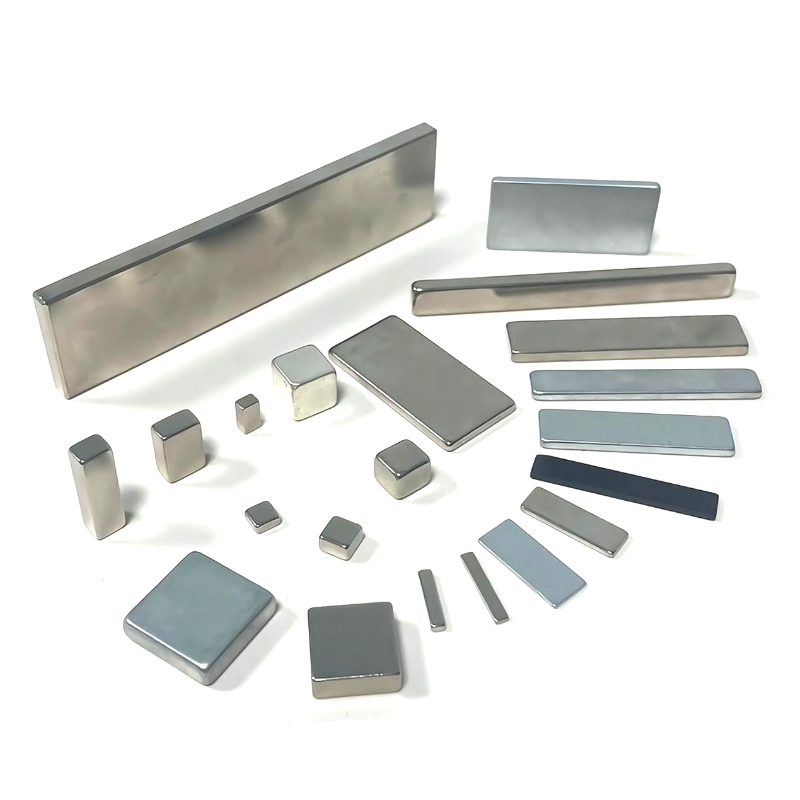
The most obvious difference between arc and block magnets is their physical form. Arc magnets are segments of a cylinder or ring, characterized by inner radius (Ri), outer radius (Ro), arc angle (typically 60°, 90°, 120°, or 180°), and axial length. Block magnets are simple rectangular prisms defined by length, width, and height. This geometric distinction dictates how each magnet type is manufactured and magnetized.
Typical Manufacturing Volume by Shape (Relative Units)
Block magnets have broader general-purpose use; arc magnets dominate motor applications
Arc magnets are typically magnetized radially (through the thickness, from inner to outer curved face) or, in some cases, parallel (across the arc). This produces a magnetic field that points radially outward or inward, essential for brushless DC motors (BLDC) and permanent magnet synchronous motors (PMSM). Block magnets can be magnetized through thickness (most common), through length, or through width, providing a straight, uniform field along the chosen axis.
For a high temperature arc magnet used in EV traction motors, radial magnetization ensures consistent back-EMF waveform even at elevated temperatures (150°C+). Block magnets, by contrast, are often used in linear actuators where a straight push-pull motion is required.
| Attribute | Arc Magnet (Segment) | Block Magnet |
|---|---|---|
| Primary shape | Curved (cylindrical segment) | Rectangular prism |
| Magnetization direction | Radial (through thickness) or parallel | Through thickness, length, or width |
| Typical magnetic field pattern | Radial field for rotating machines | Straight, concentrated field |
| Common applications | BLDC motors, servo motors, generators, wind turbines | Magnetic holders, sensors, speakers, magnetic separators |
| Manufacturing complexity | Higher (requires curved tooling, specialized grinding) | Lower (standard cutting and slicing) |
| Cost for same volume | Typically 20-40% higher due to processing | More economical |
Choosing between arc and block magnets depends entirely on the magnetic circuit design and mechanical integration. Below are typical use cases for each shape.
Market Demand Distribution by Magnet Shape (Estimated)
Block magnets represent the largest segment due to wide industrial and consumer use
Both arc and block magnets start as sintered NdFeB blocks, but post-processing differs significantly. Block magnets are produced by slicing sintered blocks into rectangular wafers using diamond wire or inner-diameter saws. Arc magnets require additional contour grinding to achieve precise inner and outer radii, as well as specialized magnetizing fixtures for radial orientation.
As a custom neodymium arc magnet manufacturer, Ningbo Tujin invests in precision grinding equipment and radial magnetizing fixtures to ensure consistent arc geometry and magnetic orientation. For Neodymium NdFeB Arc Magnets requiring high-temperature stability, we apply SH/UH/EH grade materials and epoxy coatings to resist oxidation at elevated temperatures.
Ningbo Tujin Magnetic Industry Co., Ltd specializes in the manufacturing and sales of high-performance NdFeB magnets. With years of expertise in magnetic materials, we excel in providing high-temperature-resistant motor magnets and customized magnetic solutions with superior precision and stability. Renowned for our exceptional product quality, fast lead times, and high flexibility, we have become a trusted long-term partner for leading companies across multiple industries.
Core Product Advantages:
Industry-Wide Solutions: Beyond motors, our magnets are widely used in speakers (audio magnets), sensors, wind power, etc. At Tujin Magnetic Industry, we are more than a manufacturer & supplier — we are your innovation partner. Whether for standard or custom solutions, we deliver professionalism, efficiency, and reliability to empower your products with superior magnetic performance!
Whether you require Neodymium NdFeB Arc Magnets for a high-efficiency motor or block magnets for a sensing application, Tujin provides engineering support and flexible manufacturing. Our high temperature arc magnet grades ensure reliable operation in demanding thermal environments, and as a dedicated custom neodymium arc magnet manufacturer, we deliver tailored solutions to meet your specific magnetic circuit requirements.
No.107 Yunshan Industry Park, Sanqishi Town, Yuyao, Ningbo, Zhejiang 315412, China
+86-18858010843
sales@tujinmagnet.com
Copyright ? Ningbo Tujin Magnetic Industry Co., Ltd. All Rights Reserved. Custom Rare Earth Magnets Factory