-

sales@tujinmagnet.com
-

+86-18858010843

Content
Alnico magnets are permanent magnets made primarily from aluminum, nickel, cobalt, and iron, with small additions of copper and titanium. Developed in the early 1930s, alnico was the strongest permanent magnet family in the world until rare-earth magnets such as samarium cobalt and neodymium-iron-boron appeared in the late twentieth century. For engineers, the practical conclusion is simple: alnico remains the best material when the operating temperature exceeds 300°C or when a magnet must survive for decades without a coating, but it cannot compete with neodymium magnets on magnetic strength or resistance to demagnetization.
The name itself comes from its main constituents: al from aluminum, ni from nickel, and co from cobalt. Commercial alnico grades typically contain 8 to 12 percent aluminum, 15 to 26 percent nickel, 5 to 24 percent cobalt, up to about 6 percent copper, a small amount of titanium, and the balance iron. This alloy system produces a two-phase microstructure in which tiny ferromagnetic particles are embedded in a weakly magnetic matrix. When the alloy is cooled in a strong magnetic field during heat treatment, these particles become elongated and aligned, giving the finished magnet a preferred direction of magnetization.
In terms of magnetic performance, anisotropic cast alnico grades reach a maximum energy product of about 10 MGOe, which was impressive in the mid-twentieth century but is modest compared with the 28 to 52 MGOe available from modern neodymium magnets. Alnico offers a residual induction of up to roughly 13.5 kG, which is still high enough for many instruments and sensors. Its intrinsic coercivity, however, is unusually low: typical values range from about 480 to 2,000 Oe, meaning alnico is easy to magnetize and also easy to demagnetize if it is exposed to an opposing magnetic field, mechanical shock, or excessive heat.
The most remarkable characteristic of alnico is thermal stability. Depending on the grade, alnico can operate continuously at temperatures between 450°C and 550°C, with a Curie temperature near 860°C. Its reversible temperature coefficient of remanence is only about -0.02 percent per degree Celsius, which is five to ten times better than that of neodymium magnets. This is why alnico is still specified in aircraft instruments, speed sensors, flow meters, ignition magnetos, microphones, and specialized generators where a stable magnetic output over a wide temperature range matters more than raw magnetic strength.
As a neodymium magnet manufacturer, our engineering team routinely reviews alnico specifications with customers who want to reduce the size of a motor or sensor assembly. This guide explains what alnico does well, where it falls short, and how to compare it with the other permanent magnet materials available on the market today. You will also find practical guidance on grades, manufacturing processes, handling, and purchasing, so you can make a confident material selection for your next project.
Understanding the composition of alnico is essential for anyone who evaluates material certificates, compares supplier quotes, or specifies a magnet for a new product. Alnico is not a fixed recipe; the alloy is adjusted for each grade to balance remanence, coercivity, temperature resistance, and manufacturability.
| Element | Cast Alnico (wt%) | Sintered Alnico (wt%) |
|---|---|---|
| Aluminum | 8 - 12 | 8 - 11 |
| Nickel | 15 - 26 | 18 - 24 |
| Cobalt | 5 - 24 | 10 - 20 |
| Copper | 2 - 6 | 2 - 5 |
| Titanium | 0 - 1 | 0 - 0.5 |
| Iron | Balance | Balance |
In simple terms, aluminum and nickel are the elements that give the alloy its permanent magnet behavior. Cobalt raises the saturation magnetization and improves the Curie temperature, which is why alnico grades with a higher cobalt content tend to have better high-temperature performance. Copper helps control the precipitation process, and titanium is added in some high-coercivity grades such as Alnico 8 to refine the microstructure.
The magnetic behavior of alnico comes from a fine mixture of two body-centered cubic phases, usually referred to as alpha-1 and alpha-2. The alpha-1 phase is rich in iron and cobalt and is strongly ferromagnetic. The alpha-2 phase is rich in aluminum and nickel and acts as a non-magnetic or weakly magnetic matrix. During a controlled cooling cycle in the presence of a magnetic field, the alpha-1 phase precipitates as tiny elongated rods that align with the applied field. This shape anisotropy is the reason an anisotropic alnico magnet is much stronger in one direction than in others.
Because the coercivity of alnico is low, the magnetization can be reversed by a relatively modest opposing field. In practical terms, this means the magnet must be handled carefully and the magnetic circuit must be designed to avoid strong demagnetizing influences. On the positive side, alnico can be fully magnetized at moderate field strengths, and it can be re-magnetized after partial demagnetization without any permanent damage to the material.
Alnico tolerates continuous service at high temperature better than any other commercial permanent magnet family. Standard grades are rated at 450°C to 525°C, while grades such as Alnico 8 and Alnico 9 are usable at up to 550°C. The reversible loss of remanence over the operating range is very small, which is why alnico is the material of choice in precision instruments that must hold calibration over a wide thermal envelope. Once the temperature approaches the maximum rated value, irreversible losses can start to occur, so the load line and the maximum operating point should always be checked against the supplier's demagnetization curves.
Mechanically, alnico is hard and brittle, similar in behavior to ceramic ferrite. It cannot be bent, drilled, or tapped in the finished state. Dimensional adjustments are made by grinding, electrical discharge machining, or laser cutting. The density is about 7.3 g/cm3, and the hardness is roughly 50 HRC, which means the material will chip if it is dropped or struck. Alnico also conducts electricity reasonably well, so eddy currents can develop in alternating magnetic fields; segmenting the magnet or laminating the magnetic assembly is recommended for high-frequency applications.
From a corrosion standpoint, alnico is outstanding. It does not need a nickel, zinc, or epoxy coating, which simplifies assembly and eliminates the risk of coating delamination. Even in humid conditions, the surface may oxidize slightly without a significant change in magnetic output. Long-term exposure to salt spray is still a consideration, and the magnet should be sealed or protected inside the housing if salt or aggressive chemicals are present.
Alnico is not a single material. Manufacturers classify alnico into standard grades, usually designated as Alnico 2, 3, 4, 5, 6, 8, and 9, and each grade has a different combination of remanence, coercivity, energy product, and temperature capability. A buyer who understands these grades can avoid specifying an overqualified material that raises cost or an underqualified grade that fails in the field.
| Grade | Type | Br (kG) | Hcj (Oe) | BHmax (MGOe) | Max Working Temp (°C) |
|---|---|---|---|---|---|
| Alnico 2 | Isotropic | 7.5 | 560 | 1.7 | 450 |
| Alnico 3 | Isotropic | 7.0 | 480 | 1.35 | 450 |
| Alnico 4 | Isotropic | 5.6 | 720 | 1.35 | 450 |
| Alnico 5 | Anisotropic | 12.8 | 640 | 5.5 | 525 |
| Alnico 6 | Anisotropic | 10.5 | 750 | 3.9 | 525 |
| Alnico 8 | Anisotropic | 8.2 | 1,650 | 5.3 | 550 |
| Alnico 9 | Anisotropic | 10.5 | 1,500 | 7.5 | 550 |
Isotropic alnico grades have the same magnetic properties in every direction. They are easier to magnetize and can be magnetized after assembly, but their remanence and energy product are lower. Anisotropic alnico grades are aligned during heat treatment, so they are much stronger along the orientation axis but much weaker in other directions. Anisotropic grades also have a clearly marked magnetization direction, which is important for correct installation in a magnetic circuit.
Cast alnico is produced by melting the alloy and pouring it into a mold. It generally offers the highest magnetic properties, especially in large and thick sections, and is the first choice when maximum energy product is required. Sintered alnico is produced by pressing and sintering fine powder. It has finer grain structure, better mechanical strength, tighter dimensional tolerance, and is more suitable for small or thin-wall shapes. The magnetic properties of sintered grades are slightly lower than cast grades of the same number, but the difference is rarely decisive in sensor and instrument applications.
When selecting a grade, Alnico 5 is the most common general-purpose choice because it offers the best combination of remanence, energy product, and temperature capability. Alnico 8 and Alnico 9 are preferred when the magnet will face a stronger demagnetizing field, such as in an open circuit with a large air gap. Alnico 2 and Alnico 6 are often used in smaller instruments where the shape is complex and full anisotropic alignment is difficult to achieve.
From a procurement perspective, always request the actual demagnetization curve, not just the table of single-point values. The BH curve reveals how the magnet behaves at different load lines and temperatures, which is the information your design engineer actually needs to calculate a reliable operating point.
The manufacturing route determines the magnetic performance, dimensional accuracy, and cost of an alnico magnet. Casting and sintering are the two dominant processes, and each has distinct advantages that affect both the price and the suitability of the finished part.
Alnico is too hard for conventional turning or milling. Grinding with diamond or silicon carbide wheels is the standard method for producing flat surfaces, while electrical discharge machining is used for holes, slots, and complex profiles. Tolerances of plus or minus 0.05 mm can be held on ground surfaces, while as-cast surfaces are typically held to plus or minus 0.3 mm or looser. Because the material is brittle, sharp edges should be avoided in the design, and the magnet should be protected from impact during handling and mounting.
A reliable alnico supplier verifies chemical composition, magnetic alignment, density, and dimensional accuracy on every batch. Magnetic testing usually involves measuring the demagnetization curve of sample pieces with a hysteresisgraph, then checking each production magnet for flux or magnetic moment against the specification. If your application requires high consistency across thousands of pieces, ask the manufacturer for statistical process control data and the inspection method used for dimensional verification.
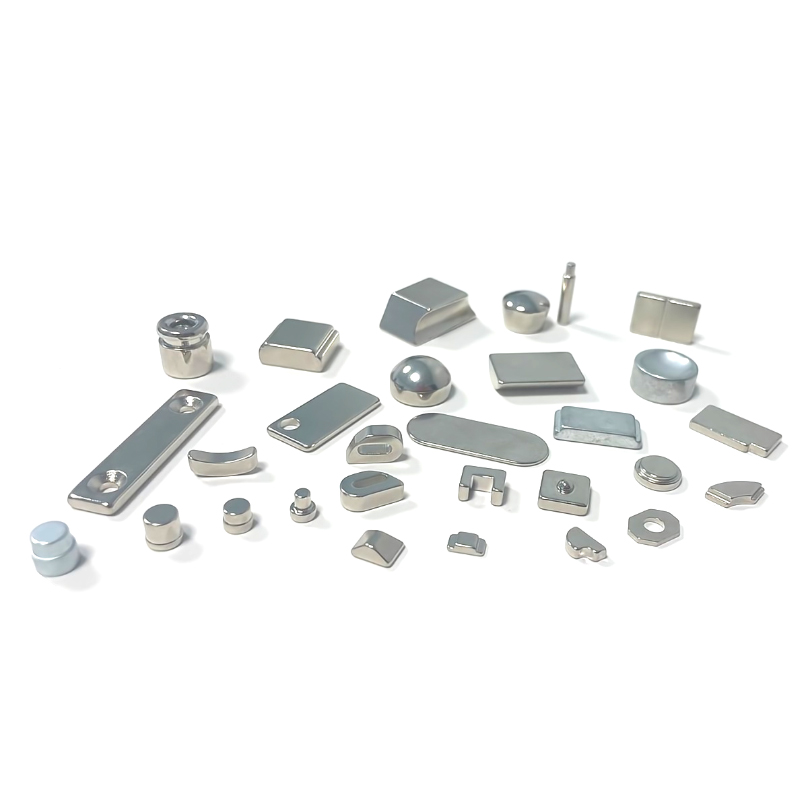
For complex three-dimensional geometries, cast alnico requires expensive tooling and careful gating design to avoid shrinkage defects. If your design demands a complicated shape and the operating temperature stays below about 230°C, custom-shaped neodymium magnets can often reproduce the same geometry with a much higher energy product and a lower total system cost, because the magnet can be smaller and the surrounding steel structure can be reduced.
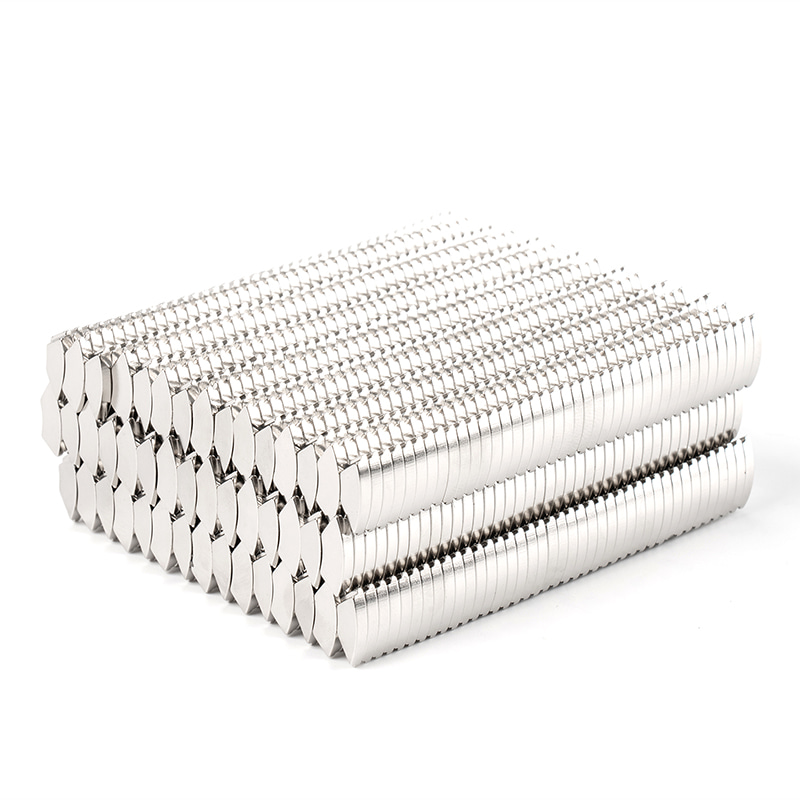 Custom Special Shapes Neodymium Ndfeb Magnets ManufacturerNingbo Tujin Magnetic Industry Co., Ltd. is China custom special shapes neodymium magnets manufacturer and special shapes ndfeb magnets s...View Product →
Choosing a permanent magnet material is a multi-variable engineering trade-off. Magnetic strength, temperature resistance, demagnetization stability, corrosion behavior, weight, and price all pull the decision in different directions. Four permanent magnet families dominate modern industrial design: alnico, ferrite, samarium cobalt, and neodymium-iron-boron. Each family has its own place, and the right choice depends on the application envelope rather than on a single datasheet column.
Before we set alnico side by side with other permanent magnet families, one specification should be examined first: maximum working temperature. The bar chart below shows the typical continuous operating temperature of five common permanent magnet materials. These values are conservative limits for standard commercial grades, not the absolute maximums that laboratory samples can survive. Special high-temperature grades of NdFeB and samarium cobalt can extend the limit further, but those grades normally cost more and deliver slightly reduced magnetic strength. Use this chart as an initial screening tool, and check the supplier's demagnetization curves before finalizing a material selection.
Alnico holds the top position in the chart, and that is exactly why it is still specified in hot environments such as aircraft engines, industrial sensors, and process instrumentation. The gap between alnico and standard NdFeB is enormous: a standard neodymium magnet loses performance rapidly above 80°C, while cast alnico can serve continuously at 550°C. High-temperature NdFeB grades close part of the gap, but above 230°C they cannot support reliable continuous duty in most magnetic circuits. Samarium cobalt can survive up to 350°C, which makes it the strongest rare-earth option for extreme heat, yet it is expensive and just as brittle as alnico. Ferrite operates only up to about 250°C and has such a low energy product that it is rarely considered for precision instruments where alnico is available. What the chart does not show is magnetic strength, and that is the second major factor in material selection. Alnico offers the best temperature resistance but only reaches a maximum energy product of about 10 MGOe. Neodymium magnets, by comparison, reach 30 to 52 MGOe, which means a magnet several times smaller can deliver the same flux in a given circuit. Demagnetization resistance is a third factor hidden in the chart: NdFeB resists opposing fields far better than alnico, because its intrinsic coercivity is often more than ten times higher. For a motor rotor exposed to armature reaction fields, the low coercivity of alnico can cause irreversible flux loss unless the operating point is carefully designed. The practical decision, therefore, is not which material is stronger in an absolute sense, but which material fits the temperature, space, and magnetic environment of the specific application.
| Property | Alnico | Ferrite | Samarium Cobalt | Neodymium (NdFeB) |
|---|---|---|---|---|
| Residual induction Br (kG) | 5.6 - 13.5 | 2.3 - 4.5 | 8.0 - 11.6 | 10.0 - 15.0 |
| Intrinsic coercivity Hcj (Oe) | 480 - 2,000 | 2,000 - 4,000 | 8,000 - 30,000 | 12,000 - 30,000 |
| Max energy product BHmax (MGOe) | 1.35 - 10 | 0.8 - 5.0 | 16 - 32 | 28 - 52 |
| Max working temperature (°C) | 450 - 550 | 250 | 250 - 350 | 80 - 230 |
| Temperature coefficient of Br (%/°C) | -0.02 | -0.20 | -0.03 | -0.12 |
| Corrosion resistance without coating | Excellent | Good | Good | Poor, coating required |
| Relative material cost | Medium | Low | High | Medium to high |
The comparison table reveals the classic substitution scenario. If an existing product uses alnico because it is exposed to temperatures above 250°C, then samarium cobalt is the only rare-earth replacement that can match the thermal envelope. If the actual maximum temperature is below 200°C, a neodymium magnet with a high-temperature grade can replace alnico while reducing the magnet volume dramatically. This is why many motor and sensor manufacturers have converted legacy alnico designs to NdFeB over the past two decades. The conversion is not always trivial: the low coercivity of alnico means that some circuits depend on the magnet being easy to demagnetize, and replacing it with a high-coercivity NdFeB magnet changes the circuit behavior, the magnetizing fixture, and the assembly process.
Cost also plays a major role in the decision. Alnico contains cobalt, which is a relatively expensive and strategically important raw material. Ferrite is far cheaper but much weaker. NdFeB offers the best strength-to-cost ratio in small magnets, but its price is sensitive to rare-earth market fluctuations. Samarium cobalt is the most expensive option per unit of magnetic flux and is usually reserved for military, aerospace, and extreme-temperature applications. A qualified magnet supplier should be able to provide a costed comparison based on the actual air gap, operating temperature, and required flux density of your magnetic circuit.
Alnico is often described as a vintage material, but it remains a serious engineering option in several well-defined application areas. Understanding these areas helps you decide whether to stay with alnico or migrate to a rare-earth solution.
Alnico is still the preferred material in speed and position sensors, tachometers, ignition magnetos, flow meters, microphones, and other precision instruments. The reasons are the same in every case: a linear demagnetization curve, extremely stable output over temperature, and no need for a protective coating. In many of these devices, the magnet is assembled into a sealed housing and never exposed to dirt or moisture, so the corrosion resistance of alnico is a long-term reliability benefit. Alnico also appears in hysteresis motors, where its moderate coercivity produces the torque characteristic required by the motor design.
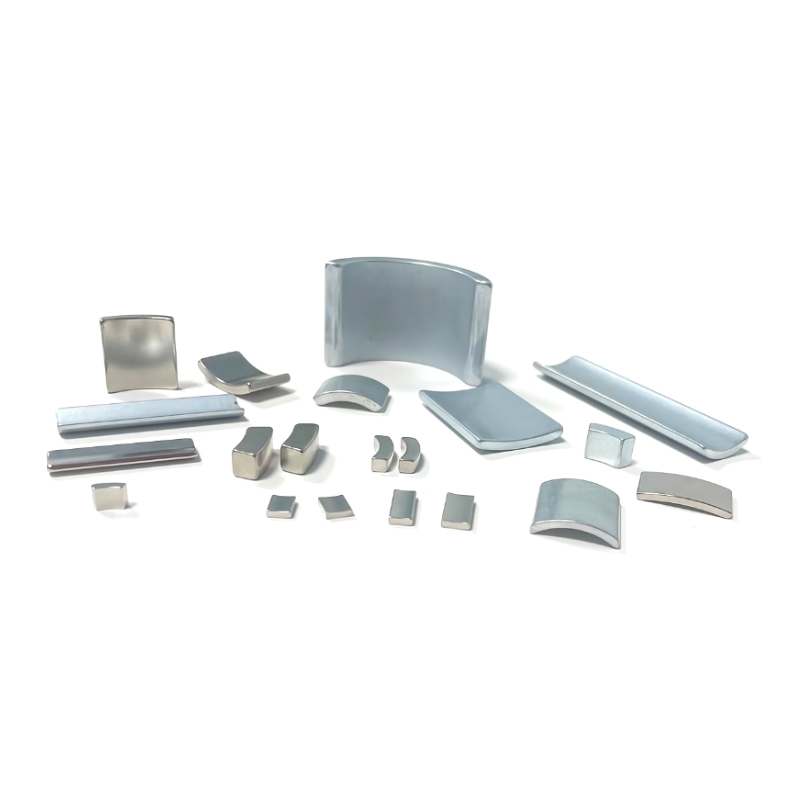
The situation is completely different in modern compact equipment. Electric vehicle traction motors, servo motors, brushless DC motors, robotic joint actuators, and high-efficiency compressors all require a magnetic flux density that alnico simply cannot deliver in the available space. In these applications, arc-shaped neodymium magnets are assembled into the rotor to generate a strong radial magnetic field while keeping the motor small and light. The high energy product of NdFeB allows designers to reduce the rotor diameter, cut copper losses, and improve the overall efficiency of the drive system.
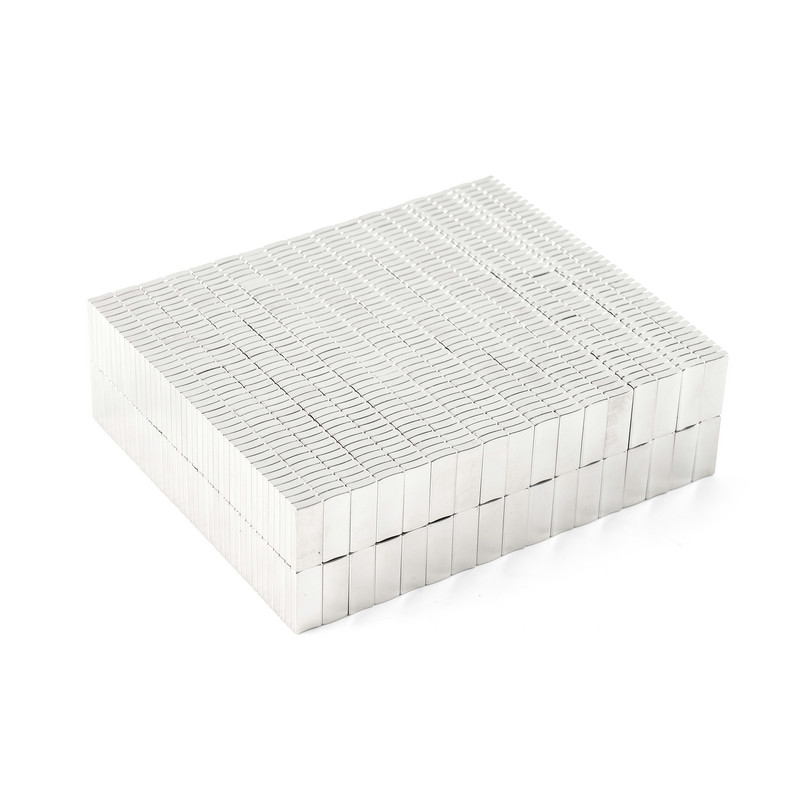 Custom Neodymium NdFeB Arc Magnets Manufacturer, SuppliersNingbo Tujin Magnetic Industry Co., Ltd. is China Neodymium Arc magnet manufacturer and neodymium Ndfeb Arc magnets suppliers, Our compan...View Product →
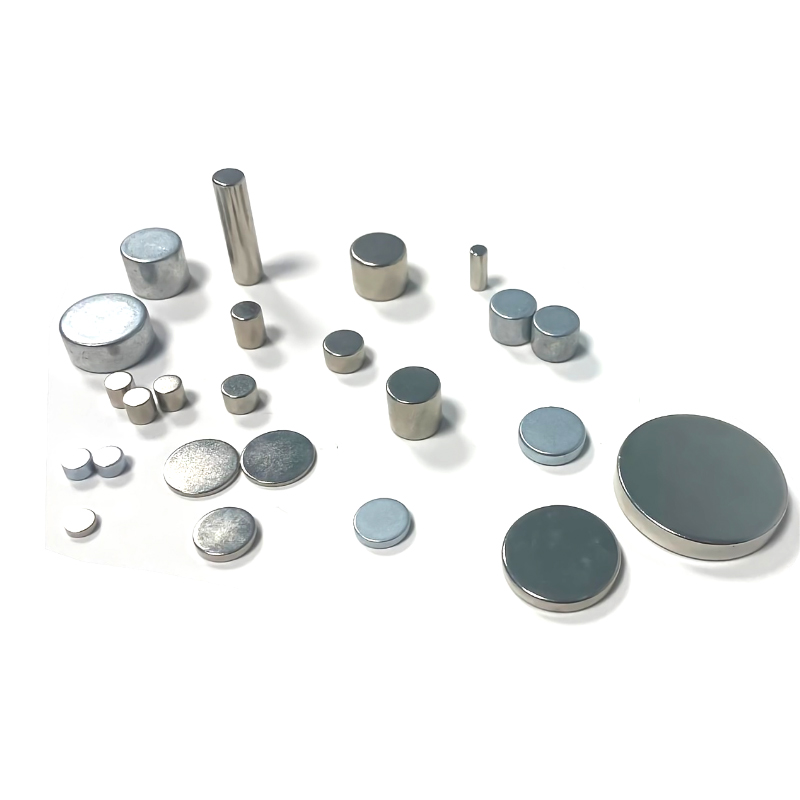
Sensors and consumer devices have followed the same path. Compact position sensors, door locks, magnetic couplings, and small holding assemblies now use neodymium disc magnets because a thin disc provides the same field strength as a much larger alnico magnet. When the working temperature stays below 200°C and the environment can be controlled with a simple epoxy or nickel coating, NdFeB offers a decisive size and cost advantage.
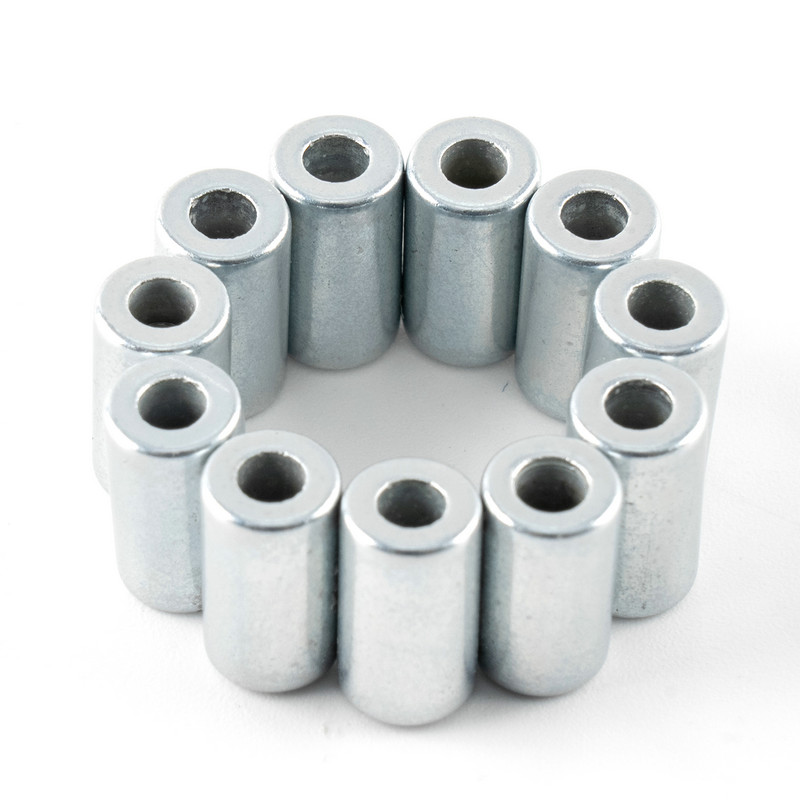 Custom Neodymium NdFeB Disc Magnets Manufacturer, SuppliersNingbo Tujin Magnetic Industry Co., Ltd. is China Neodymium disc magnet manufacturer and neodymium Ndfeb disc magnets suppliers, Our comp...View Product →
Choose alnico when
|
Choose NdFeB when
|
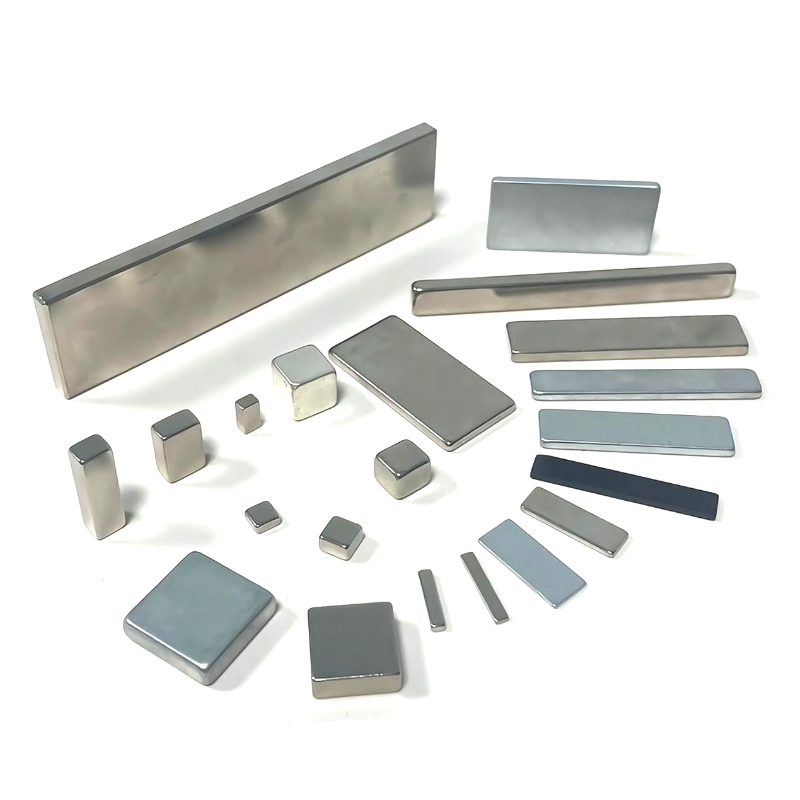
The classic shape for sensors, reed switches, and holding assemblies where a straight magnetic field is needed.
A traditional configuration that concentrates flux in a small air gap and reduces the external stray field.
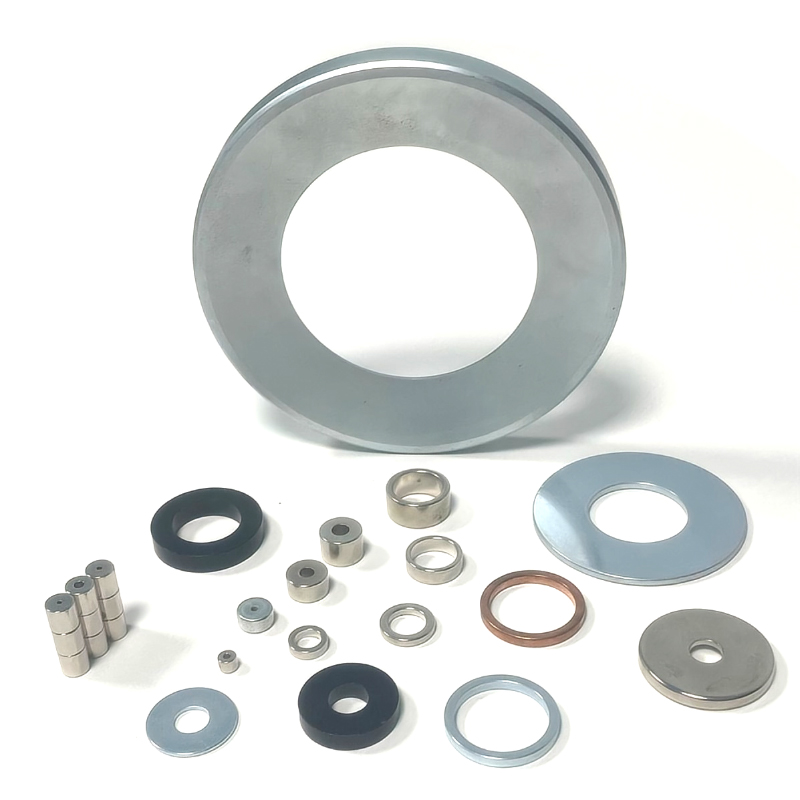
Used for tachometers and rotary encoders where a magnet must fit around a shaft without blocking the axis.
Cast into circular segments for older motor designs and magnetic couplings with radial magnetization.
Complex instrument housings and sensor packages are produced as investment castings to reduce assembly steps.
Alnico magnets are robust in service but surprisingly easy to demagnetize during handling. Since the intrinsic coercivity of alnico is low, even a modest opposing magnetic field or a mechanical shock can reduce the magnetic output permanently. A good handling and maintenance plan prevents flux loss and keeps the product within specification.
The main causes of demagnetization are an opposing magnetic field, physical shock, vibration, and temperature above the rated maximum. Placing alnico magnets near a strong NdFeB magnet with the wrong pole orientation can partially erase the magnetization. Dropping a magnet onto a steel table can misalign magnetic domains at the impact point. Removing a magnet from a steel assembly creates a strong demagnetizing field in the gap as the air path opens, which can also cause irreversible loss. Even a simple test like sliding two alnico magnets together with opposite poles facing can reduce their strength.
Alnico requires almost no maintenance in normal service. The surface may develop a thin oxide film over time, but magnetic properties remain stable. If a magnet becomes contaminated with oil or dust, it can be cleaned with a mild solvent and a lint-free cloth. Chipped corners are a cosmetic issue in most applications, but a deep crack may indicate internal stress that could lead to further fracture.
One advantage of alnico is that it can be fully re-magnetized after partial demagnetization. Because alnico saturates at a relatively low field strength, most magnet suppliers can restore the original flux value by re-magnetizing the part in a pulse coil. This is a useful recovery path when a prototype has been dropped or when an assembly was incorrectly magnetized during development. In production, however, the magnetizing fixture should be designed around the final assembly geometry so that every magnet is saturated in the correct direction before the product leaves the factory.
For design engineers, the correct approach is to calculate the load line of the magnetic circuit and verify that it stays above the knee of the demagnetization curve at the maximum operating temperature. If the load line is too low, a grade with higher coercivity, such as Alnico 8, should be selected. Alternatively, adding a soft magnetic pole piece near the magnet can reduce the demagnetizing field and protect the operating point.
Whether you are an OEM engineer, a purchasing manager, a wholesaler, or a distributor, sourcing alnico magnets requires more discipline than ordering a standard steel part. The same grade number from two different suppliers can have noticeably different properties, so the purchasing process should include a clear specification and a documented verification method.
Cast alnico is preferred when the design requires the highest magnetic output, large cross-sections, or a unique near-net shape that can be invested cast. Lead times for cast tooling are generally longer, and the minimum order quantity depends on the mold design and the part mass. Sintered alnico is preferred for small parts, thin walls, and tight tolerances. Sintering also supports higher volume production with better part-to-part consistency, which is critical in sensor assemblies where every magnet must produce a similar signal level.
The price of alnico is strongly influenced by cobalt, which is one of the more volatile raw materials in the magnet industry. Machining and inspection add further cost, especially for complex shapes that require electrical discharge machining or multiple grinding operations. Magnetizing is a relatively small portion of the cost, but the fixture design must be considered early if the magnet is to be magnetized in the final assembly rather than as a loose part.
An experienced permanent magnet manufacturer brings more than shipping boxes; it brings material selection expertise. Tujin Magnetic does not produce alnico, but because most alnico inquiries arrive from motor, sensor, and instrument manufacturers, our engineering team regularly reviews the operating envelope and proposes the optimal rare-earth solution where the temperature allows. In many cases, a high-temperature NdFeB grade replaces alnico with a smaller magnet, a lighter assembly, and a lower total system cost. In cases below 200°C, the conversion is usually straightforward. In cases above 250°C, we recommend staying with alnico or switching to samarium cobalt, and we can support the evaluation with technical comparisons.
For wholesale buyers and distributors, the key purchasing criteria are consistent dimensional tolerances, stable magnetic output across batches, and reliable delivery. Ask for a certificate of conformance on every lot, and request a pre-shipment inspection report if the parts will be used in a critical safety application. A written quality agreement that defines sampling plans, acceptance criteria, and corrective action procedures will prevent most disputes before they start.
These are the most common questions we receive from engineers and buyers who are comparing alnico magnets with rare-earth alternatives. The answers are based on standard commercial material data and realistic application experience.
Are alnico magnets better than neodymium magnets?There is no absolute winner. Alnico is better above 250°C, in corrosive environments without a coating, and in applications that demand a very stable magnetic output over decades. Neodymium magnets are better below 200°C because they deliver two to five times more magnetic energy in a much smaller volume. The right choice depends entirely on the operating temperature, the available space, and the demagnetizing field in the circuit. |
How hot can alnico magnets get?Alnico can operate continuously at temperatures from 450°C to 550°C depending on the grade. Alnico 2, 3, and 4 are rated at about 450°C; Alnico 5 and 6 at about 525°C; Alnico 8 and 9 at about 550°C. The Curie temperature, where the material loses its ferromagnetic behavior entirely, is near 860°C, but continuous operation well above the rated working temperature causes irreversible loss. |
Why do alnico magnets lose strength?Alnico has low intrinsic coercivity, so it is easily demagnetized by an opposing magnetic field, mechanical shock, vibration, or overheating. Dropping an alnico magnet, knocking two magnets together, or exposing the magnet to a strong alternating field can permanently reduce its output. The material can usually be re-magnetized to its full original value, but the demagnetization event should be prevented in the first place. |
Do alnico magnets need a protective coating?No. Alnico is naturally corrosion resistant and does not need a nickel, zinc, or epoxy coating. This is one of its key advantages in high-temperature and long-life applications. In severe salt spray environments, the magnet can still be protected within the housing or with a thin passivation treatment, but a standard alnico magnet will perform well in normal humidity and industrial atmospheres without any coating. |
Is cast or sintered alnico better?Cast alnico offers the highest magnetic properties, especially in large cross-sections, and is the best choice when maximum energy product is required. Sintered alnico offers tighter tolerances, better mechanical strength, and more uniform properties in small and thin-wall shapes. For a large motor or separator magnet, choose cast. For a precision sensor magnet, choose sintered. |
Can I replace alnico magnets with neodymium magnets?In most applications below 200°C, yes. A high-temperature NdFeB grade can replace alnico with a smaller magnet and a lower total system cost, provided the demagnetizing field is within the capability of the chosen grade. The conversion requires a calculation of the new magnet volume, a check of the load line at maximum temperature, and a review of the magnetizing fixture. Above 250°C continuous, alnico or samarium cobalt remain the correct choices. |
Ningbo Tujin Magnetic Industry Co., Ltd. is a neodymium magnet manufacturer focused on high-temperature motor magnets and custom-shaped solutions for global industrial customers. Although our production line is built around NdFeB rather than alnico, our engineering team supports customers who are evaluating material replacement, comparing magnetic performance, or optimizing a magnet shape for a new motor or sensor design. We understand the limits of alnico, the strengths of rare-earth materials, and the practical steps needed to convert a legacy magnet specification into a modern, cost-effective solution.
If you are working through a material selection or need a custom rare-earth magnet for an existing design, the following resources from our site provide the technical foundation for the discussion.
Explore magnetic performance, dimension tolerances, surface coatings, corrosion resistance, and magnetization direction for neodymium magnets.
Review the complete catalog of neodymium magnet shapes, including arc, block, countersunk, cylinder, disc, and ring magnets.
Read how temperature variations affect the performance of neodymium ring magnets in real engineering environments.
For a direct engineering discussion about your magnet application, including a cost comparison between alnico and rare-earth materials, contact our sales and engineering team with your drawing, operating temperature, and required flux density. We respond with a technical proposal that matches your volume, tolerance, and delivery requirements.
Having a blueprint in mind, working hard and forging ahead
 No.107 Yunshan Industry Park, Sanqishi Town, Yuyao, Ningbo, Zhejiang 315412, China
 +86-18858010843
 sales@tujinmagnet.com
Copyright ? Ningbo Tujin Magnetic Industry Co., Ltd. All Rights Reserved. Custom Rare Earth Magnets Factory