-

sales@tujinmagnet.com
-

+86-18858010843

Content
Cobalt magnetization is the reason a permanent magnet can keep delivering full flux inside a traction motor at 200 °C, hour after hour, while a cheaper material would quietly shed part of its field. For engineers and buyers comparing magnet options, this single material property explains more about your quotation list than any catalog page. The direct answer to the question most people start with is yes: cobalt is strongly ferromagnetic at room temperature. It reaches a saturation magnetization of roughly 1,440 emu per cubic centimeter (equivalent to 1.44 MA/m), carries about 1.7 Bohr magnetons per atom, and retains spontaneous magnetization up to a Curie temperature of about 1115 °C, the highest of the three classic ferromagnetic elements.
What complicates the commercial picture is that almost nobody buys pure cobalt as a magnet. Its value shows up inside samarium-cobalt magnets, alnico grades, cobalt-iron laminations, and the cobalt-modified NdFeB formulations that an experienced NdFeB magnet manufacturer adjusts when a motor must run hot. Understanding how cobalt magnetizes, and what limits that magnetization, tells you where each of those products fits and where the money in your bill of materials is really going.
This guide covers the numbers that define cobalt magnetization, the atomic physics behind it, the factors that raise or lower it, the commercial magnet families built on it, motor selection practice, specification and testing guidance, and a detailed FAQ. The emphasis stays practical throughout: what the property means for the people who purchase, design with, or supply magnets.
Cobalt is ferromagnetic with a saturation magnetization near 1,440 emu/cm3 and a Curie temperature of about 1115 °C, and those two numbers are the foundation of every high-temperature magnet on the market.
Magnetization, written M in every textbook, is the net magnetic moment packed into a unit volume of material. Suppliers quote it in emu/cm3 in the CGS system or in amperes per meter in SI units, and the two scales convert directly, since 1 emu/cm3 equals 1,000 A/m. When a magnet supplier talks about how strongly a material can be magnetized, the relevant ceiling is the saturation magnetization, the value reached when every atomic moment points the same way. For cobalt, that ceiling sits near 1,440 emu/cm3, equivalent to a saturation polarization of roughly 1.8 tesla. Iron goes higher, at about 1,715 emu/cm3, and nickel falls far lower, at about 485 emu/cm3, which places cobalt second among the practical elements but first in thermal endurance.
The phrase spontaneous magnetization deserves a precise definition, because it separates cobalt from ordinary magnetic-sounding materials. Below its Curie temperature, cobalt aligns its atomic moments parallel to its neighbors purely through internal quantum forces, with no external field applied. Each region that aligns this way is a domain, and the magnetization inside a domain exists whether or not you ever put the material near a magnet. What an external field changes is not the magnetization within domains but the arrangement of domains across the piece, and that distinction drives both how magnets are manufactured and how they fail.
Remanence, abbreviated Br on datasheets, is the third number buyers actually pay for. It is the flux density that remains after a strong magnetizing field is removed, and it always lands below the saturation value because the domain structure partially relaxes back. When you compare a 1.4 tesla NdFeB arc with a 1.1 tesla Sm2Co17 arc, you are comparing remanence values, not saturation values. The gap between a material's saturation magnetization and its achievable remanence measures how well the microstructure freezes the magnetized state in place.
Each cobalt atom contributes a moment of about 1.7 Bohr magnetons, a count of the elementary magnets that atomic physics provides. The table below gathers the values worth keeping at hand during design reviews.
| Property | Typical value | What it means in practice |
|---|---|---|
| Saturation magnetization | Approx. 1,440 emu/cm3 (1.44 MA/m) | Ceiling of how strongly cobalt can be magnetized |
| Saturation polarization | Approx. 1.8 T | Flux density if every domain were perfectly aligned |
| Magnetic moment per atom | Approx. 1.7 Bohr magnetons | The raw atomic budget behind all cobalt magnetization |
| Curie temperature | Approx. 1115 °C | Point where spontaneous magnetization disappears |
| Crystal structure (room temperature) | Hexagonal close-packed (hcp) | Source of the strong uniaxial anisotropy |
| Anisotropy constant K1 | Approx. 0.4-0.5 MJ/m3 | Resistance of the easy axis to magnetization rotation |
| Density | 8.90 g/cm3 | Needed for rotor mass and inertia calculations |
Two of these numbers do most of the commercial work. The high saturation magnetization gives cobalt-bearing alloys the raw flux they need to compete with iron-rich compositions, and the record Curie temperature is what allows that flux to survive motor temperatures. Neither number alone makes a permanent magnet, which is why the next section looks at the physics underneath.
Cobalt's saturation magnetization is second only to iron, but its 1115 °C Curie temperature is the true commercial advantage, because flux that cannot survive heat is worth little in a motor.
Cobalt's electronic structure, with its partially filled 3d electron shell, leaves several electrons unpaired per atom, and each unpaired electron carries a magnetic moment. Most elements have unpaired electrons too, yet stay nonmagnetic, because their atomic moments point in random directions and cancel. In iron, cobalt, and nickel, a quantum mechanical effect called the exchange interaction makes parallel alignment between neighboring atomic moments the lowest-energy state. Cobalt's exchange interaction is the strongest of the three, and that single fact cascades into its highest Curie temperature and its ability to hold magnetization while heated. This is the atomic-level answer to why cobalt magnetization is not just strong but stubborn.
A block of unmagnetized cobalt is full of domains, tiny regions magnetized to saturation internally but oriented in different directions so the net field outside is nearly zero. Domains exist because they reduce the external stray-field energy. Magnetizing the piece means forcing those directions into agreement, and it happens in stages rather than all at once.
Production magnetizing follows exactly this sequence, compressed into milliseconds by capacitor-discharge fixtures that deliver fields of several thousand kiloamperes per meter. The magnet remembers the process because defects, grain boundaries, and precipitates pin the domain walls in their new positions. Pinning strength is what the coercivity value on a datasheet measures, and it is the difference between a material that can be saturated and one that stays saturated.
At room temperature cobalt crystallizes in a hexagonal close-packed structure, and in that structure magnetization strongly prefers one crystallographic direction, the c-axis. The energy penalty for pointing elsewhere is described by the anisotropy constant, roughly 0.4 to 0.5 MJ/m3 for hcp cobalt, an order of magnitude above iron's. Anisotropy is a double-edged gift. It makes cobalt resist demagnetization, because turning the magnetization away from the easy axis costs energy, but it also means a randomly oriented lump of cobalt is a poor magnet. Commercial magnets solve this by aligning powder grains in a magnetic field before sintering, producing anisotropic magnets whose full performance appears only along the alignment direction. This is why magnetization direction is specified on engineering drawings rather than chosen casually at the magnetizing step.
Cobalt magnetizes strongly because unpaired 3d electrons and a powerful exchange interaction align its atomic moments, and it stays magnetized because hexagonal anisotropy and pinned domain walls resist every attempt to rotate them back.
Four variables govern how much magnetization a cobalt-bearing part actually delivers in service: temperature, crystal structure, the applied field, and the alloy recipe. Buyers who understand how each one moves the numbers can read a supplier's datasheet critically instead of accepting the headline grade name.
Heat fights the exchange interaction directly. As temperature rises, thermal motion increasingly scrambles the aligned atomic moments, and spontaneous magnetization declines along a well-characterized curve, slowly at first and then steeply as the Curie point approaches. Above 1115 °C, cobalt's moments lose alignment completely and the material becomes paramagnetic, responding to fields only weakly and never retaining them. No design should operate anywhere near that limit, because long before the Curie point the useful magnetic output of a permanent magnet collapses for circuit reasons described later in this article.
One number explains most of cobalt's reputation in high-temperature magnets: its Curie temperature. The bar chart below compares the Curie points of pure cobalt with iron, nickel, and the magnet families built around these elements. Each bar marks the temperature at which spontaneous magnetization collapses and the material turns paramagnetic. Cobalt sits far above the other two elements, and the alloys that lean on it inherit part of that headroom. Use the chart as a first filter when shortlisting magnet grades for hot environments.
| Cobalt (Co) | 1115 °C | |
| Alnico | about 850 °C | |
| Sm2Co17 | about 820 °C | |
| Iron (Fe) | 770 °C | |
| Hard ferrite | about 450 °C | |
| Nickel (Ni) | 354 °C | |
| NdFeB | about 315 °C |
The gap between cobalt at about 1115 °C and iron at 770 °C looks modest on paper, but it decides which magnet families survive inside real equipment. Nickel, at roughly 354 °C, never stands a chance in motor duty, which is why it appears in magnets only as an alloying element. Alnico, with roughly a quarter of its mass being cobalt in common grades, keeps useful magnetization up to about 850 °C. Sm2Co17 inherits its approximately 800-850 °C Curie point from both the cobalt sublattice and the samarium-cobalt compounds themselves. Hard ferrite, which contains no cobalt at all, plateaus near 450 °C, yet its low remanence keeps it in cost-driven applications. NdFeB's Curie temperature of roughly 310-320 °C explains why unmodified grades cannot work hot, even though room-temperature NdFeB out-magnetizes everything else on the chart. Designers should also notice that no magnet runs safely close to its Curie point. Long before that limit is reached, the demagnetization curve develops a knee and flux drops irreversibly under load. As a working rule, practical continuous ratings land between roughly 40 and 65 percent of the Curie temperature, depending on the family and the magnetic circuit. That is why an 800-850 °C Curie point supports Sm2Co17 service ratings of 300-350 °C, and why nobody sells a 1000 °C magnet. It also explains why cobalt additions lift NdFeB ratings, because every few percent of cobalt nudges the Curie point upward and buys design margin. When you compare supplier datasheets, check the Curie temperature and the rated operating temperature side by side instead of trusting either number alone.
Between roughly 417 and 422 °C, pure cobalt changes crystal structure from hexagonal close-packed to face-centered cubic. The magnetization itself barely changes in magnitude, but the strong uniaxial anisotropy of the hexagonal phase weakens in the cubic phase, which alters how the material responds to fields at temperature. For magnet manufacturing, the transition matters mainly in heat treatment and sintering windows, where process control keeps the microstructure in the state the designer specified. For end users, it is a reminder that cobalt-bearing parts cycling through 400 °C deserve a conversation with the supplier about phase stability and any microstructural drift over thousands of operating hours.
Alloying turns cobalt's raw magnetization into engineering materials. Pairing it with iron in roughly equal parts produces cobalt-iron alloys with saturation flux densities near 2.4 tesla, the highest of any practical alloy, which is why motor laminations and pole pieces in aerospace and high-power-density machines pay the premium. Adding nickel dilutes the magnetization; adding chromium or manganese suppresses ferromagnetism rapidly; interstitial impurities such as carbon, nitrogen, and sulfur degrade both magnetization and workability. In thin films, cobalt's hexagonal anisotropy is exploited deliberately, with cobalt-platinum alloys storing the bits on every conventional hard disk platter and cobalt-iron-boron layers switching the state of modern magnetic memory cells. Across all of these, cobalt is the tuning element: it raises saturation, raises temperature tolerance, and supplies anisotropy that designers can actually build with.
Temperature is the primary threat to cobalt magnetization, and the alloy recipe is the primary defense, which is why every serious high-temperature magnet conversation starts with a Curie temperature and ends with a composition sheet.
Pure cobalt is expensive and, by itself, not hard enough magnetically to survive inside a working motor, so the industry never sells it alone. Instead, cobalt's saturation magnetization and thermal endurance are combined with the coercivity of other elements. Three families do this deliberately, and a fourth, NdFeB, borrows the trick in small doses.
Samarium-cobalt magnets pair cobalt's high saturation magnetization with the enormous magnetocrystalline anisotropy of the samarium sublattice. The 1:5 phase, SmCo5, offers remanence around 0.8 to 0.9 tesla, coercivity among the highest of any family, and maximum service temperatures near 250 to 300 °C. The 2:17 phase, Sm2Co17, pushes remanence to 1.0 to 1.15 tesla and energy products to 25 to 32 MGOe while extending service to 300-350 °C. Both resist corrosion far better than NdFeB, which reduces coating requirements. These are the magnets inside downhole tools, aerospace actuators, and the hottest slots of industrial motor programs.
Cobalt magnetization reaches its most commercial form in samarium-cobalt, and the 2:17 family is the workhorse. The donut chart below shows the approximate weight composition of a typical Sm2Co17 sintered magnet. Cobalt dominates the recipe, which is why these magnets carry the element's thermal resilience into service. Samarium supplies the strong sublattice anisotropy that cobalt alone cannot deliver in a permanent magnet. Small amounts of iron, copper, and zirconium tune the microstructure so the magnetization survives machining and long thermal cycling.
Sm2Co17
| Cobalt (Co): approx. 65% | |
| Samarium (Sm): approx. 26% | |
| Iron (Fe): approx. 5% | |
| Copper (Cu): approx. 2.5% | |
| Zirconium (Zr): approx. 1.5% |
At roughly 65 percent by weight, cobalt is the structural backbone of Sm2Co17 and the main source of its saturation magnetization. Samarium, about a quarter of the mass, looks expensive per kilogram but earns its place by multiplying coercivity and temperature stability. The samarium sublattice contributes enormous magnetocrystalline anisotropy, which stops domains from rotating under hot, reverse-field stress. Iron, near five percent, pushes saturation magnetization upward without sacrificing temperature class. Copper, at two to three percent, segregates into cell boundaries during the slow aging treatment and pins domain walls where they belong. Zirconium, at one to two percent, refines the cellular microstructure and keeps coercivity consistent between production batches. This composition is why Sm2Co17 processing takes days of controlled heat treatment rather than a single sintering step. The payoff is a magnet with remanence of 1.0 to 1.15 tesla, coercivity that barely flinches at 300 °C, and corrosion behavior that often needs no heavy plating. Compare that with NdFeB, where cobalt plays only a supporting role of a few percent. The recipe also explains procurement risk, because a SmCo quotation tracks two volatile metals, samarium and cobalt, instead of one. Buyers who understand the composition negotiate better, since they know exactly which property each element buys. Any established manufacturer will share composition ranges and the resulting magnetic values on request, and those two lines of a datasheet say more than a grade name ever will.
Alnico dates from the 1930s and remains a textbook case of what cobalt contributes. Common grades carry about 8 to 35 percent cobalt, with the famous Alnico 5 at roughly 24 percent. The cobalt raises the Curie temperature to about 850 °C and stabilizes the magnetization, producing remanence up to around 1.3 tesla and a temperature coefficient of remanence near -0.02 percent per degree Celsius, the best in the business. The family's weakness is coercivity: alnico demagnetizes easily against its own field geometry and external fields, so designers must respect load lines and keep it away from hostile circuit conditions. Instruments, sensors, and high-temperature machinery still specify it where stability outweighs strength.
NdFeB's magnetic workhorse phase, Nd2Fe14B, has a Curie temperature of only about 312 °C, which caps unmodified grades at modest temperatures. Replacing a few percent of the iron with cobalt raises the Curie temperature, improves corrosion resistance, and slightly reduces remanence, a trade that manufacturers make deliberately. Combined with heavy rare earth additions and grain-boundary engineering, cobalt-modified NdFeB grades reach continuous ratings of 150 to 230 °C. When a magnet supplier quotes an SH, UH, or EH grade for a motor program, part of what you are buying is precisely this cobalt lever, adjusted alongside the rest of the recipe.
SmCo5 (1:5)
Cobalt approx. 66% by weight; remanence 0.8-0.9 T; service to 250-300 °C; very high intrinsic coercivity.
Sm2Co17 (2:17)
Cobalt approx. 65%; remanence 1.0-1.15 T; service to 300-350 °C; the high-temperature workhorse.
Alnico 5
Cobalt approx. 24%; remanence up to about 1.3 T; service to 450-525 °C; low coercivity demands careful circuit design.
Co-modified NdFeB
Cobalt 2-5% replacing iron; lifts the Curie point and corrosion resistance; grades rated 150-230 °C.
CoFe soft magnetic
Cobalt approx. 49%; saturation near 2.4 T; used as laminations and pole pieces, not as permanent magnets.
SmCo earns its price through cobalt-dominated chemistry that sustains magnetization past 300 °C, alnico through cobalt-stabilized stability, and cobalt-modified NdFeB through small additions that lift a room-temperature champion into motor-grade territory.
Motors concentrate every challenge that cobalt magnetization addresses: copper and iron losses heat the rotor, armature fields push back against the magnet, and compact geometry leaves little margin. Selection therefore runs in a fixed order: temperature first, demagnetization second, magnetization pattern third, and cost last.
Start from the worst-case hot spot inside the machine, not the ambient temperature on the installation site. In electric vehicle traction motors, hub motors, servo and robot joint motors, air-conditioning compressor motors, elevator traction machines, and solar pump drives, the magnet may sit tens of degrees above coolant temperature, and eddy currents inside the magnet itself add more. Two different losses must be separated in your mind. Reversible losses reduce flux while hot and recover on cooling, so they are predictable and can be designed around. Irreversible losses, caused by driving the magnet below the knee of its demagnetization curve at temperature, permanently reduce output and can only be fixed by remagnetizing. The rating chart below shows where each family's practical ceiling sits.
Curie temperature sets the theoretical limit, but purchasing decisions run on maximum operating temperature. The column chart below compares the practical service ceilings of the main magnet families discussed so far. Each column reflects the highest continuous temperature at which the family still works without permanent flux loss in typical circuit designs. Alnico leads because its cobalt-rich lattice simply refuses to lose magnetization at motor-iron temperatures. NdFeB closes the list, though modern high-temperature grades reach levels that were impossible a decade ago.
525 °C
Alnico
350 °C
Sm2Co17
300 °C
Hard ferrite
250 °C
SmCo5
200 °C
NdFeB (EH)
Approximate maximum continuous operating temperatures in typical magnetic circuits; actual ratings depend on grade, geometry, and working point.
Alnico's 525 °C ceiling comes with a catch, because its coercivity is so low that careless handling next to steel fixtures can partially demagnetize it. Sm2Co17, rated around 350 °C, is the family most motor designers choose when the rotor genuinely runs hot. SmCo5 trades roughly 100 °C of that headroom for simpler metallurgy and somewhat lower raw-material intensity in certain designs. Hard ferrite holds a surprisingly high rating near 300 °C, which explains its persistence in appliance and automotive motors despite weak remanence. NdFeB high-temperature grades, stabilized with heavy rare earths, cobalt additions, and grain-boundary engineering, now reach 200-230 °C. The critical nuance is that these ratings assume a sensible magnetic working point. A thin magnet in a low-load-line circuit can fail at half its family's rated temperature. Permeance coefficient, magnet geometry, and armature reaction all pull the operating point and must be checked together. Notice the pattern across the chart: every family rated above 250 °C owes its position to cobalt. That is not a coincidence but a direct consequence of cobalt magnetization and its 1115 °C Curie point. For a buyer, the chart is a shortcut: specify the worst-case hot-spot temperature first and let it eliminate families before price discussions begin. A capable manufacturer will run the demagnetization calculation at your true peak temperature rather than quoting from a room-temperature datasheet.
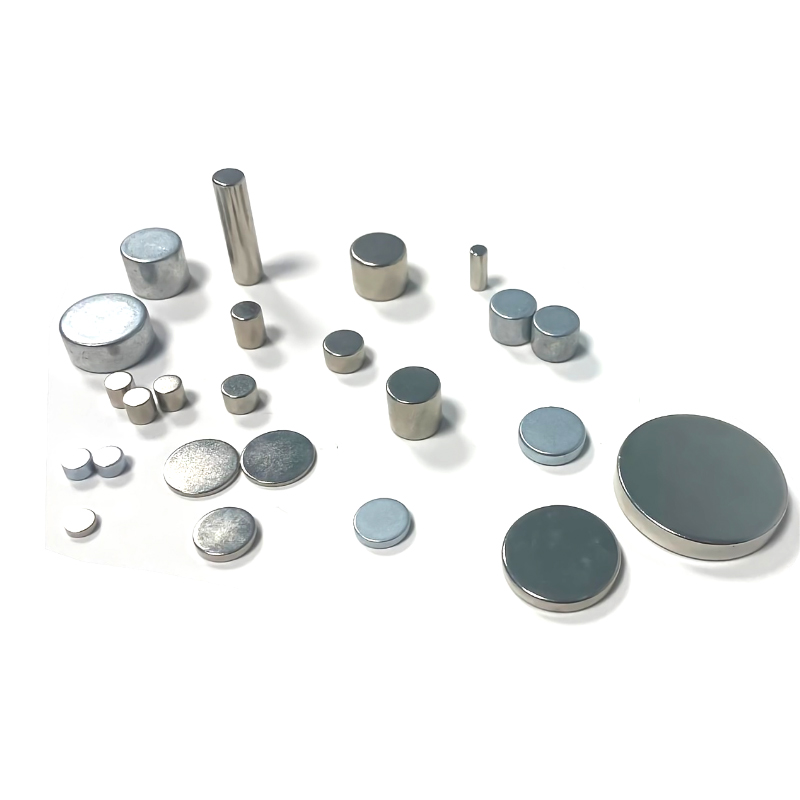
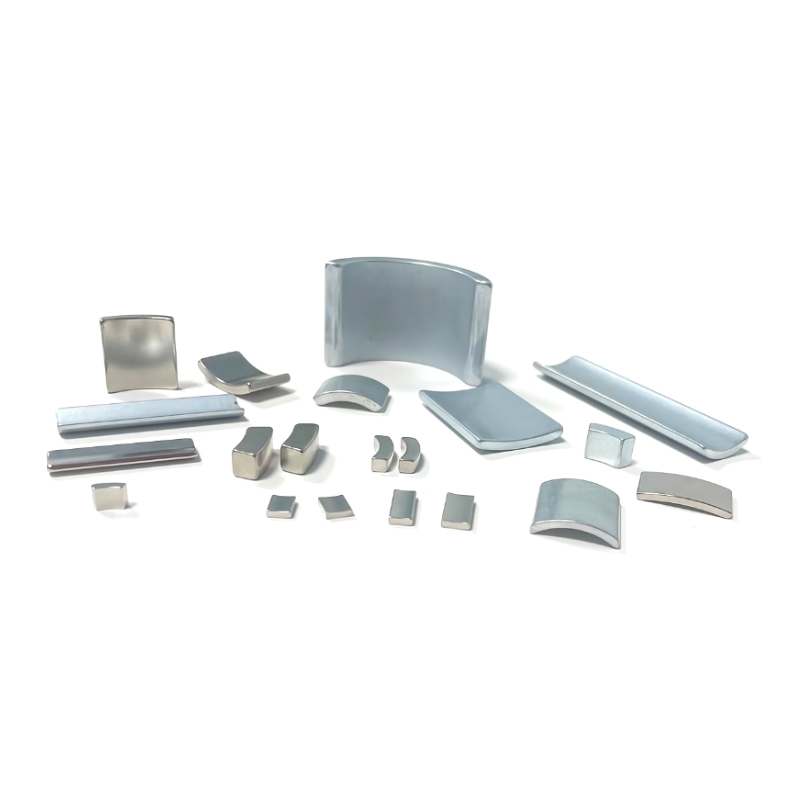
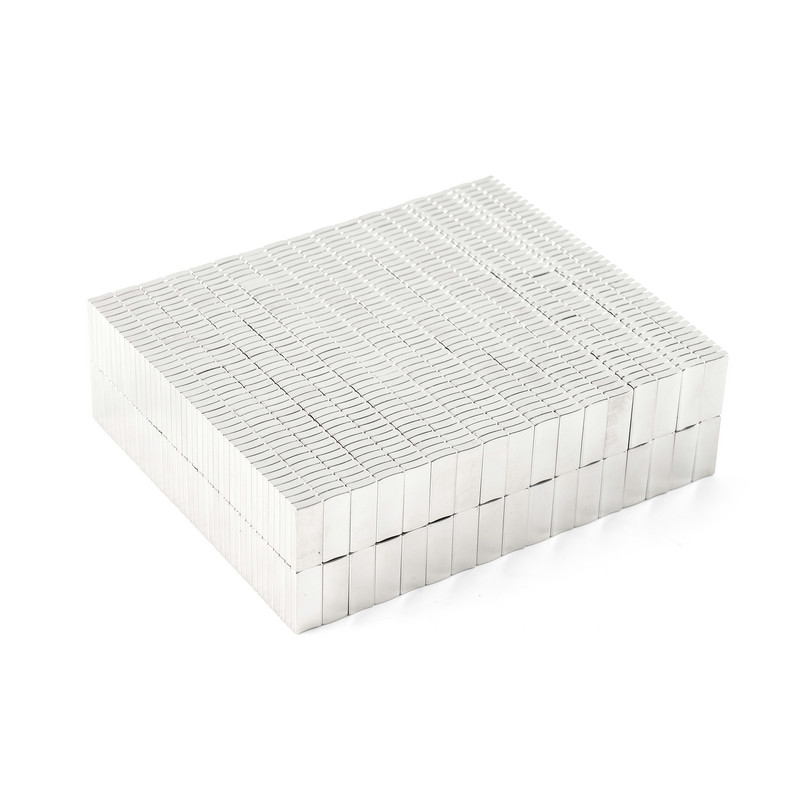 NdFeB Arc Magnets for Permanent Magnet MotorsCurved NdFeB segments for DC, BLDC, and servo motor rotors. Where motor magnets run hot, choosing the right grade and arc geometry keeps the operating point above the knee, avoiding permanent flux loss at temperature.View Product →
The second quadrant of the hysteresis loop is where permanent magnet design lives. As long as the operating point stays on the straight, upper portion of the curve, flux loss at temperature is small and reversible. Where the curve bends, at the knee, further stress knocks domains out of alignment permanently, and the magnet loses flux that only a full remagnetization can restore. Coercivity at operating temperature is the number to interrogate: NdFeB loses intrinsic coercivity at roughly half a percent per degree Celsius, while SmCo loses around a third of that rate. Geometry matters just as much, because a magnet's length-to-diameter ratio sets its self-protecting load line. A thick, squat arc resists demagnetization that would flatten a thin disc of the same grade, which is why rotor magnet shape is negotiated between the motor designer and the magnet manufacturer rather than picked from a catalog.
Because anisotropic magnets deliver their rated performance only along the alignment direction, magnetization direction is a design specification, not an afterthought. Motor arc magnets are typically magnetized radially, so the field points through the air gap, or parallel-magnetized, which is cheaper to fixture and often adequate. Ring magnets for brushless rotors and sensors carry multipole patterns, with alternating poles impressed around the circumference by a fixture shaped to the pole count. Magnetizing before or after assembly is a genuine engineering decision: magnetized parts attract debris and demand careful handling, while unmagnetized assemblies require fixture access that the finished motor may not allow. Cobalt's own hexagonal easy axis is the atomic-scale ancestor of this whole discipline, a reminder that every permanent magnet inherits its directionality from crystal physics.
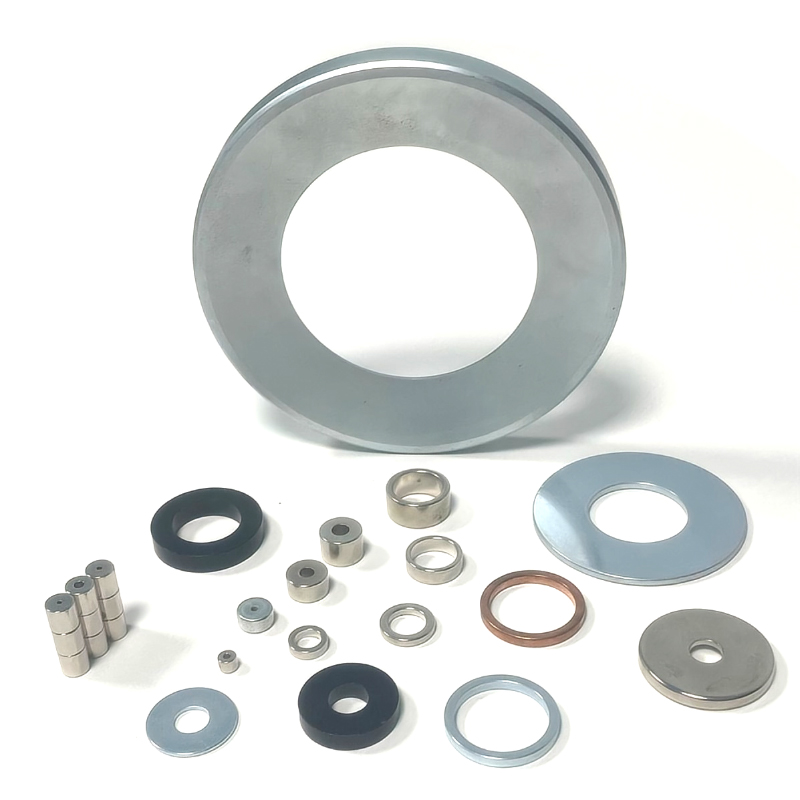
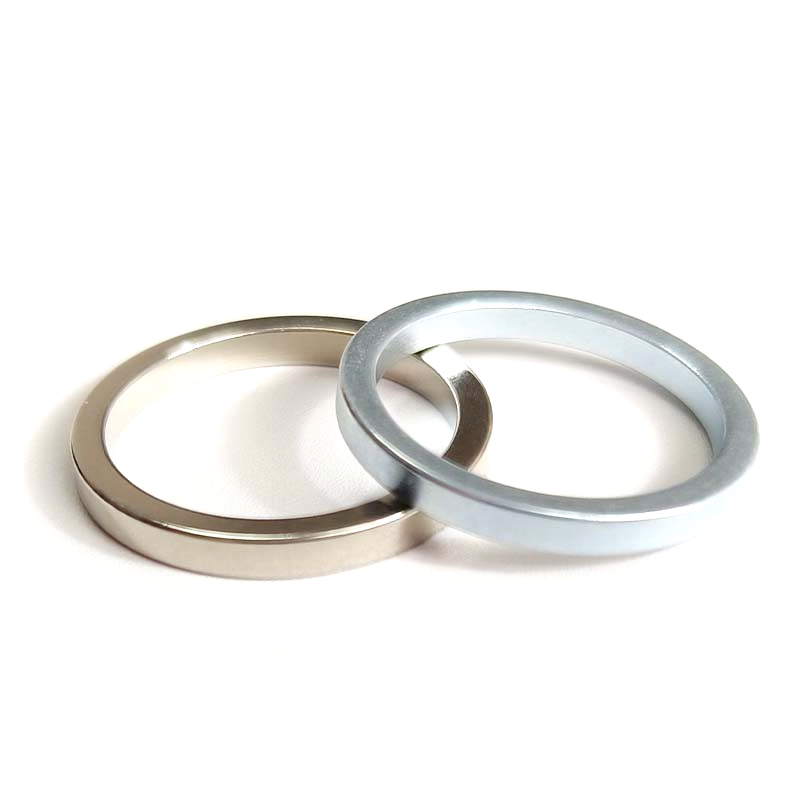 NdFeB Ring Magnets with Multipole MagnetizationNeodymium ring magnets supplied for speakers, sensors, generators, and automotive use. Ring rotors and sensors depend on the specified radial or multipole magnetization pattern, so this range shows how alignment direction is built in.View Product →
Cobalt-modified NdFeB fits when
|
SmCo fits when
|
Neither family wins universally. The honest method is to write down the true peak temperature and the flux density the machine needs, then let those two numbers select the family before anyone discusses price.
Specify the worst-case hot-spot temperature first and check that the operating point stays above the knee of the demagnetization curve at that temperature; those two checks prevent nearly every field failure attributed to magnetization loss in motors.
Cobalt is a volatile commodity, and the battery industry consumes the large majority of world supply, so magnet buyers feel cobalt-driven price swings directly in SmCo quotes and, more mildly, in high-temperature NdFeB. A procurement strategy that treats cobalt content as a design variable, rather than a fixed given, consistently lands better cost and shorter lead times. It also matters who you buy from: a wholesaler reselling stock shapes can rarely answer temperature-class questions with data, while a manufacturer running its own sintering, grinding, magnetizing, and testing can.
Items two and three are where cobalt magnetization expertise shows. A supplier who can explain how their cobalt-modified grade's knee moves between 20 °C and 200 °C, and who magnetizes to your specified pattern in-house, is a partner; a supplier who only quotes a grade name is a reseller.
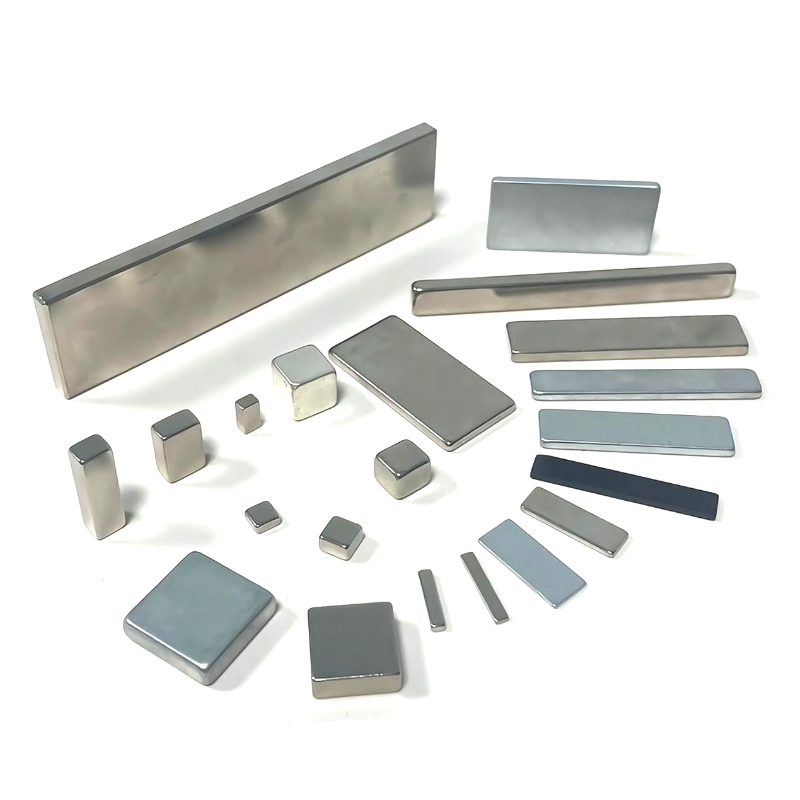
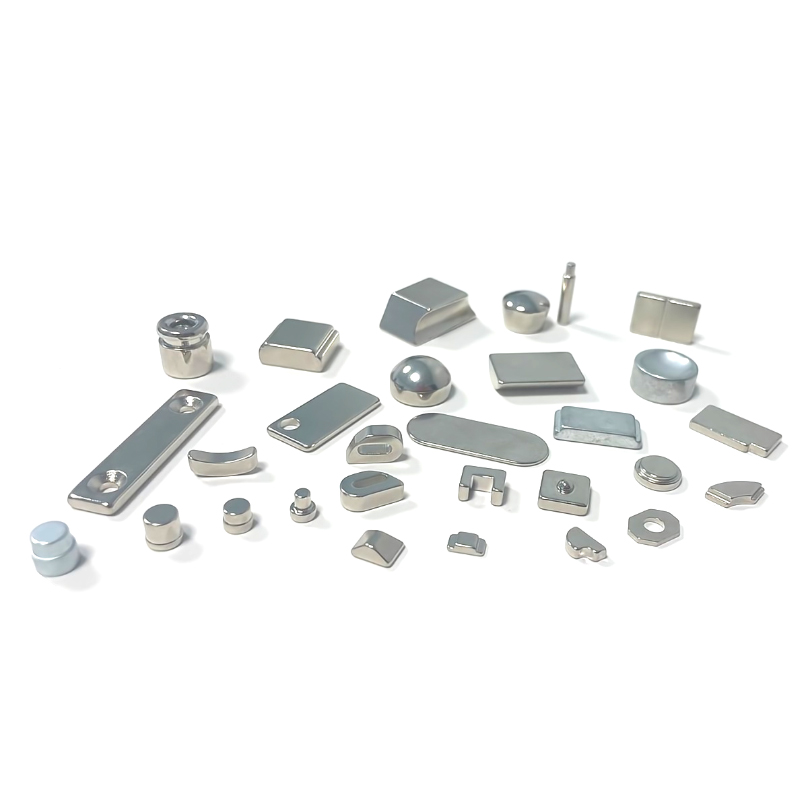
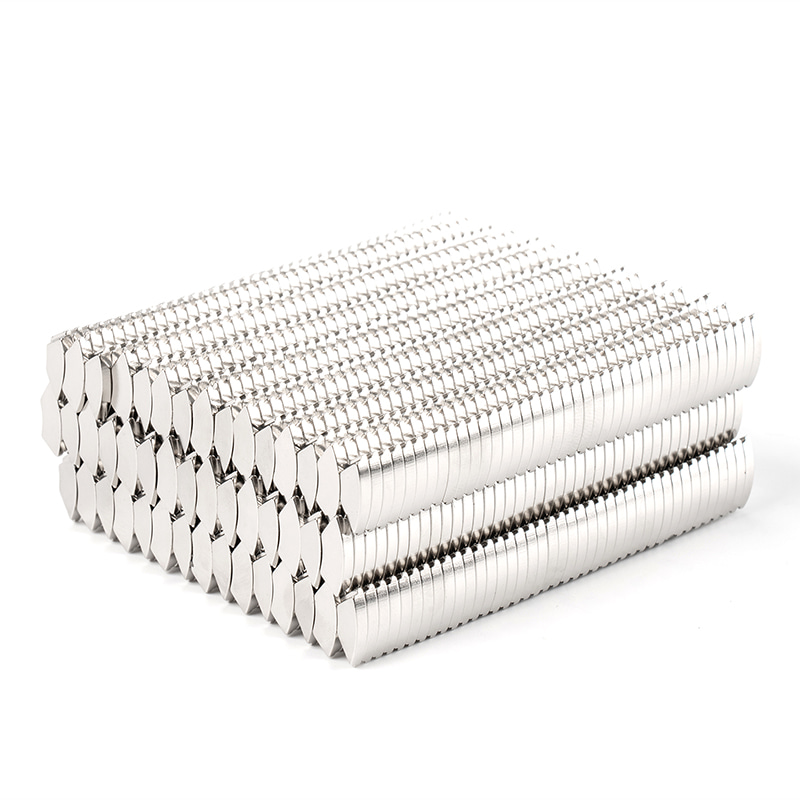 Custom Special-Shaped NdFeB MagnetsNdFeB magnets made to drawing in wedge, stepped, hollow, and other custom shapes for connectors and non-standard parts. Non-catalog geometries need a supplier who can verify Br, HcJ, and flux against specification after magnetizing.View Product →
Three instruments cover the verification chain. A hysteresisgraph measures the full demagnetization curve of finished magnets in a closed circuit and reports Br, HcJ, and energy product against the grade specification. A vibrating sample magnetometer, the VSM of materials laboratories, measures magnetization curves on small samples and powders where closed-circuit fixtures cannot reach. A fluxmeter with a Helmholtz or fixture coil measures the total flux of magnetized parts quickly enough for high-volume checks. For magnetized assemblies, gaussmeter mapping verifies the pole pattern that the magnetizing fixture was supposed to imprint. Ask which of these your supplier operates in-house, and at what sampling rate, because magnetization that is never measured is a rumor, not a specification.
| Magnet family | Cobalt content and role | Typical Br | Max continuous service temp. | Key caution |
|---|---|---|---|---|
| Cobalt-modified NdFeB | 2-5% Co replacing iron; lifts Curie point and corrosion resistance | 1.10-1.40 T | 150-230 °C | Verify the knee at temperature; requires coating |
| SmCo5 | Approx. 66% Co; carrier of high saturation magnetization | 0.80-0.90 T | 250-300 °C | Brittle; lower remanence than Sm2Co17 |
| Sm2Co17 | Approx. 65% Co plus iron, copper, zirconium | 1.00-1.15 T | 300-350 °C | Multi-day heat treatment; two-metal price exposure |
| Alnico 5 | Approx. 24% Co; raises Curie point and stability | 1.20-1.35 T | 450-525 °C | Low coercivity; demagnetizes easily |
| CoFe soft magnetic | Approx. 49% Co; maximizes saturation flux density | 2.3-2.45 T (saturation) | Curie approx. 980 °C | Soft material, not permanent; machining cost |
Three practical levers reduce cobalt exposure without sacrificing performance. First, do not overspecify: paying for 350 °C capability in a part that never sees 180 °C wastes money twice, once in alloy premium and once in design margin. Second, consider hybrid designs, where cobalt-modified NdFeB carries the flux and SmCo appears only in the hottest zones. Third, lock composition and test requirements into long-term agreements, so a cobalt price spike cannot quietly change what arrives in your boxes. Manufacturers with flexible custom-shape capability add a fourth lever, because a better-shaped magnet often removes a thermal problem that a more expensive grade was being asked to solve.
Write the worst-case temperature, the at-temperature demagnetization curve, and the magnetization pattern into every RFQ, because those three lines separate manufacturers with real cobalt magnetization control from resellers quoting grade names.
Is pure cobalt magnetic at room temperature?Yes. Cobalt is ferromagnetic at room temperature, one of only three elements that are. Its saturation magnetization is roughly 1,440 emu/cm3, second among practical elements only to iron, and it retains spontaneous magnetization without any external field as long as it stays below its Curie temperature of about 1115 °C. A cobalt-bearing alloy will therefore hold a permanent magnetization, which is why cobalt appears in permanent magnets rather than only in soft magnetic parts. |
What is the difference between spontaneous magnetization and remanence in cobalt?Spontaneous magnetization exists inside each domain purely from atomic alignment and requires no external field; it is a property of the material below its Curie temperature. Remanence is the net flux density a whole piece retains after a magnetizing field is removed, and it depends on the domain arrangement, the grain alignment, and the anisotropy of the microstructure. Cobalt's spontaneous magnetization is near 1,440 emu/cm3, but the remanence a commercial magnet reaches is always lower, and remanence is what magnet datasheets actually quote. |
Why does cobalt magnetization survive high temperatures better than neodymium magnets?The exchange interaction that aligns cobalt's atomic moments is stronger than the one in the Nd2Fe14B phase, so cobalt's Curie temperature of about 1115 °C towers over NdFeB's roughly 312 °C. A magnet never operates near its Curie point, but the margin sets the whole temperature ladder: coercivity, knee position, and reversible losses all degrade more gently in cobalt-rich materials. That is why SmCo magnets serve past 300 °C while standard NdFeB grades stop far below. |
Do NdFeB magnets contain cobalt?Standard NdFeB grades contain little or none, but high-temperature and corrosion-resistant grades typically replace a few percent of the iron with cobalt. The substitution raises the Curie temperature, improves corrosion resistance, and slightly reduces remanence. Combined with heavy rare earth additions and grain-boundary engineering, it is one of the main levers that lets manufacturers offer NdFeB grades rated for 150 to 230 °C service. |
Is samarium-cobalt the same thing as cobalt magnetization?No. Cobalt magnetization is a material property; samarium-cobalt is a magnet family that exploits it. SmCo alloys combine cobalt's high saturation magnetization with samarium's very high anisotropy, producing magnets whose coercivity and temperature stability exceed what any single element can deliver. When you buy Sm2Co17, you are buying that combination in commercial form. |
How do manufacturers measure cobalt magnetization?Hysteresisgraphs measure the full demagnetization curve of finished magnets and report Br, HcJ, and energy product against the grade. Vibrating sample magnetometers handle powders, thin films, and small samples where closed-circuit fixtures cannot. Fluxmeters with Helmholtz or fixture coils verify total flux on production parts, and gaussmeter mapping checks multipole patterns on magnetized assemblies. Ask your supplier which instruments they run in-house and at what sampling rate. |
If a supplier can answer these six questions with measured data rather than brochure language, their cobalt magnetization control is real.
Cobalt magnetization earns its central place in magnet engineering through a rare combination: saturation magnetization second only to iron, a Curie temperature of about 1115 °C that no rival approaches, and hexagonal anisotropy that keeps magnetization pointed where it was put. Pure cobalt is almost never the product, but SmCo, alnico, cobalt-iron laminations, and cobalt-modified NdFeB all draw their high-temperature credibility from the same atomic source. For motor programs, the practical sequence stays the same across projects: fix the worst-case temperature, verify the demagnetization curve at that temperature, lock the magnetization direction, and then optimize cost and supply.
When your specification involves continuous service above about 150 °C, work with a magnet manufacturer who treats cobalt content, grain alignment, and magnetizing fixtures as process variables they control and measure, not as catalog columns. That is the difference between magnets that meet the datasheet at room temperature and magnets that still meet it after a year inside a hot rotor.
Magnetization directions, coatings, and tolerance specifications in our NdFeB technical data
How temperature variations impact the performance of neodymium ring magnets
Cobalt's second-place saturation magnetization and its record 1115 °C Curie temperature are the twin reasons every magnet family that survives above 250 °C is built on cobalt.
Having a blueprint in mind, working hard and forging ahead
 No.107 Yunshan Industry Park, Sanqishi Town, Yuyao, Ningbo, Zhejiang 315412, China
 +86-18858010843
 sales@tujinmagnet.com
Copyright ? Ningbo Tujin Magnetic Industry Co., Ltd. All Rights Reserved. Custom Rare Earth Magnets Factory