-

sales@tujinmagnet.com
-

+86-18858010843

Content
Choosing the right NdFeB (Neodymium Iron Boron) magnet comes down to five core factors: grade (magnetic strength), maximum operating temperature, coating type, shape and dimensions, and magnetization direction. Get these five parameters right, and the magnet will perform reliably in your application for years. Miss even one, and you risk demagnetization, corrosion failure, or mechanical mismatch. This guide walks you through each decision systematically.
NdFeB magnets are classified by grade, expressed as a number followed by one or two letters — for example, N35, N42, N52, or N35SH. The number indicates the maximum energy product in MGOe (Megagauss-Oersteds), which is a direct measure of magnetic energy density. The letters indicate the magnet's thermal performance class.
Here is a breakdown of common grades and their typical energy products:
| Grade | Energy Product (MGOe) | Typical Remanence Br (T) | Common Use Cases |
|---|---|---|---|
| N35 | 33–36 | 1.17–1.21 | Craft projects, basic sensors |
| N42 | 40–43 | 1.28–1.32 | Motors, speakers, holding fixtures |
| N52 | 50–53 | 1.42–1.47 | High-performance motors, MRI components |
| N35SH | 33–36 | 1.17–1.21 | Automotive, high-temp environments |
| N48M | 46–49 | 1.37–1.42 | Industrial drives, wind generators |
A practical rule: do not automatically choose the highest grade. Higher grades are harder to machine, more brittle, and may have lower coercivity — meaning they demagnetize more easily at elevated temperatures. Match the grade to the actual field strength required in your design.
Temperature is the most commonly overlooked specification when selecting NdFeB magnets. Standard N-grade magnets (no suffix) have a maximum operating temperature of only 80°C. Exposing them to higher temperatures causes irreversible demagnetization — a failure that cannot be corrected without remagnetizing.
The letter suffix in the grade indicates the high-temperature coercivity class:
For example, an electric vehicle traction motor may see temperatures of 120–150°C inside the rotor assembly. In this case, an N42H or N38SH grade is the appropriate selection. Using a standard N42 would result in field loss within the first operating cycle at elevated temperatures.
Also account for the magnet's temperature coefficient of remanence, which is typically −0.11% to −0.12% per °C for NdFeB. A magnet rated at 1.30 T at 20°C will produce approximately 1.17 T at 120°C — a 10% reduction that must be factored into your magnetic circuit design.
NdFeB magnets are highly susceptible to corrosion. The base alloy contains iron and rare earth elements that will rust rapidly in humid or chemically aggressive environments without a protective coating. Choosing the wrong coating is one of the primary causes of premature magnet failure in the field.
| Coating Type | Thickness (μm) | Salt Spray Resistance | Best For |
|---|---|---|---|
| Nickel-Copper-Nickel (Ni-Cu-Ni) | 10–20 | 24–48 hours | General-purpose, indoor use |
| Zinc (Zn) | 8–15 | 12–24 hours | Cost-sensitive applications |
| Epoxy | 15–25 | 48–96 hours | Humid or mildly corrosive environments |
| Gold (Au) | 1–3 | 200+ hours | Medical devices, electronics |
| Parylene | 5–25 | 200–500+ hours | Implants, underwater, aggressive chemicals |
| Tin (Sn) | 8–15 | 24–48 hours | Solderability required |
Note that coating thickness directly affects dimensional tolerances. If your design has tight clearances — for instance, a rotor slot with a 0.1 mm tolerance — the 20 μm nickel layer must be accounted for in the machined dimensions of the magnet.
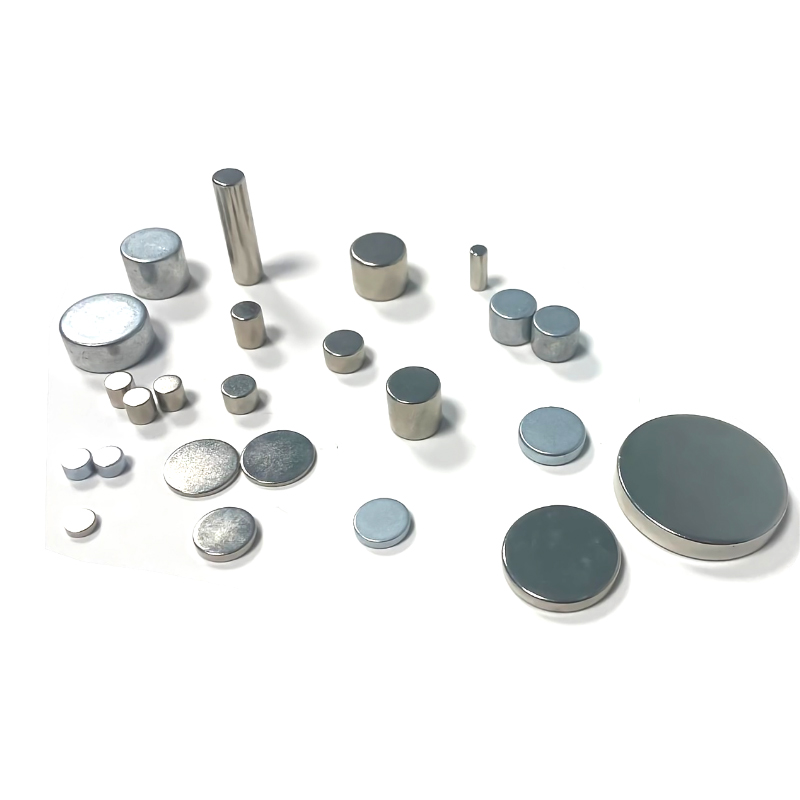
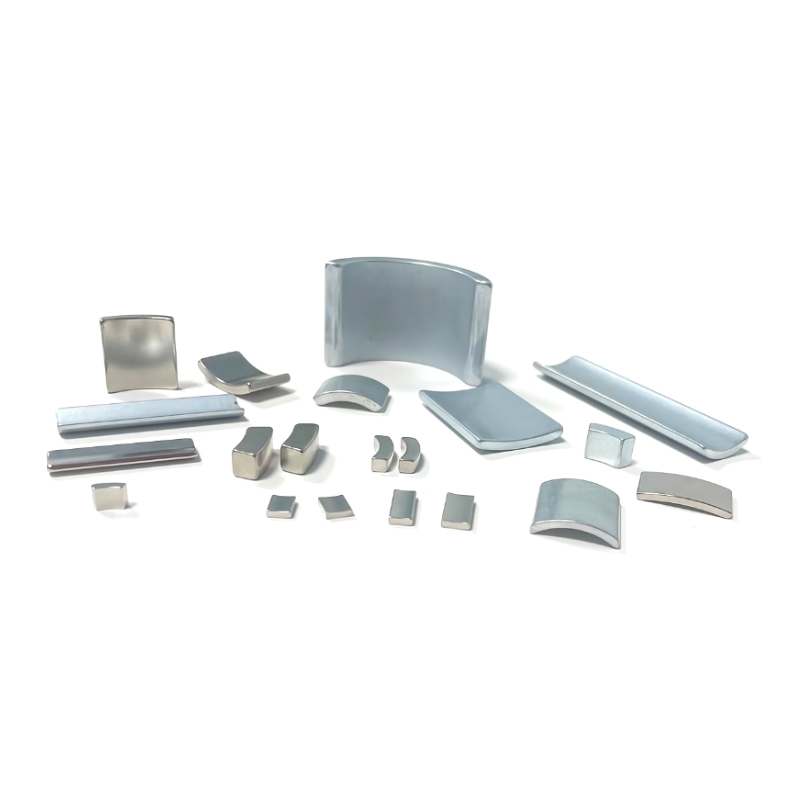
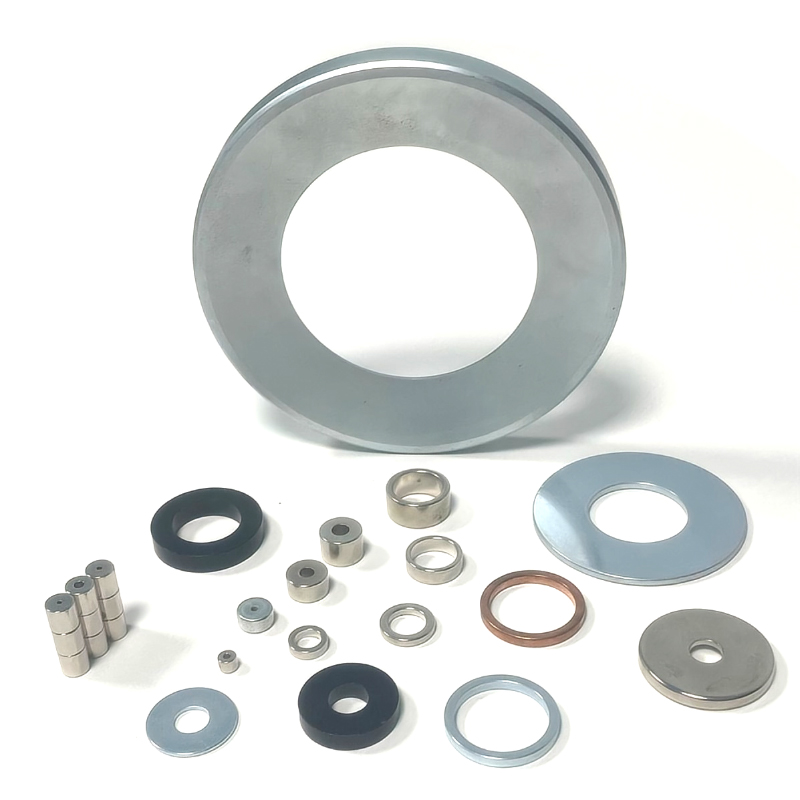
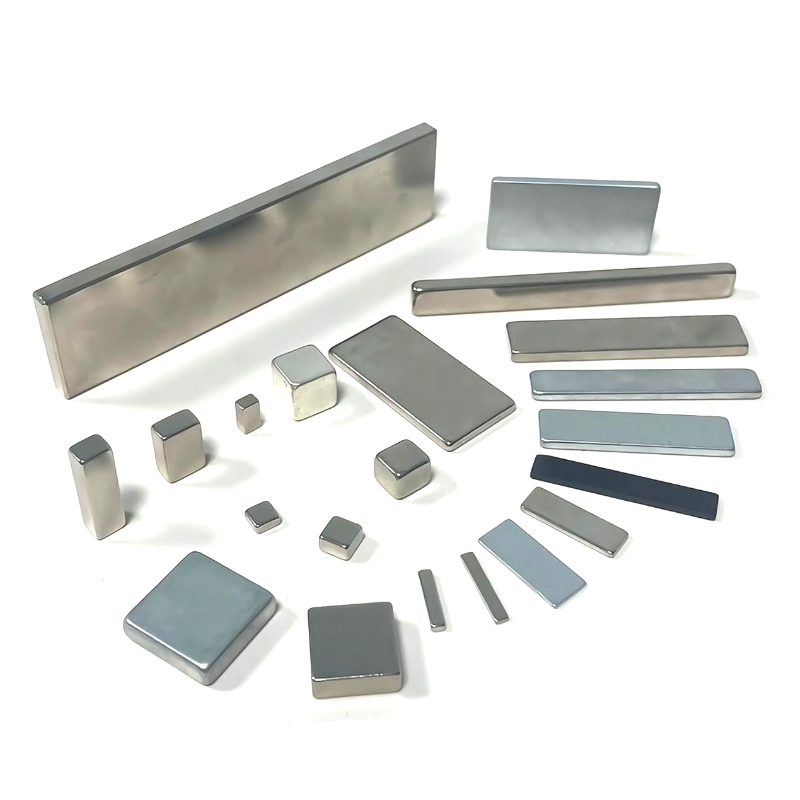
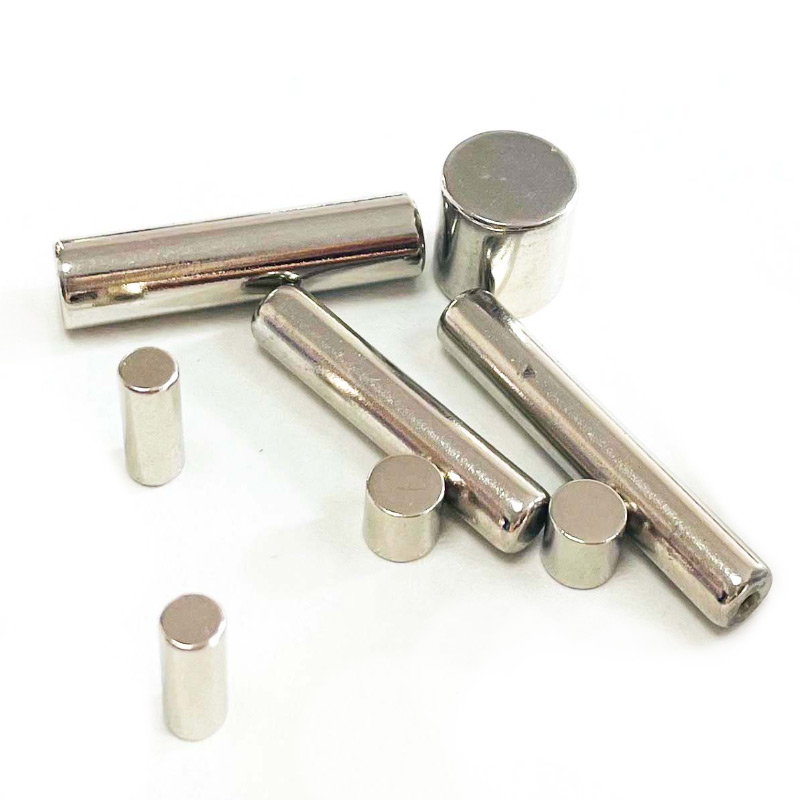
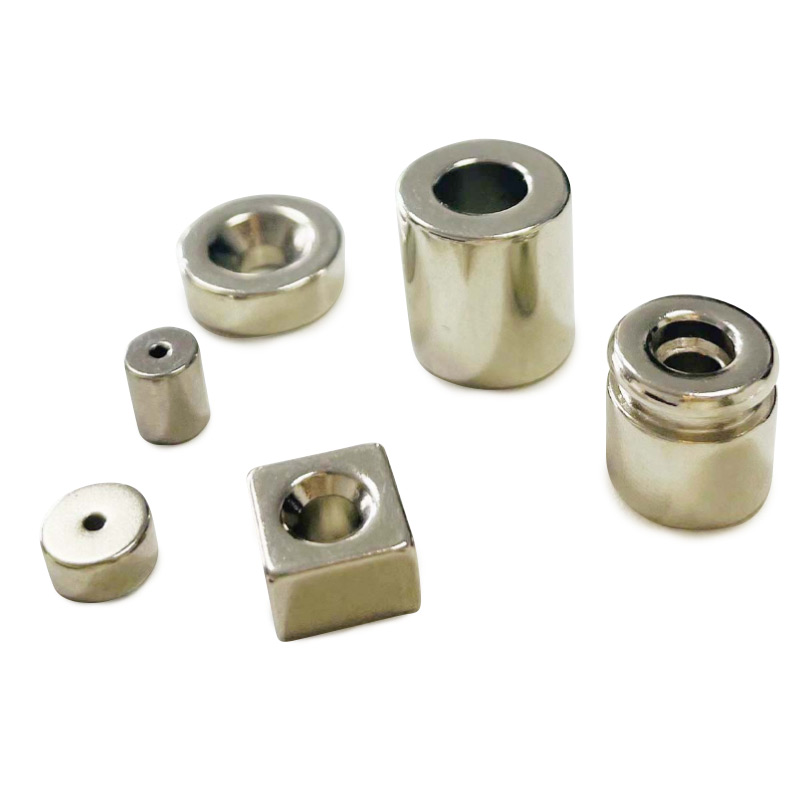
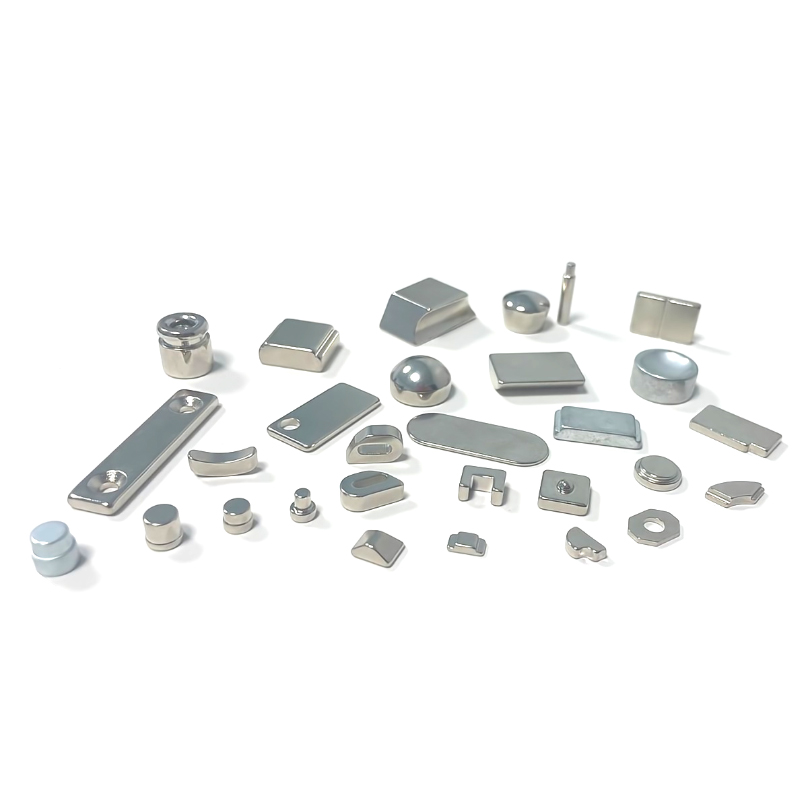
NdFeB magnets are manufactured in a wide range of standard shapes: blocks, discs, rings, arcs, rods, and custom profiles. The shape you choose must serve your magnetic circuit geometry, not the other way around.
Key dimensional considerations include:
For holding magnets used in fixtures or latches, the pull force is strongly dependent on the air gap. A disc magnet rated at 10 kg pull force at 0 mm gap will produce less than 1 kg at a 3 mm air gap — a factor of ten drop due to air gap reluctance alone.
NdFeB magnets can be magnetized in different directions relative to their geometry. The most common options are axial (through the thickness), diametric (across the diameter), and radial (from center outward). Specifying the wrong magnetization direction will result in a magnet that cannot be used in your assembly, even if every other parameter is correct.
Always confirm magnetization direction with a Gauss meter or Hall probe before integrating magnets into an assembly, especially in multi-pole configurations where polarity errors can cause rotor imbalance.
NdFeB magnets are sintered ceramic-like materials. They are hard but brittle, with a compressive strength of approximately 1,050 MPa but a flexural strength of only 250 MPa. This means they can withstand compression well but will crack or chip under bending, impact, or tensile stress.
Practical handling requirements to plan for:
When sourcing NdFeB magnets for a new application, working through these questions in order will systematically eliminate unsuitable options:
Running a finite element magnetic simulation (FEM) using the actual B-H curve data for your selected grade — not simplified assumptions — is strongly recommended before finalizing the specification for any high-volume or safety-critical application.
Once you have identified a target specification, request certified material test reports (CMTR) or third-party test data that confirm the following parameters for each production batch:
Batch-to-batch consistency is a known challenge in sintered NdFeB production. Magnetic properties can vary by ±3–5% between furnace batches, which is significant in precision applications. Specifying incoming inspection criteria in your purchase order — not just relying on supplier self-certification — is a practical step that prevents downstream assembly failures.
Having a blueprint in mind, working hard and forging ahead
 No.107 Yunshan Industry Park, Sanqishi Town, Yuyao, Ningbo, Zhejiang 315412, China
 +86-18858010843
 sales@tujinmagnet.com
Copyright ? Ningbo Tujin Magnetic Industry Co., Ltd. All Rights Reserved. Custom Rare Earth Magnets Factory