-

sales@tujinmagnet.com
-

+86-18858010843

Content
NdFeB is a range of rare-earth permanent magnet alloys based on the tetragonal intermetallic compound Nd2Fe14B. The material is produced from neodymium, iron, and boron, often with small additions of dysprosium, terbium, praseodymium, or cobalt to improve coercivity or thermal stability. NdFeB magnets currently deliver the highest maximum energy product (BHmax) of any commercial magnet material, which is why they are the standard choice for traction motors, servo motors, and high-efficiency small drives.
In everyday language, "NdFeB magnet" and "neodymium magnet" refer to the same product family. The difference is only a matter of precision: NdFeB describes the alloy chemistry, while a neodymium magnet is the finished component with a defined shape, coating, and magnetization. What matters for a buyer is that both terms cover a very wide specification window. One supplier may quote an N35 block, while another quotes an N52 arc magnet with a UH operating temperature; both are NdFeB, but their performance and price are entirely different.
Because NdFeB is so much stronger than ferrite or alnico, it allows engineers to shrink motor packages, reduce moving mass, and increase torque density. That advantage explains its rapid adoption in electric vehicles, industrial robots, and high-precision medical devices. The trade-off is that NdFeB has a lower Curie temperature than samarium-cobalt and is susceptible to corrosion if the surface coating is damaged, so grade selection and protection strategy must be evaluated together.
Sintered neodymium magnets are manufactured through a powder metallurgy route because the alloy must be fully dense and crystallographically aligned to achieve high remanence and coercivity. Each process step affects the final magnetic performance, so understanding the process helps you evaluate supplier quality and lead time. Every NdFeB manufacturer controls these stages differently, which is why the same grade from two plants can behave differently in a real motor.
Each of these steps has process windows that affect tolerance and consistency. A manufacturer that documents its process flow and dimensional tolerances can usually deliver more repeatable arc and ring magnets for motor rotors, while a supplier that skips grain-boundary engineering will struggle to hold high coercivity at elevated temperatures.
To compare NdFeB with other permanent magnet classes, engineers look at four parameters: remanence (Br), intrinsic coercivity (Hcj), maximum energy product (BHmax), and maximum operating temperature (Tw). BHmax is the most frequently quoted because it combines flux output and volume efficiency into a single value.
Five points should be kept in mind before looking at the chart. First, BHmax represents the maximum energy product measured in the second quadrant of the B-H curve. Second, commercial sintered NdFeB grades fall between 35 MGOe and 52 MGOe (around 280 to 420 kJ/m³). Third, the numbers in the chart are typical ranges, not guarantees for any specific grade. Fourth, the chart compares average commercial specifications, so boundary values can vary by supplier and grade family. Fifth, for motor designers, the useful range is often lower than the absolute maximum because the operating point in a magnetic circuit never sits exactly at the BHmax point.
Typical maximum energy product (BHmax) ranges for commercial permanent magnet families.
Sintered NdFeB reaches a typical BHmax of 35 to 52 MGOe, which is four to ten times higher than ferrite and about two to three times higher than samarium-cobalt. This energy-density advantage is the reason an NdFeB rotor can produce the same torque as a ferrite rotor in half the volume. In an electric vehicle traction motor, that weight and space saving directly translates into longer range or more battery capacity. In a robot joint, it means a lighter arm and faster dynamic response. Samarium-cobalt still wins on maximum operating temperature and corrosion resistance, which is why it remains in aerospace actuators and high-temperature oil-well tools. Ferrite maintains its place in inexpensive applications where size and weight are not critical, such as loudspeakers, door catches, and small DC motors. Alnico is now a niche product, used mainly for very high-temperature instrumentation and certain classic sensor designs.
Within the NdFeB family, BHmax changes as remanence and coercivity move in opposite directions. A high-remanence grade like N52 offers maximum flux at low temperatures, while high-coercivity grades like SH, UH, and EH hold their flux better at 150°C to 200°C but have a lower starting BHmax. For example, an N38EH magnet might have a nominal BHmax of 38 MGOe, but at 180°C its intrinsic induction remains high enough to resist demagnetization in a motor stator. Choosing a grade by BHmax alone is the most common mistake in early-stage procurement; the correct workflow is to model the operating temperature, the demagnetizing field, and the coating requirement at the same time. The chart also helps explain the cost hierarchy of permanent magnets, because raw material prices are sensitive to neodymium, praseodymium, and dysprosium content. A high-temperature grade with dysprosium costs noticeably more than a standard N35, and that price gap can be justified only when the application needs the full temperature resistance.
When choosing an NdFeB magnet, the first structural decision is between sintered and bonded NdFeB. Sintered NdFeB is the classic high-density magnet with the highest magnetic output. Bonded NdFeB mixes magnetic powder with a polymer binder and can be molded into complex shapes, but its magnetic performance is lower because the binder dilutes the active material. The table below summarizes the main differences.
| Property | Sintered NdFeB | Bonded NdFeB |
|---|---|---|
| Manufacturing process | Powder metallurgy, vacuum sintering | Injection molding / compression bonding with polymer |
| Magnetic performance | High (BHmax up to 52 MGOe) | Moderate (BHmax approx. 6-12 MGOe) |
| Shape flexibility | Requires grinding for complex shapes | Near-net-shape with minimal secondary machining |
| Dimensional tolerance | Grinding gives ±0.02 to ±0.05 mm typical | Molding gives ±0.1 mm or better depending on design |
| Operating temperature | Max up to about 200-230°C with EH/AH grades | Usually 100-150°C depending on binder |
| Unit cost in volume | Higher material and machining cost | Lower cost for complex shapes in large series |
For motor-grade components that need high flux, sintered NdFeB is normally the only option. Bonded magnets are useful for small sensor rings, rotor position encoders, and multi-pole injection-molded rings where geometry matters more than raw energy output.
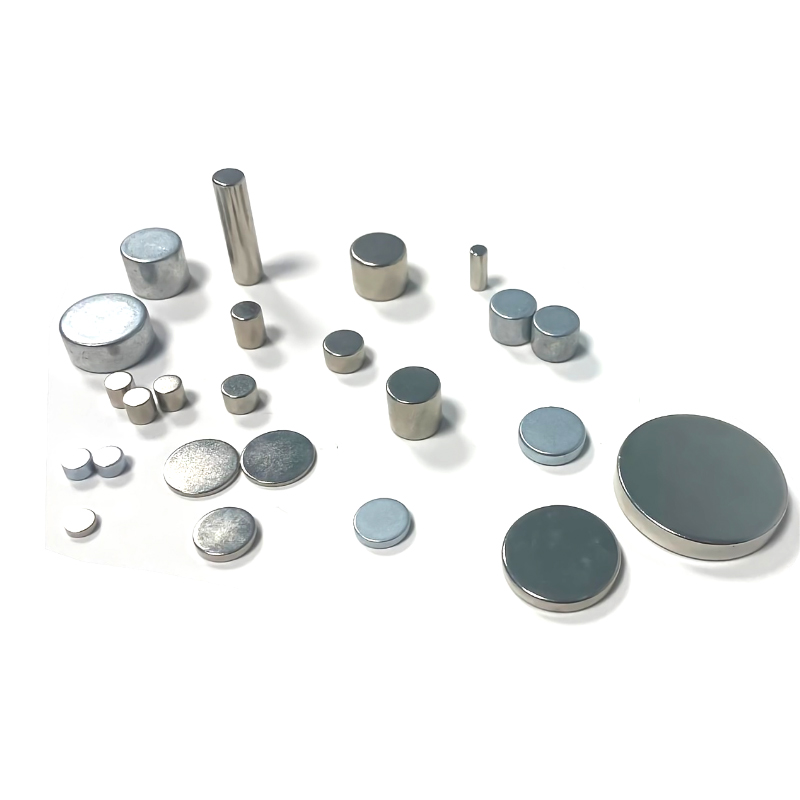
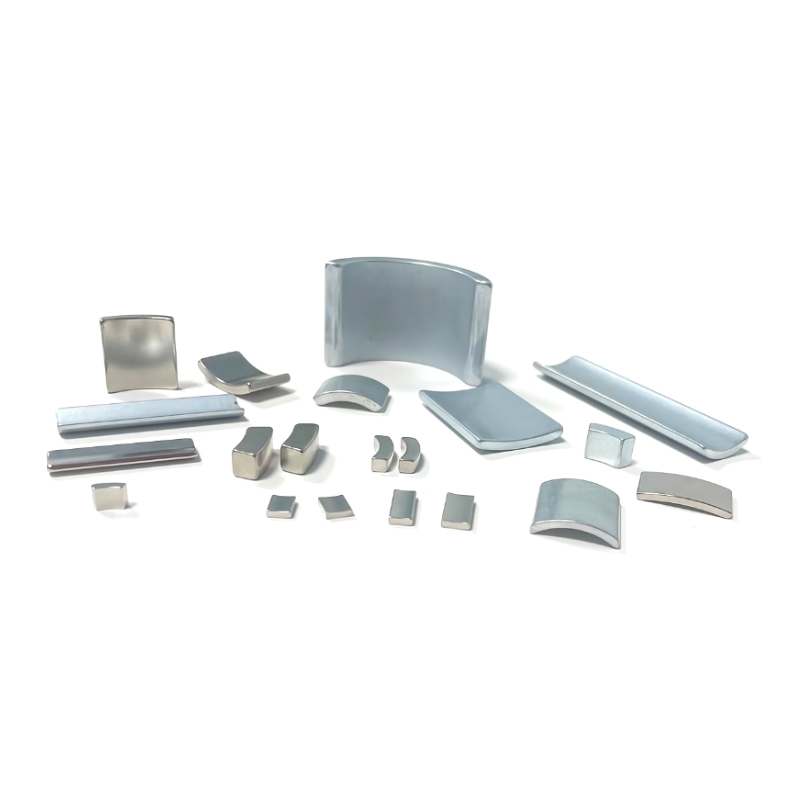
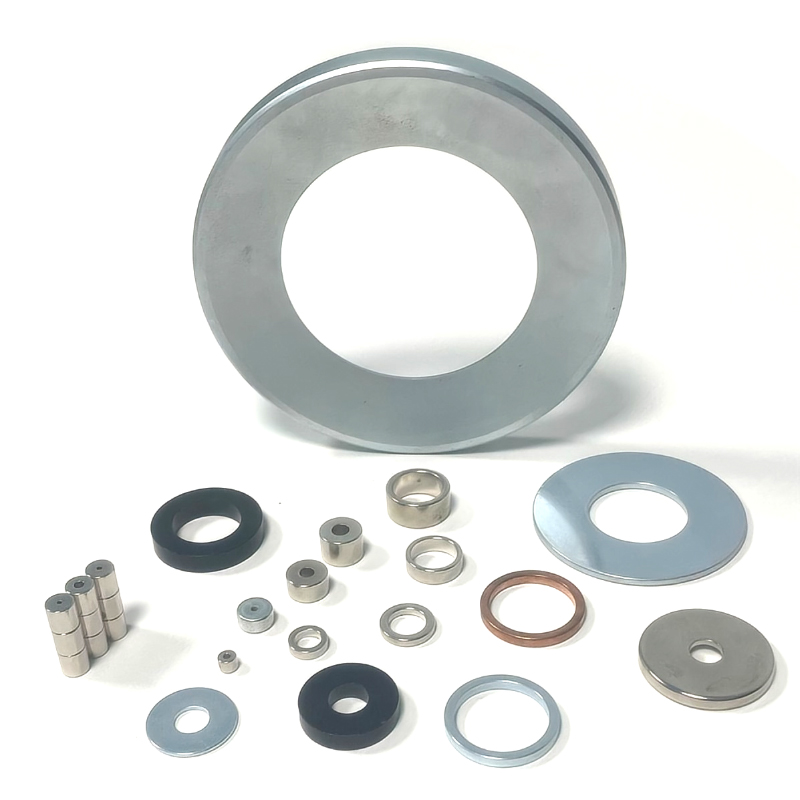
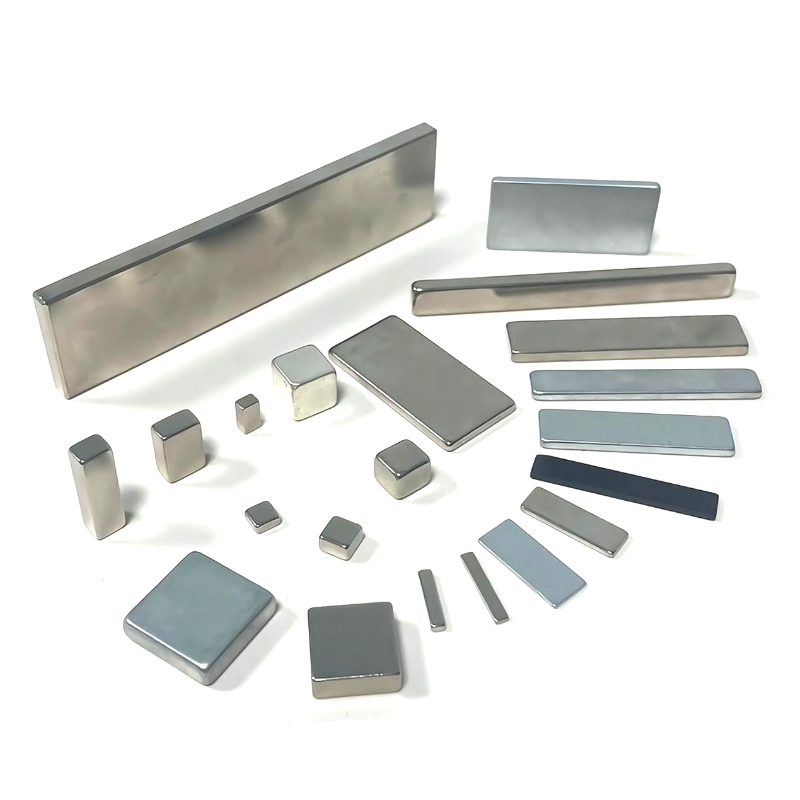
NdFeB magnets can be produced in almost any shape that a grinding wheel or wire-cutting process can reach, but a few geometries cover most of the demand in motor and industrial applications. The shape determines how the flux is distributed in the magnetic circuit and how the magnet is assembled into the final product. Here are the seven most common configuration families.
Curved segments for motor rotors and stators to build radial magnetic fields.
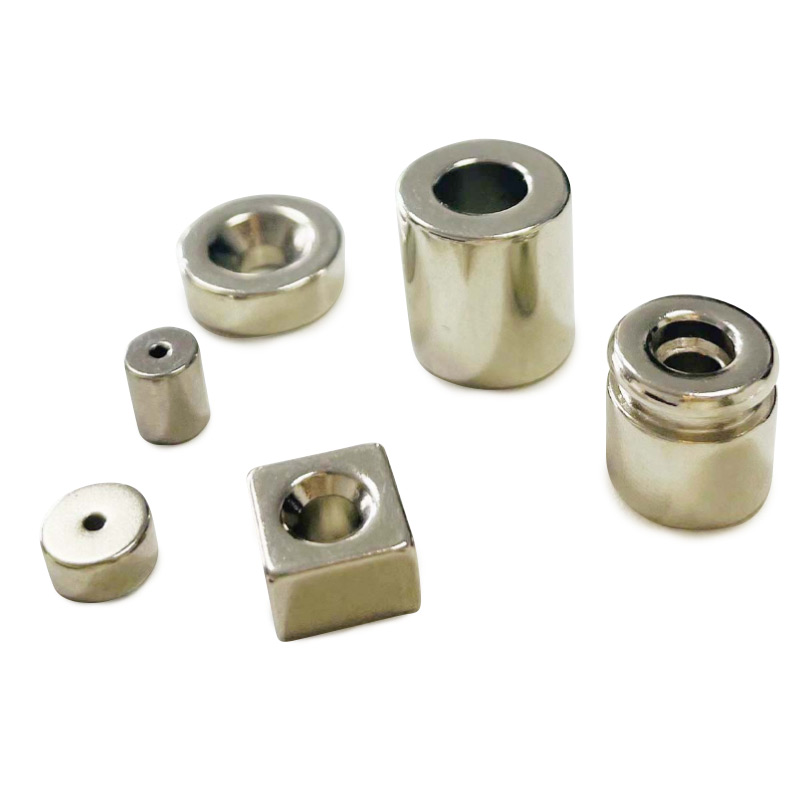
Cylindrical magnets with a central bore for shaft-mounted rotors and pumps.
Thin round magnets for compact sensors, couplings, and low-profile systems.
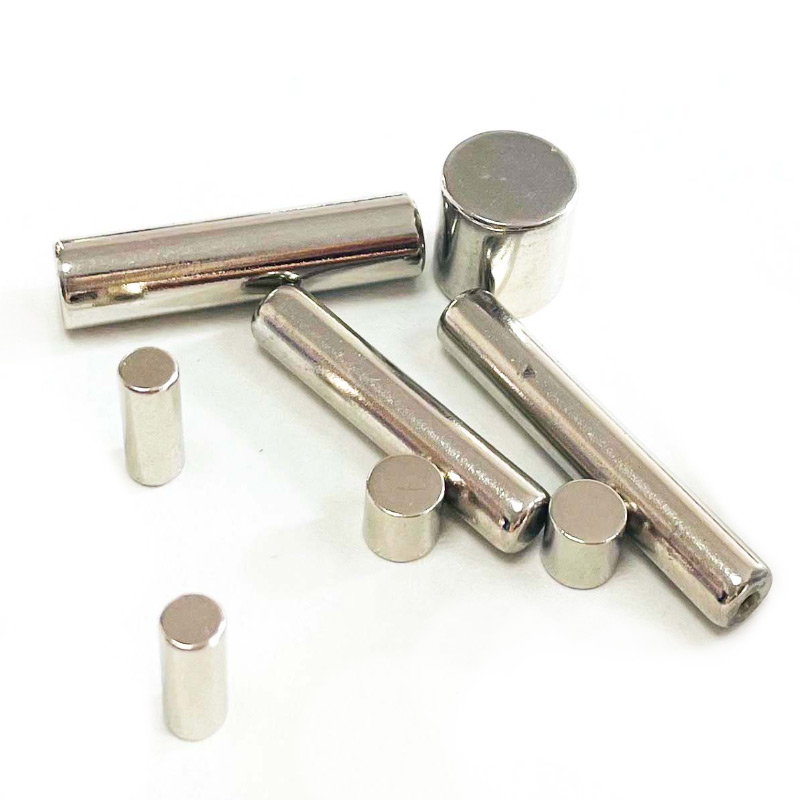
Round bars with axial or diametrical magnetization for motor rotors and couplings.
Rectangular magnets for linear motor arrays, chucks, and holding fixtures.
Disc magnets with a bolt hole for screw mounting without increasing the magnetic gap.
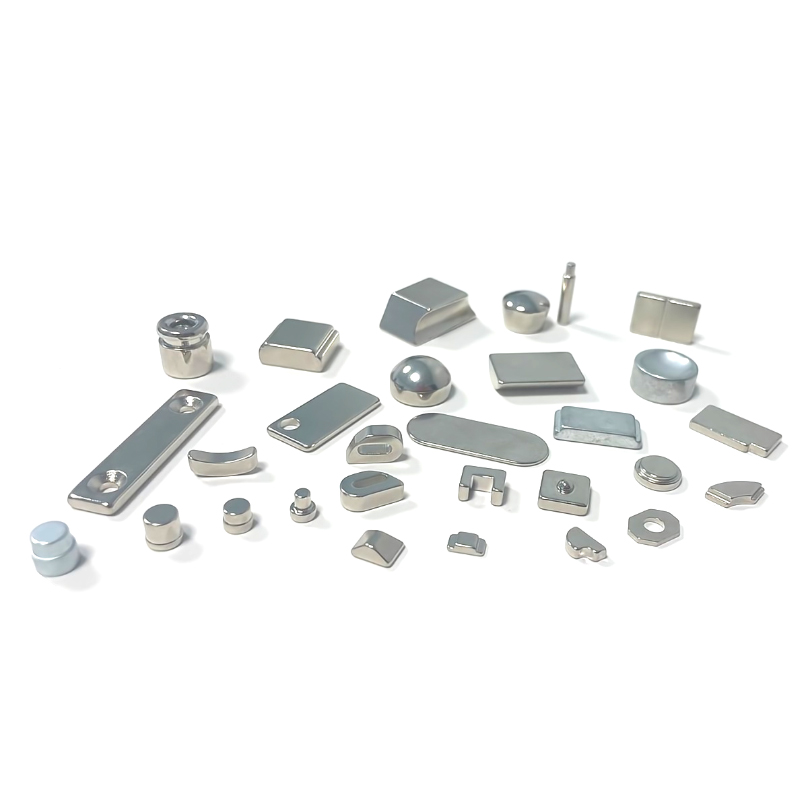
Non-standard geometries machined to drawing for special pole configurations.
Motor applications tend to need arc and ring magnets with tightly controlled dimensions, high temperature ratings, and consistent magnetization. That is why many engineering teams work with a manufacturer that specializes in motor magnets, such as a supplier of arc magnets for motor rotors. Ring magnets are equally important for shaft-mounted designs, and the thermal behavior of neodymium ring magnets should be reviewed against the motor's peak load. When the design does not fall into any standard geometry, a customized NdFeB shape supplier can machine the magnet to your drawing while retaining the required coating and magnetization direction.
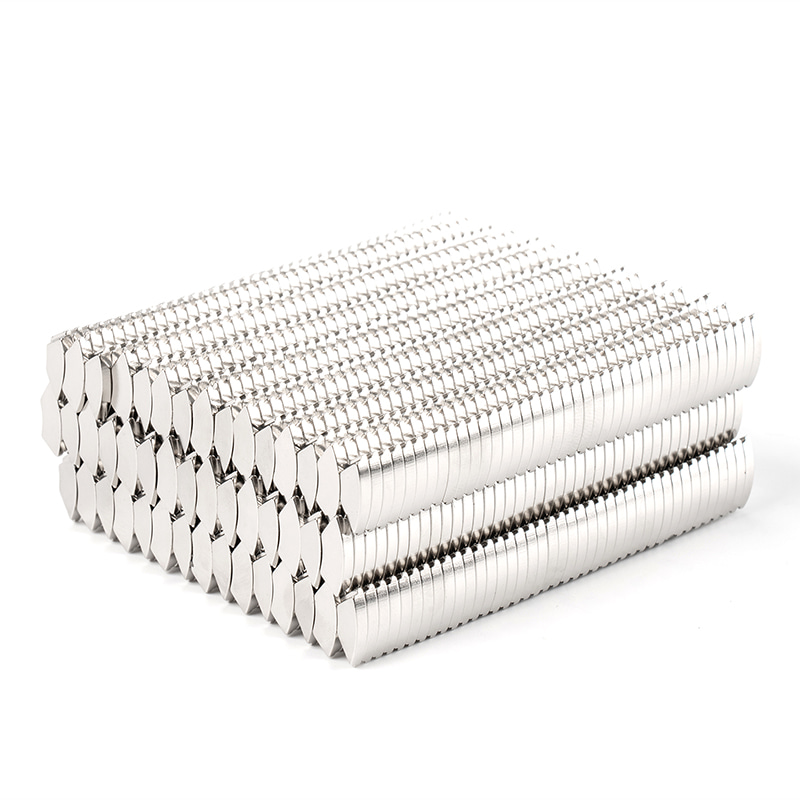 Custom Special Shapes Neodymium Ndfeb Magnets ManufacturerNingbo Tujin Magnetic Industry Co., Ltd. is China custom special shapes neodymium magnets manufacturer and special shapes ndfeb magnets s...View Product →
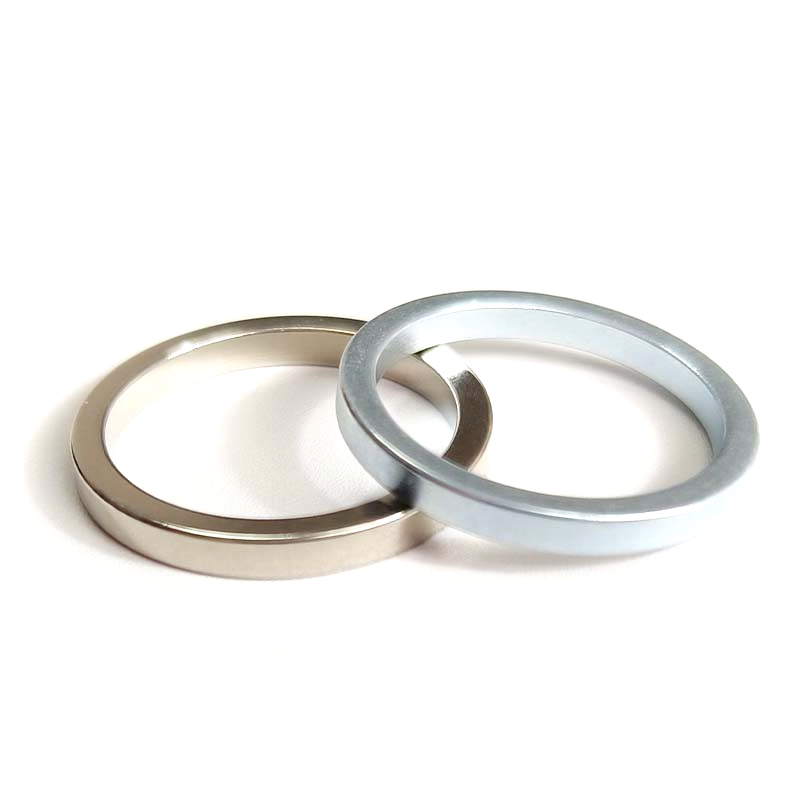 Custom Neodymium NdFeB Ring Magnets Manufacturer, SuppliersNingbo Tujin Magnetic Industry Co., Ltd. is China Neodymium ring magnet manufacturer and neodymium Ndfeb ring magnets suppliers, Our comp...View Product →
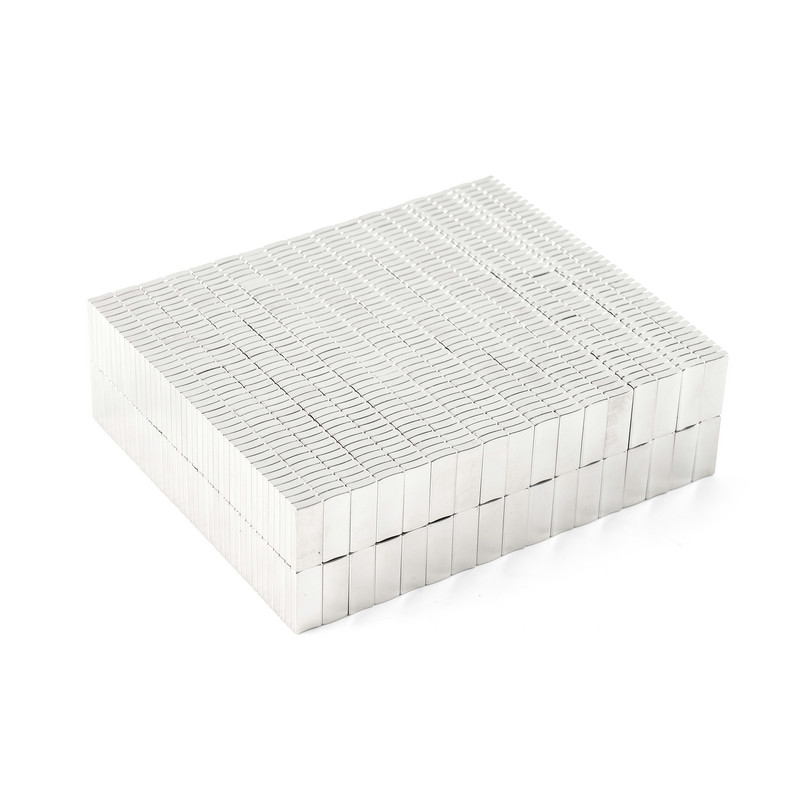 Custom Neodymium NdFeB Arc Magnets Manufacturer, SuppliersNingbo Tujin Magnetic Industry Co., Ltd. is China Neodymium Arc magnet manufacturer and neodymium Ndfeb Arc magnets suppliers, Our compan...View Product →
Temperature is the biggest single variable in NdFeB specification. While ferrite magnets can operate well above their relatively low flux density, NdFeB loses flux as temperature rises and can irreversibly demagnetize if the operating point crosses the knee of the B-H curve. That is why suppliers divide NdFeB into temperature classes based on the intrinsic coercivity Hcj.
| Grade suffix | Approx. max operating temperature | Typical characteristic |
|---|---|---|
| N | 80°C | High Br, low coercivity, lowest cost |
| M | 100°C | Moderate coercivity |
| H | 120°C | Balanced performance |
| SH | 150°C | High coercivity |
| UH | 180°C | Very high coercivity |
| EH | 200°C | Extremely high coercivity |
| AH | 230°C | Ultra-high coercivity with Dy/Tb doping |
These temperature values are approximate; the actual demagnetization margin depends on the shape factor, the load line, and the coating. For a motor rotor that must survive overcurrent or locked-rotor stalls, many buyers choose a grade one class above the steady-state operating temperature. If you need insight into how temperature changes affect actual ring magnet output, read our technical article on how temperature variations impact the performance of neodymium ring magnets.
Corrosion is the second major limitation of NdFeB. The sintered alloy is porous and reactive, especially near grain boundaries, so a bare magnet loses flux and develops surface oxidation quickly in humid environments. The standard solution is a multi-layer nickel-copper-nickel coating, which offers good corrosion resistance and is the default for automotive motors. Zinc, epoxy, phosphating, or PTFE coatings are used when the magnet is exposed to chemicals, salt spray, or where a specific galvanic behavior is required. Coating thickness directly affects dimensional tolerance; Ni-Cu-Ni plating of 15 to 20 micrometers typically adds a uniform layer, while epoxy can be specified on colored surfaces for higher salt-spray resistance.
Start with the operating temperature, then work out the required magnetic flux, then decide the coating and tolerance. This order is the opposite of what most datasheet readers expect, but it is the most efficient route to a reliable specification. A clear technical drawing always includes the magnetization direction, the reference dimensions, and the coating specification.
| EV traction motor: high remanence, high coercivity, excellent thermal stability, low tolerance on rotor outer diameter, and a coating that passes salt-spray tests. | Select an SH or UH arc magnet with Ni-Cu-Ni coating and a drawing that specifies magnetic orientation within ±3°. |
| Servo motor or robot joint: compact size, low inertia, and consistent torque over a wide speed range. | Use a high-Br grade such as N42SH or N45SH in an arc or block shape, with a tight mass tolerance to balance the rotor. |
| Pump with shaft-mounted ring magnet: bore tolerance, radial magnetization accuracy, and resistance to wet environments. | Choose a ring magnet with epoxy or nickel coating, and confirm the radial magnetic poles with the supplier's quality data. |
When requesting a quotation, always include the max operating temperature, the peak current or demagnetizing field, the available geometry envelope, and the environmental class (indoor, outdoor, salt spray, chemical). This allows the NdFeB manufacturer to recommend a grade and coating without guesswork. For a complete set of specification parameters, the technical data pages cover the relevant magnetic performance, dimension tolerance, and surface treatment details.
NdFeB magnets appear in nearly every system that needs high torque density or precise flux control. The main application groups include electric vehicles, industrial automation, home appliances, medical devices, and heavy machinery. In all of these fields, the magnet choice affects motor efficiency, weight, starting torque, and thermal reliability.
In each of these settings, working with a manufacturer that understands motor-specific requirements is more important than simply buying a standard magnet from a catalog. The combination of custom shapes, tight tolerance grinding, and validated high-temperature performance is what turns a magnet block into a reliable motor component.
Is NdFeB the same as a neodymium magnet?Yes. NdFeB stands for the alloy of neodymium, iron, and boron, while a neodymium magnet is the finished product made from that alloy. Both terms refer to the same product family in B2B sourcing and technical discussions. |
What are the main disadvantages of NdFeB magnets?The two main limitations are temperature sensitivity and corrosion vulnerability. NdFeB can lose flux at high temperatures, and the sintered structure oxidizes when the coating is damaged. A high coercivity grade and an appropriate protective coating are the standard answers to both problems. |
What are the standard grades of NdFeB?Sintered NdFeB grades are described by a letter and number system, such as N35, N42SH, N45UH, and N38EH. The number indicates the maximum energy product in MGOe, and the suffix indicates the intrinsic coercivity class, which determines the maximum operating temperature. |
Can NdFeB magnets operate above 200°C?Some NdFeB grades with EH and AH suffixes can operate up to 200°C and 230°C respectively. However, the actual allowable temperature depends on the demagnetizing load in your motor, the magnet's shape, and the coating. Always verify with a test or a magnetic circuit model before committing to a design. |
How do I prevent NdFeB magnets from corroding?The best protection is a multi-layer nickel-copper-nickel coating, or an epoxy coating for higher humidity and salt-spray environments. For marine or chemical exposure, consider zinc-nickel or PTFE coatings. Also design the magnet assembly to avoid scratches on the coating during installation. |
If you are narrowing down an NdFeB specification, the following resources give more detail on magnetization, tolerances, and real-world performance.
These materials help you translate your mechanical and electrical requirements into a clear NdFeB specification before you request a quote. Using both the product geometry and the technical parameters together is the most efficient way to work with any NdFeB manufacturer or supplier.
Having a blueprint in mind, working hard and forging ahead
 No.107 Yunshan Industry Park, Sanqishi Town, Yuyao, Ningbo, Zhejiang 315412, China
 +86-18858010843
 sales@tujinmagnet.com
Copyright ? Ningbo Tujin Magnetic Industry Co., Ltd. All Rights Reserved. Custom Rare Earth Magnets Factory